Our transition into wholeness

OUR TRANSITION INTO WHOLENESS

I’ve recently been coming across various writings and TV documentaries that all seem to support a theory of our time; that our society’s sicknesses are due to an impending consciousness shift.  This brilliant article called Reuniting the self: Autoimmunity, Obesity and the ecology of health, is one those that prompted me to write this blog.
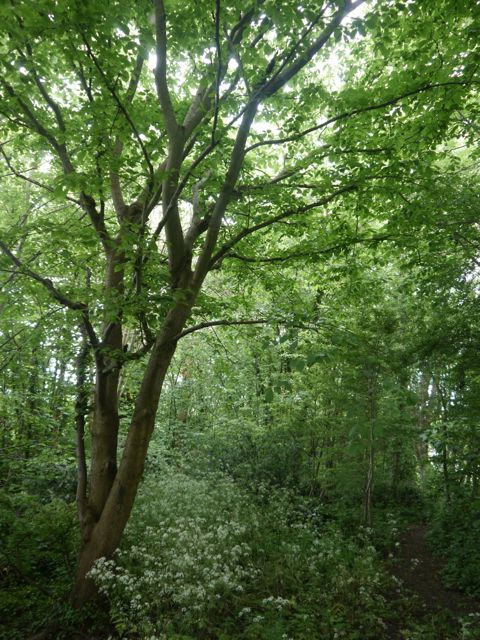
woodsWhen Krishnamurti said “It’s no measure of health to be well adjusted to a sick society” he was highlighting one of the biggest challenges of our time: our society is sick because it is founded on an outdated ‘being-at-war-with-nature’ mindset, and I believe that the only cure is for our society to transition into a new mindset, where we understand our place within the web of life and develop harmonious ways to live within the biosphere. This is where permaculture comes in, to offer solutions and tools to help us navigate a path towards this new mindset.

It’s no wonder that so many of us in the western world are sick and depressed, these seem to be the symptoms of living within a sick system, one that is disconnected and fragmented. Another fantastic article I read recently expands upon this theme; Depression is not a disease but an indication that consciousness needs to change and it’s worth a read.

To be at war with nature is to be at war with ourselves, because we are nature.

In a sense the old mindset has served us well; we’ve been able to produce a surplus of food, create machines that reduce our domestic workload, and we’ve managed to conquer old sicknesses with the development of sanitation, vaccines and antibiotics. But in the middle of the twentieth century we thought we were close to ‘fixing’ all of our health problems, so it has become a bit of a shock that in the twenty-first century, we are in the midst of an epidemic of chronic disorders such as autoimmunity and diabetes.

If you can access BBC iplayer then I’d recommend watching this LeafHORIZON documentary ‘Allergies, modern life and me‘ (available until Wednesday 17th September) which explains why we are seeing an enormous rise in allergies in the UK; due to our overly sanitised culture, we have a lack of beneficial bacteria in our bodies to help balance our immune systems. This means we are being forced into a new holistic mindset that understands ourselves as a community of cells and bacteria that cannot be separated from our environment.

As you know, I have an autoimmune disease called Lupus SLE and it’s the most challenging limiting factor in my life. It causes chronic fatigue, along with pain in my joints, muscles and nerves. I was diagnosed over 4 years ago and it has been a very ‘interesting’ journey, mainly because western doctors and scientists have no clue as to why the immune system starts attacking our own healthy cells. Treatment is a stab in the dark at mitigating symptoms using various drugs with often horrendous side-effects. They can offer no therapies that tackle the root of the disease because they don’t know why it happens.

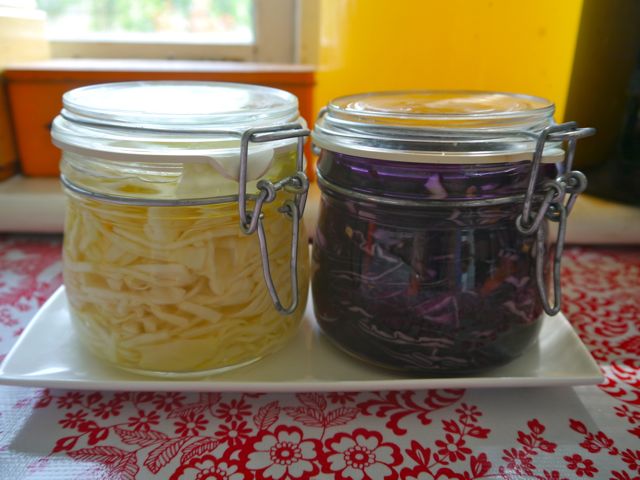
Due to the fact that the drugs I tried were like taking a sledgehammer to a nail and making me feel a whole lot worse, I was forced to looking into alternative ways to treat my Lupus and to try an holistic approach. This has lead me to a very interesting realisation: we are nature and therefore taking the old at-war-with-nature approach to healthcare is no longer working for us as a society. It creates more disease in fact. Chronic conditions such as mine tend to get better when we see ourselves as a multi-dimensional web of relationships. We are not separate units, but part of a whole biosphere. The human body is actually a community of cells, a vast percentage of which are not even human, but bacterial. sauerkrautAcknowledging this is part of the healing process.
For me, optimising my own health using a holistic approach has meant developing strategies such as:

1 Eating a diet rich in lots of leafy green veg (from the garden if possible) and juicing some of these so that I am adding extra nutrients into my diet

2 Avoiding food sprayed in chemicals and processed foods as well as known triggers for inflammation such as gluten, sugar and some dairy

3 Eating home made fermented foods such as kefir and sauerkraut which help feed the friendly bacteria that live in my body, my own community of cells

4 Using herbs that support my body’s systems and reduce inflammation

5  Avoiding alcohol and stimulants such as coffee and chocolate so that my adrenals get lots of rest

6 Gentle walks and tai chi for exercise

7  Try to keep stresses to a minimum (not always possible!) and focus on joyful/nourishing activities

8 Balance activity with breaks during the day to rest and stretch

9 Regular acupuncture and other therapies to keep my energy in balance

10 Be honest with my feelings and attempt to deal with them as they arise

I am still not lupus-free, and I still struggle sometimes with flare-ups, but I am still managing the disease very well. I have a certain quality of life which I’m able to maintain.

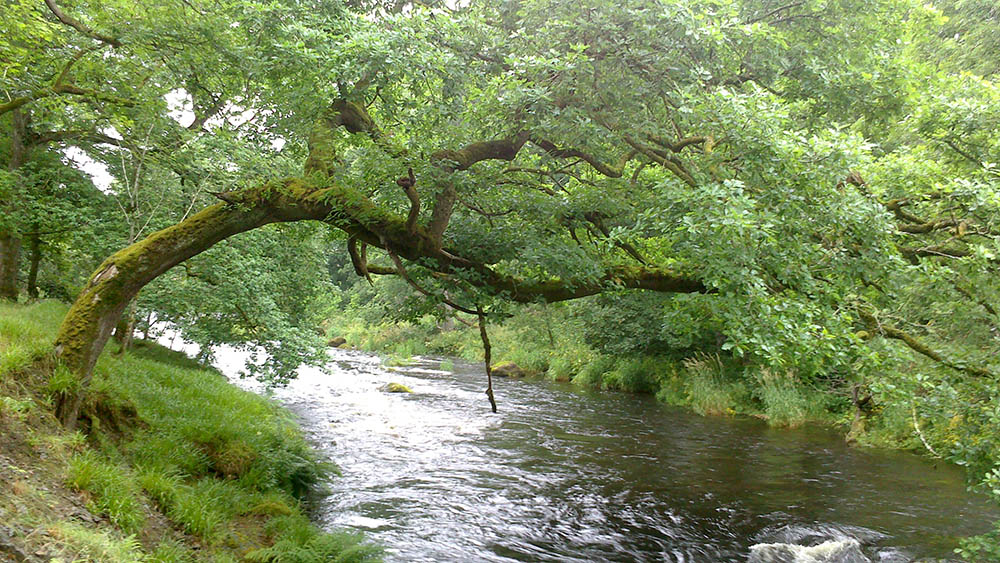
I see my own sickness as just a symptom of a sick society. I am just one cell in the giant body of Gaia, of which humanity is one of the ‘consciousness carriers’, and this is evolving and changing. DSC_0058Our consciousness is on a journey, where once we could get away with behaving like a young child, meeting our needs selfishly and not looking at the long term, we are now facing the consequences of that, and being forced to evolve into a more mature understanding of ourselves and our place within the universe; Humanity is growing-up.
For those looking for further reading on a holistic treatment of autoimmune diseases check out this brilliant article ‘How to stop attacking yourself‘ in the Huffington Post. And do let me know what you think about this on Facebook.

 

Observation is the Key

OBSERVATION IS THE KEY

While I was away this summer, I visited a couple of beautiful permaculture projects, one in Scotland and one in France. What was interesting is that I found myself having rather similar conversations about what permaculture is and what is isn’t. I’ve noticed that this seems to be one of the topics of discussion within the permaculture community at the moment, including in the letters pages of Permaculture Magazine (often involving comments from Patrick Whitefield) and in Facebook groups like ‘Permies‘.

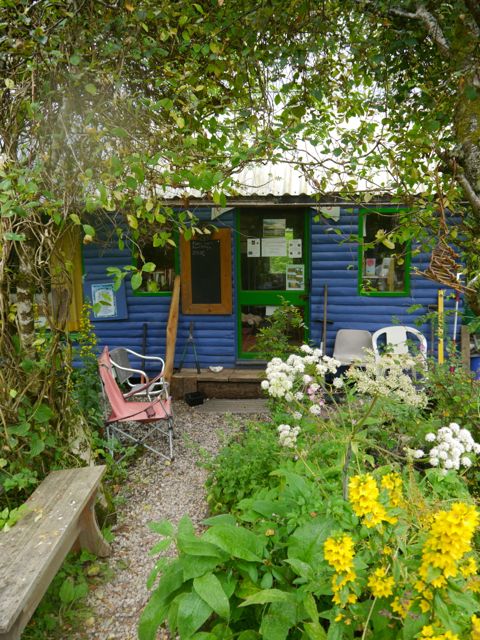
Rubha Phoil‘Rhuba Phoil’ – or ‘Skye Forest garden’-  located right by the ferry port at Armadale on the Isle of Skye, was the first project I visited with my family. We camped there right by the shore, with stunning views across the sea to the mainland.

What struck me immediately on entering the garden, was that it was clearly managed by someone with a very feminine ‘new paradigm’ way of thinking. What I mean by this is that it was immediately obvious that everything there, had been created by working with nature, and nothing had been imposed on the land that had not been negotiated with it first. No heavy machinery had been used in any of the Skye FGconstructions, which were all built with recycled and natural materials. Notices told you about the benefit of weeds. Vegetables poked out from behind wild flowers and from under fruiting shrubs. Compost loos stood like wooden castles in the tree canopy. It was a very charming kind of organised chaos, that understood it’s place within the web of life.

I will write more about the garden in future blogs, but for now I want to talk about our discussion about what permaculture is and what is isn’t. Sandra, who founded and manages this Skye forest garden shared some of my concerns about the permaculture movement and where it’s going.  She has had many ‘WWOOFers‘ visit her project, with the idea that they stay and help to manage and develop the garden. Often they’ll turn up with an idea about what they think permaculture is and persuade her to try out something they’ve recently learned about. An example of this was that they’d arrived all excited about the concept of ‘Hugelkultur’ beds, and then created one for her (see here and here for more info on this raised bed technique).

Now I’m sure that in the right place, in the right climate, after observing a need for a means to feed plants with slow releasing moisture and nutrients, a hugelkultur bed is probably a great solution. But in a sense this bed was ‘thrown’ at the landscape by a few excited enthusiasts who had not observed a need for it before imposing it on this particular patch of land. Skye FG2Sandra was worried that they had chosen the type of wood that would suck a lot of nitrogen out of the soil during it’s decomposition, actually making the bed very infertile. And on a rainy island like Skye there is little need for slow releasing moisture! She’d wisely decided to cover and leave it for a year and observe what it did.

In the new paradigm, we are not at war with nature, instead we work with nature. We understand ourselves as a part of the interconnectedness of life. We understand our sense of place within a complicated web of relationships. We first observe and later tweak what we find there. We do not wade in and impose our will on nature, even with the best intentions in the world, our hugelkultur bed might be disrupting a delicate balance that we might have noticed if we’d spent time first observing what was there. Observation is everything.

A ‘swale’ is another permaculture design idea that is as popular as the hugelkultur bed, and needs just as much caution in it’s implementation. In Patrick Whitefield’s post about ‘the death of the swale‘ he helpfully writes:

“For me the essence of permaculture is to tune in to the unique characteristics of a particular piece of land and of the people who are inhabiting or using that land. From this flows a design which will meet the needs of both land and people. It’s the very opposite of taking an idea off the shelf and saying, ‘Hey, this size fits all!’ ”

Brittany1And this brings me to my visit to France where we spent time celebrating a birthday with Stuart and Gabrielle Anderson on their permaculture smallholding in Brittany. Around the fire one night, Stuart and I had this continuing discussion about what permaculture is and isn’t. I think we agreed that the principles of permaculture as set out by David Holmgren or Bill Mollison, are not there to be stuck to dogmatically, but are there as a guide.

For me, the permaculture principles are an essential roadmap for a mind that is still lost in it’s conditioning of the old paradigm of separation, and cannot yet see how everything is interconnected; they show the way to making the transition from the old mindset to the new one. But once you actually ‘get’ permaculture and you start seeing the world around you with new eyes, you can see how everything is connected in your landscape and community and you embody this symbiotic way of being. Rules or principles fade away as you develop your own deep relationship to your place in the web of life, that is essentially based on a firm foundation of good observation.

There is so much more I could say than I have time for in this blog, so I think I’ll be coming back to this over and over again. I am also fascinated about how this ties into another area that I’m interested in: how the old ‘at-war-with-nature’ mindset has created fertile ground for autoimmune disease and how transitioning to a new holistic mindset is the key to healing and recovery. Please feel free to comment here and on Facebook.


Garden Inspiration

GARDEN INSPIRATION

10502152_10152519621161622_1494079754616004550_nI’m not feeling so well at the moment, I’m feeling really exhausted with some nerve pain, so I’m taking it easy (which can be frustrating!). But what helped was that yesterday I was able to get out with my mum and visit an inspiring back garden in Florence Road in Brighton, as part of the ‘Garden Gadabout’ event.

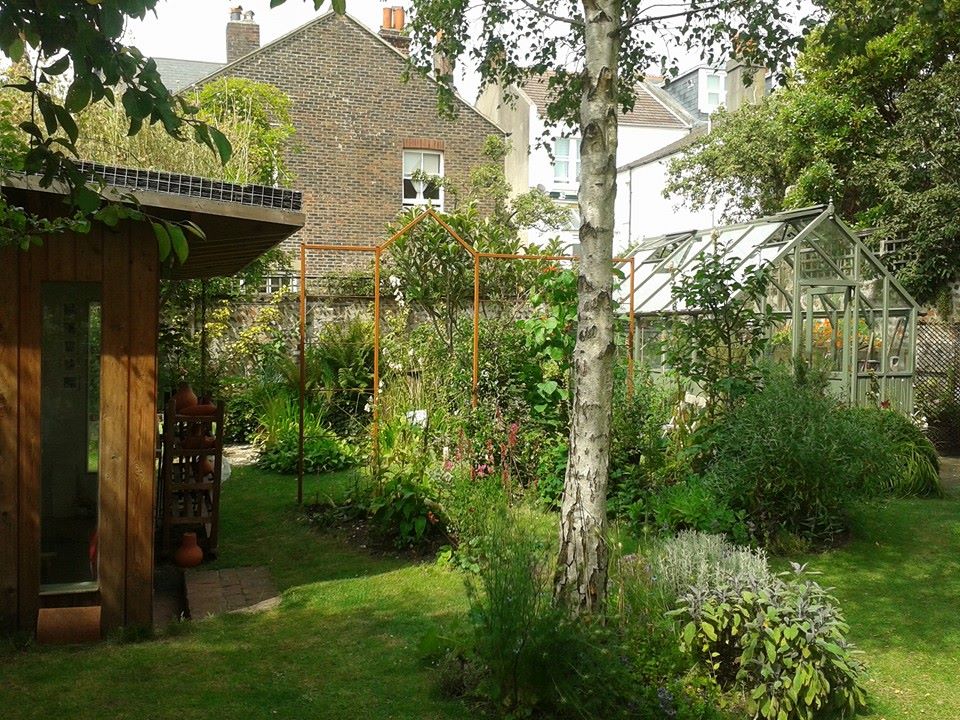
We sat in the shade and drank tea, while we admired the way the gardener has taken inspiration from permaculture and created a ‘forest garden’ style of natural planting in layers.

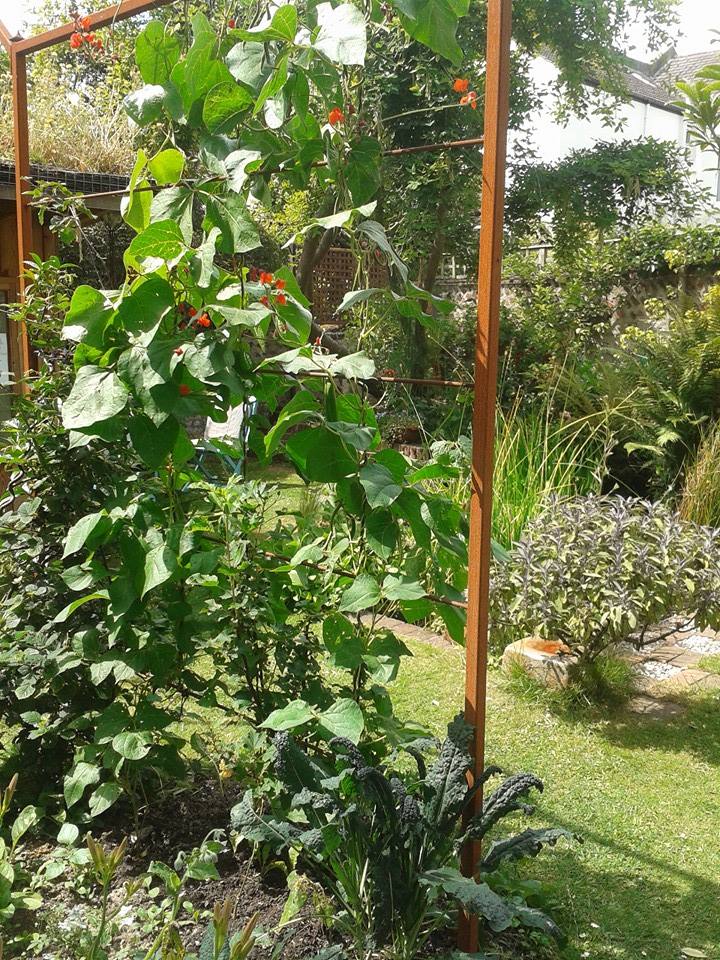
10479141_10152519621521622_8594423699443447289_nI particularly like the way they’d made use of the vertical space by training runner beans up the garden trellis, while Nero kale and currents grew beneath in the shrub layer, and on the ground-cover layer they had sprawling strawberries, fruiting well. On the back wall, there were cordoned fruit trees with herbs and strawberries growing underneath. And in the corner, there was even a peach fruiting well in the warm summer sunshine in this perfect micro-climate. The gardener told me they have to cover it in winter to protect it, but it does well each year even in our unpredictable British climate.


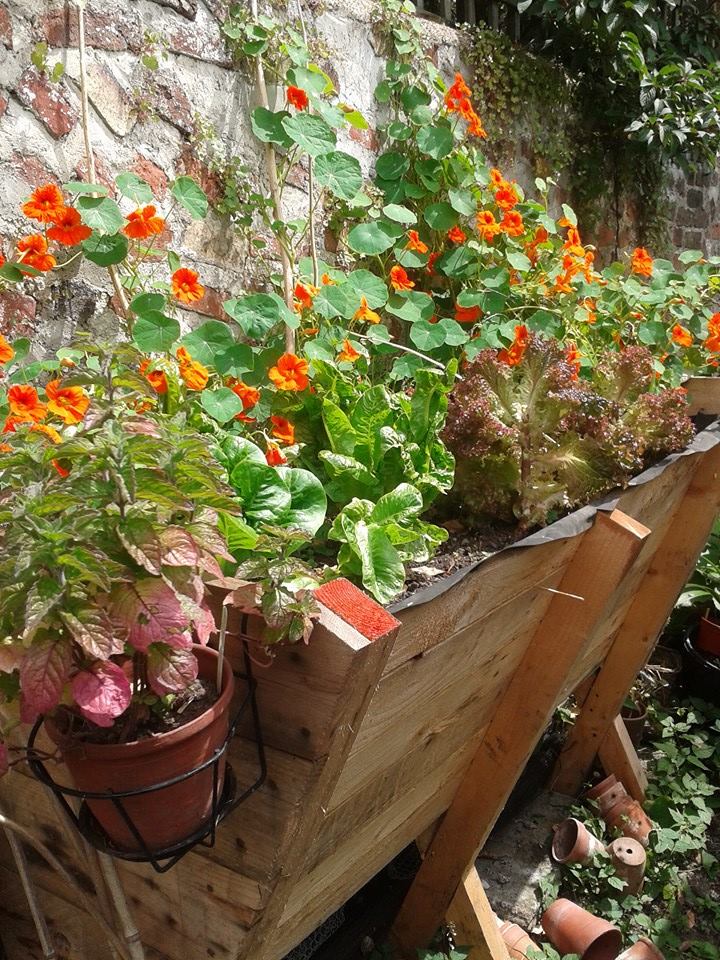
10462776_10152519622836622_2028310725281820280_nIn a corner of the garden behind the green house in a place that would otherwise be very underused, I was impressed to find a raised bed full of salads. The nasturtium flowers were really cheerful – and of course edible. What also impressed me is that it’s little innovations like this raised bed, that help people access gardening who would otherwise struggle; people who who have mobility issues and chronic illnesses find gardening on this level much easier.

All in all it was a most pleasant way to spend time on a warm sunny afternoon, and I’m so glad I made it. It was therapy!

Growing Season

GROWING SEASON

I just love this time of year, don’t you? P1010205It’s full of exuberant growth, with plants reaching their zenith with a riot of flowers. I’ve also found that it’s been a time of too much growth! This weekend, we’ve had to strim the grass, cut back the lavender bush, pull up Creeping-Buttercup, cut down the towering sorrel flowers, pull up enormous nettles, and drastically reduce the spread of the common comfrey that would happily take over it’s side of the border.

The good thing about abundant growth though, is that I’ve been able to harvest so many things to eat from our garden each week. The perennial broccoli is still producing florets, I’ve only just pulled up the purple sprouting broccoli which had been producing a bag of broccoli for us every few days since March, and the chard and salads are producing a steady supply of greens too. And while I was clearing the border of creeping buttercup, I found the last of the leeks hiding there, just starting to bolt. P1010194And this is all from a tiny 30x25ft garden with two 5x5ft veg beds and one 9x3ft one.

A word about the ‘Ragged Jack’ (Red Russian Kale); it’s BRILLIANT! I will definitely grow it next year and beyond. It overwinters well, and then early in Spring is starts bolting little florets which are so delicious and more prolific than the purple sprouting. It’s now flowering (it’s hard to keep up with it all) but it’s become a staple crop for our household over the past few months as it’s great in salads, stir fries or just steamed on the side

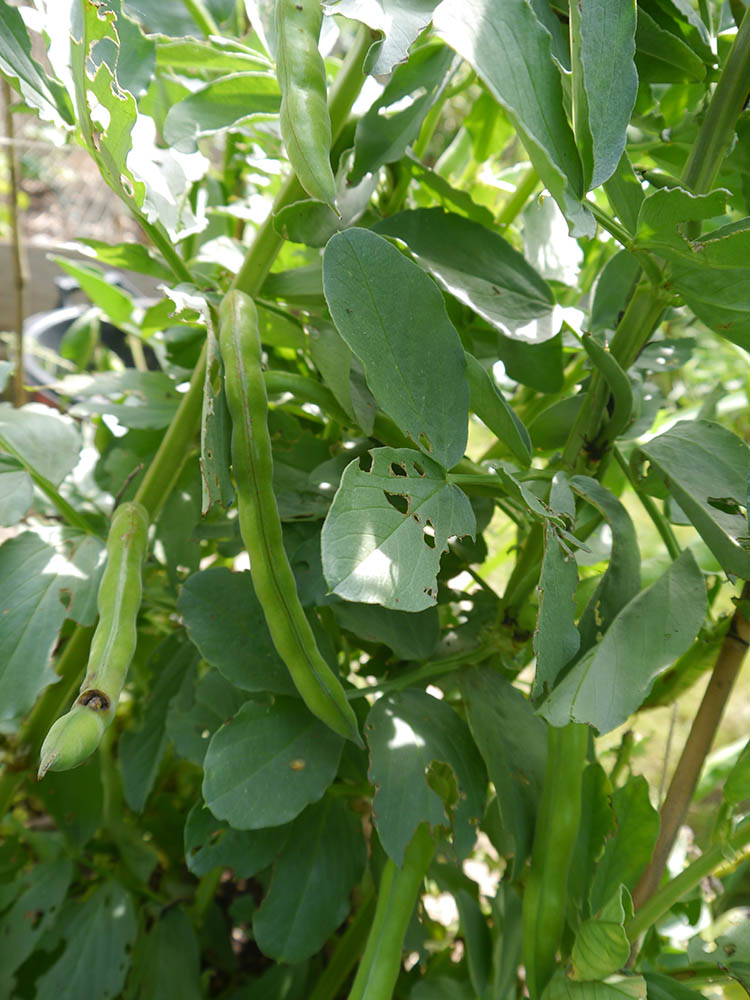
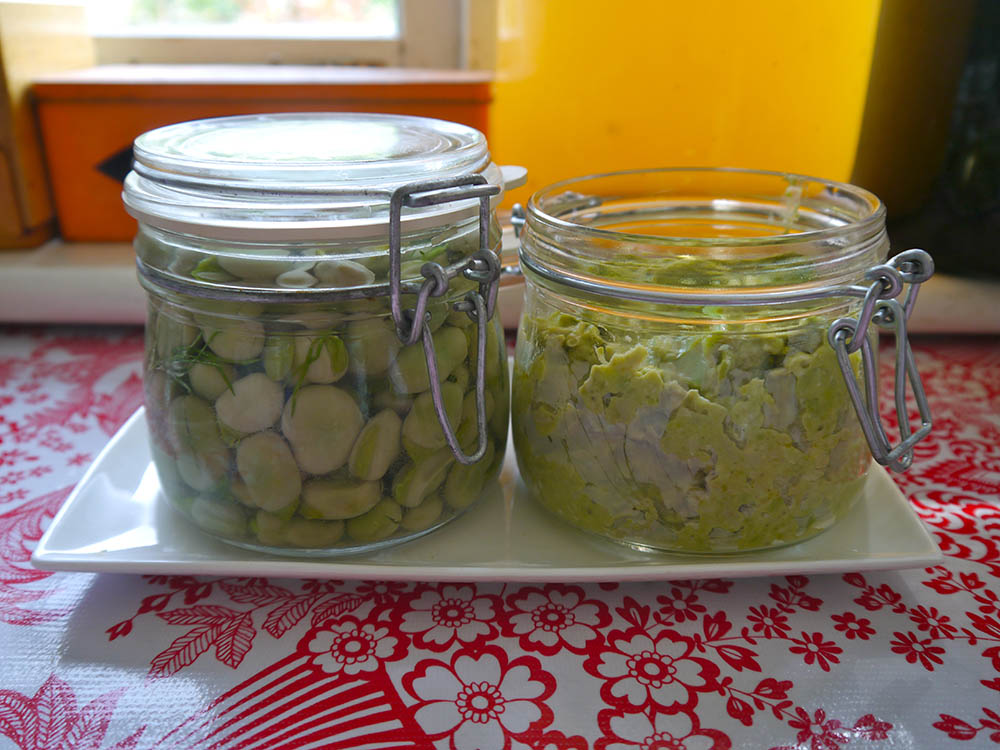
Yesterday I harvested an enormous armful of broad beans and got busy with them in the kitchen. It’s quite therapeutic sitting and shelling a huge pile of beans ready for making into delicious things. I’ve been looking forward to this moment for a whole year! P1010184Last year, I grew broad beans for the first time because I was inspired by a recipe to make bean pate, but I didn’t get a chance to make it last year. So this year I made sure it was the first thing I did with my broad bean harvest! Last year I also tried out an amazing fermentation recipe for garden beans, where you store them in a jar of salt water and herbs, so I was looking forward to making this again (they were so delicious)! If you would like to have a go yourself, you can find the recipe on my Facebook page .

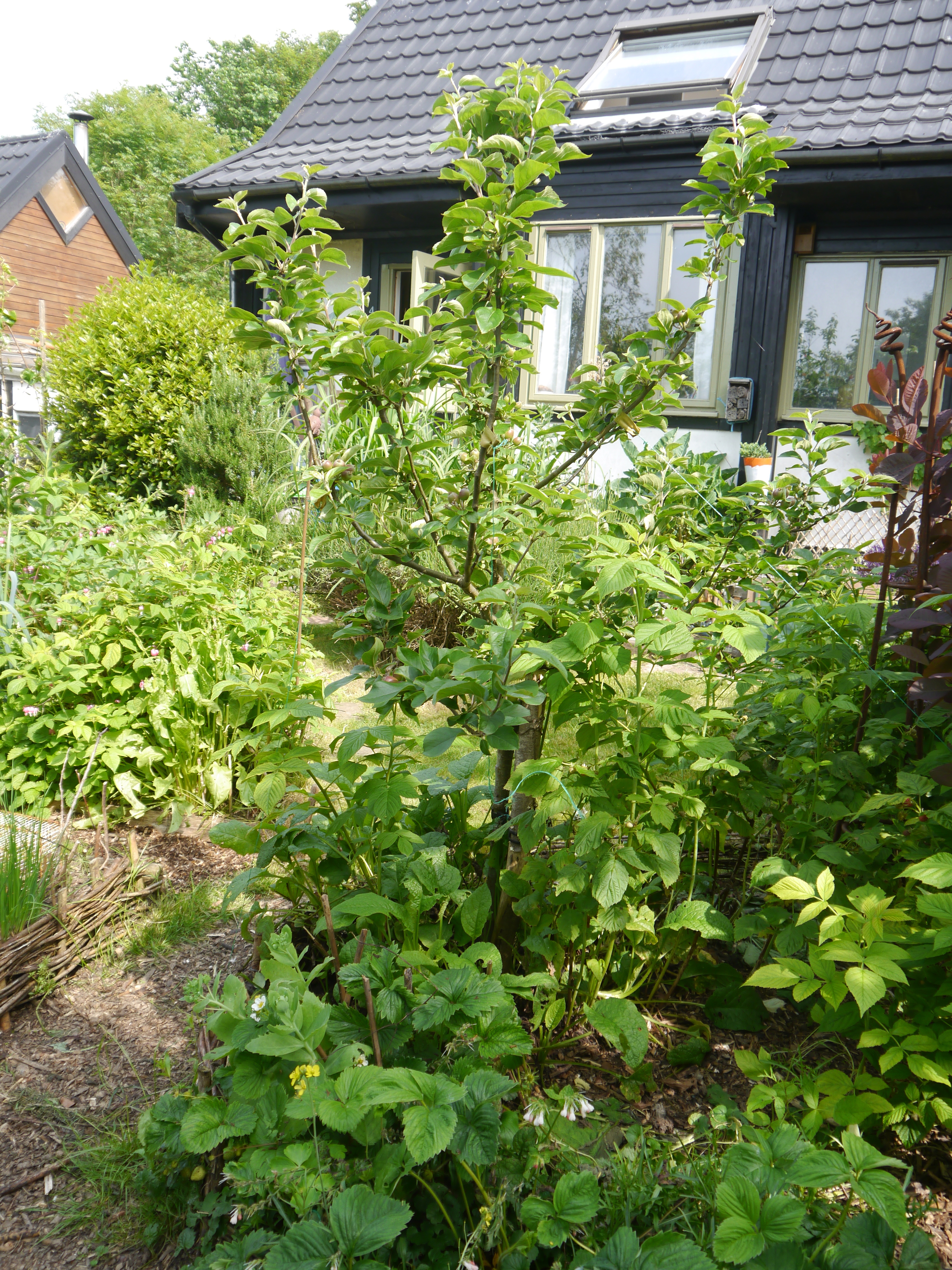
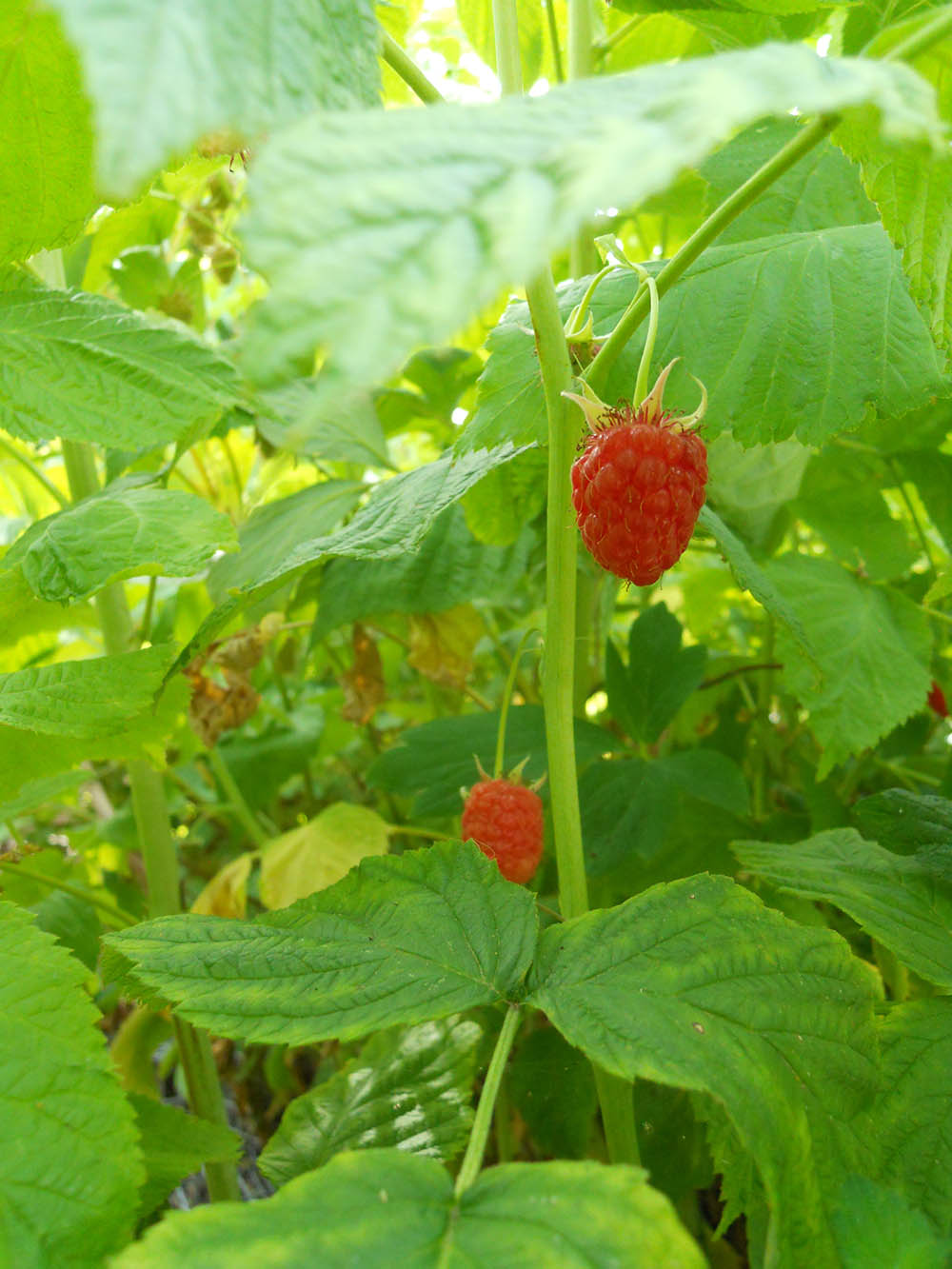
The pear and apple trees seem to have successfully pollinated and are full of swelling fruits. The raspberries are starting to produce their first few ripened berries, and DSCN4579so are the strawberries plants, some of which are the wild variety, that I grew from seed last year. We’ve just finished the last pot of raspberry jam that I made from our own raspberries last year, so I’m looking forward to making more of that, and it’s so easy too. Here’s a basic recipe:

Weigh your freshly picked raspberries and add to a pan. Weigh out the same weight of sugar and add to the pan and heat gently until the raspberries and sugar have dissolved together. Turn up the heat for a few minutes, and keep testing the jam to see if it’s reached it’s setting point (scoop a tiny spoonful onto a cold plate and put it in the fridge, after a minute, push the jam with your finger and if it wrinkles, you have reached the setting point). Put jam into washed and sterilised jars and put on the lid while still hot to help it create a good seal, and label it with the date.

It’s amazing what you can grow and produce for yourself in a small space. Do let me know what you are growing this year in your gardens, balconies and allotments, and what dishes and recipes you’ve created -I’d love to hear. Let’s share the abundance! Do leave comments here or on my Facebook page. Thanks!

Reduce your food waste

REDUCE YOUR FOOD WASTE

Just thought I’d let you know that Permaculture Magazine have recently published my latest article online, this time all about reducing food waste. DSCN5274In this article I interview Mel Rees who was attempting her 100 day food challenge where she aimed to live off other people’s food waste for 100 days (and she managed it!). During those 100 days she bought no food of her own. In this picture she is preparing the soil for the 2014 growing season, in order to supplement her food income from her own garden.

In the article I also write about the 7 top tips I found for reducing your own food waste, and a recipe inspired by Mel for using up food waste. You can read the article here.

P1010140Meanwhile my garden is ‘showing off’ this Spring – even though I’ve been away and given it no attention, it’s full of blossom, flowers and things to harvest. Since I’ve returned from Devon, I’ve been harvesting a large bag of greens from my garden every other day – that’s Ragged Jack (also known as Red Russian kale), purple sprouting broccoli and perennial broccoli. I’m also harvesting leeks, salad and the broad beans are almost ready too. The garden is a riot of colour with all the spring flowers. Lovely!

What are you harvesting this Spring? Do leave a comment or visit my Facebook page and see my other photos.

Spring Chickens

SPRING CHICKENS

We’re off to Devon for a while, where I’ll be putting my artist’s hat on so that I can focus on drawing the local landscape to create a new body of work. If you didn’t know I was an artist, here’s a link to my artists website: flosnook.co.uk

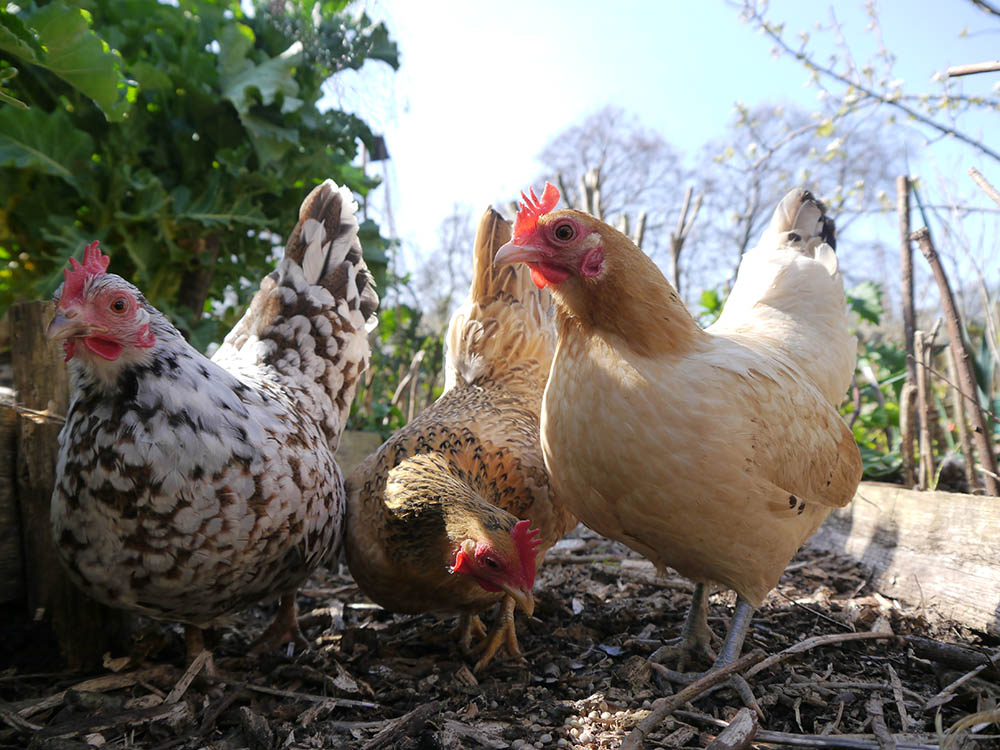
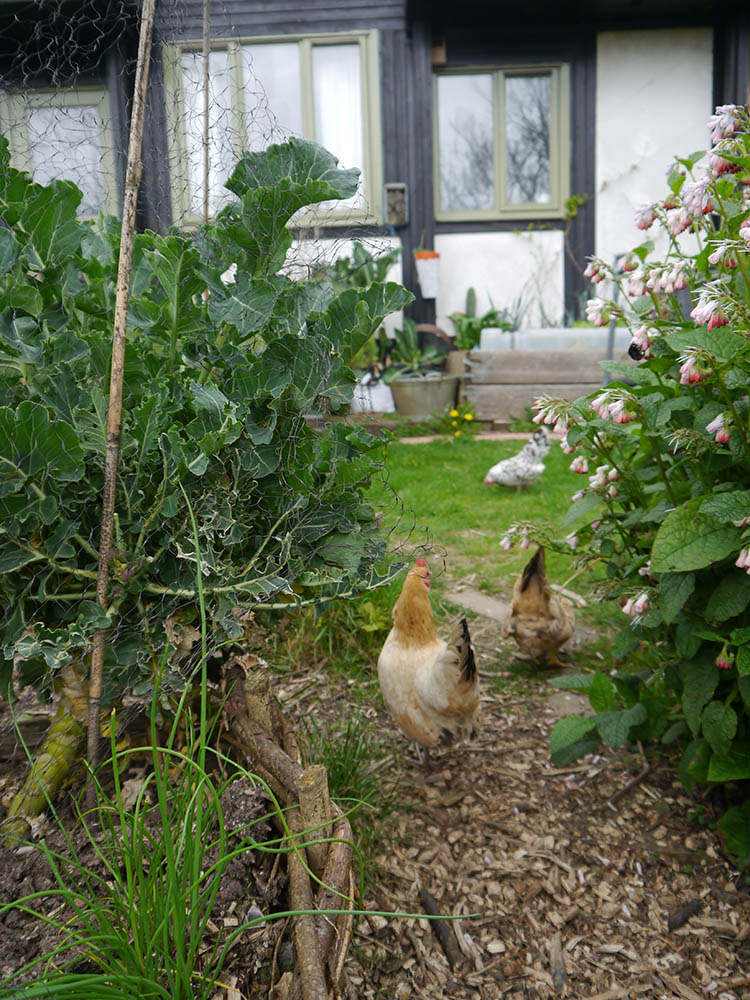
In the meantime, Spring is certainly springing here in the South East, and my garden is coming to life; the pear tree is in blossom, bumble bees are buzzing amongst the common comfrey flowers and we are harvesting lots of purple sprouting broccoli and perennial broccoli. P1000580We also have 2 new tiny bantam hens called Peggy (left) and Mabel (right) and our old hen Daphne (middle) has certainly made them aware who is boss! Our next door neighbours are looking after them while we are away and will be the happy recipients of their tiny eggs. In terms of weight, a bantam egg is half the weight of an average egg, so when I bake cakes I need to use 2 for one. They are such delightful pets and I’ve already trained them to come to me when I call them and they like to eat sunflower seeds out of my hand.

P1000594I’ll be writing much more about the garden, as well as permaculture and health related issues when I return from Devon. So in the meantime, I hope you all have a very Happy Easter and get lots of time outdoors enjoying the Spring bird song, tree blossoms, woodland flowers and hopefully some lovely Spring weather too! 

Small and slow solutions

SMALL AND SLOW SOLUTIONS

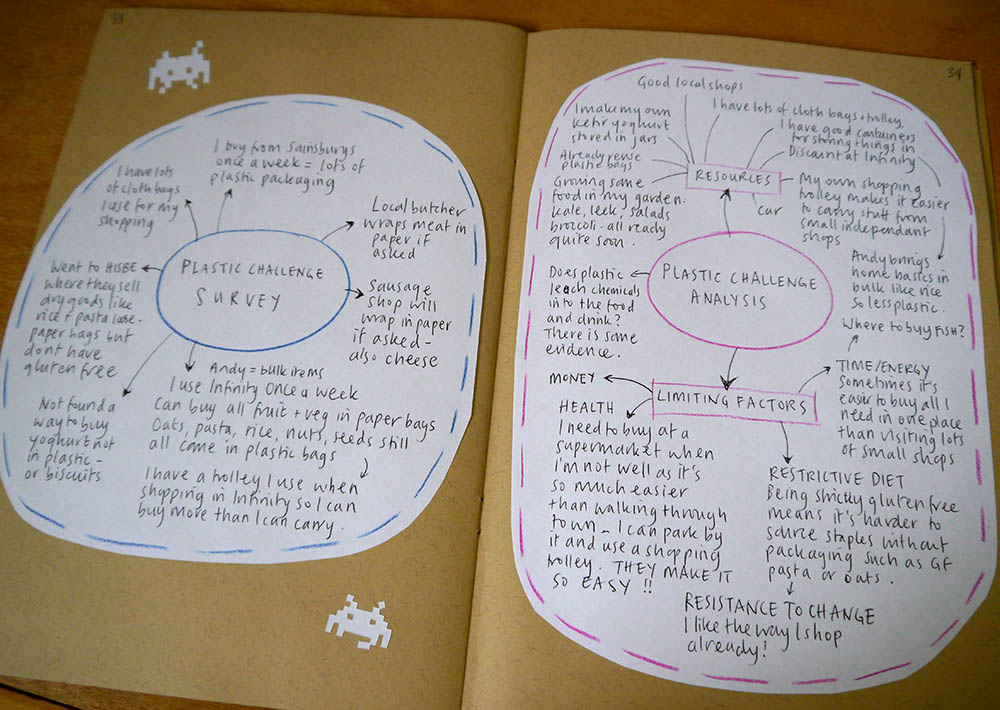
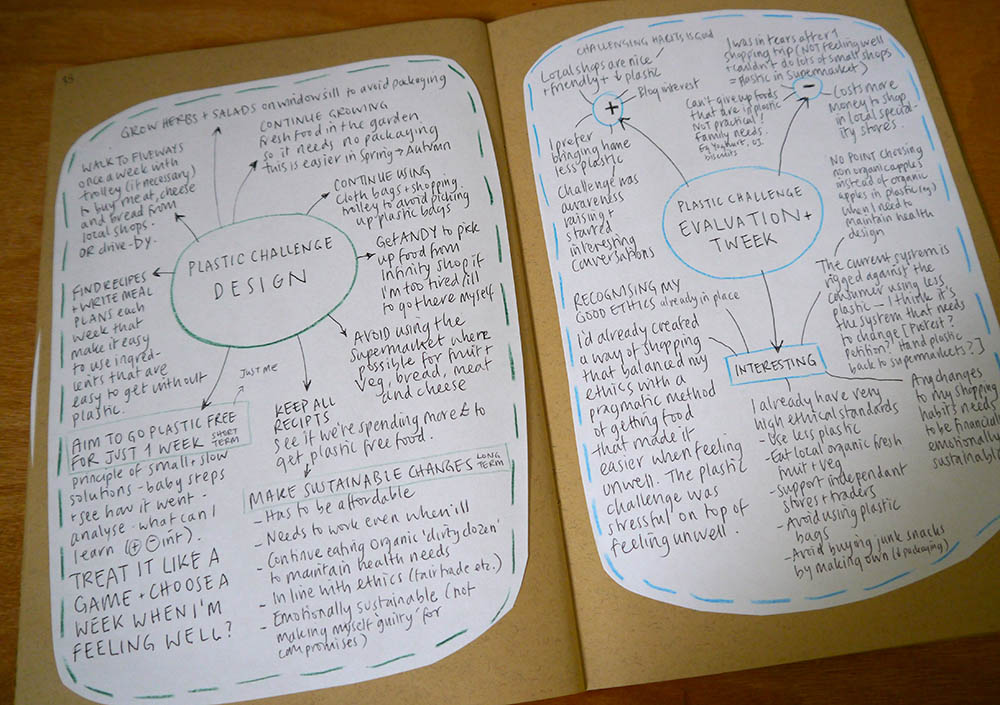
As you’ll know from my previous post, I have been taking part in a ‘plastic free challenge’ for all food items. I thought I’d show you an image of the design process that I’ve been using in my scrapbook, so you can see how I work (the little space invaders were cut out by my son so I pinched a couple to illustrate this page!). P1000488This has not been an easy challenge, and at times it has actually been a little stressful. I like to live as ethically as possible, but I also need to be as pragmatic as possible about shopping due to my health challenges. This has meant that my pragmatism has been bumping up against my attempt to go plastic free, meaning that I’ve had to avoid supermarkets (so easy, but so full of plastic!) and buy more from local small shops (not so easy when feeling unwell as it takes more energy). It’s also a rather budget-busting way of shopping too because small artisan food shops often charge more for their products. Another difficult part of the challenge is that they often don’t stock foods that I would normally rather buy organic (the dirty dozen includes potatoes, tomatoes and apples) so I’ve had to opt for local non-organic fruit and veg, which worries me that my health might suffer with an increase in pesticides in my diet.P1000457

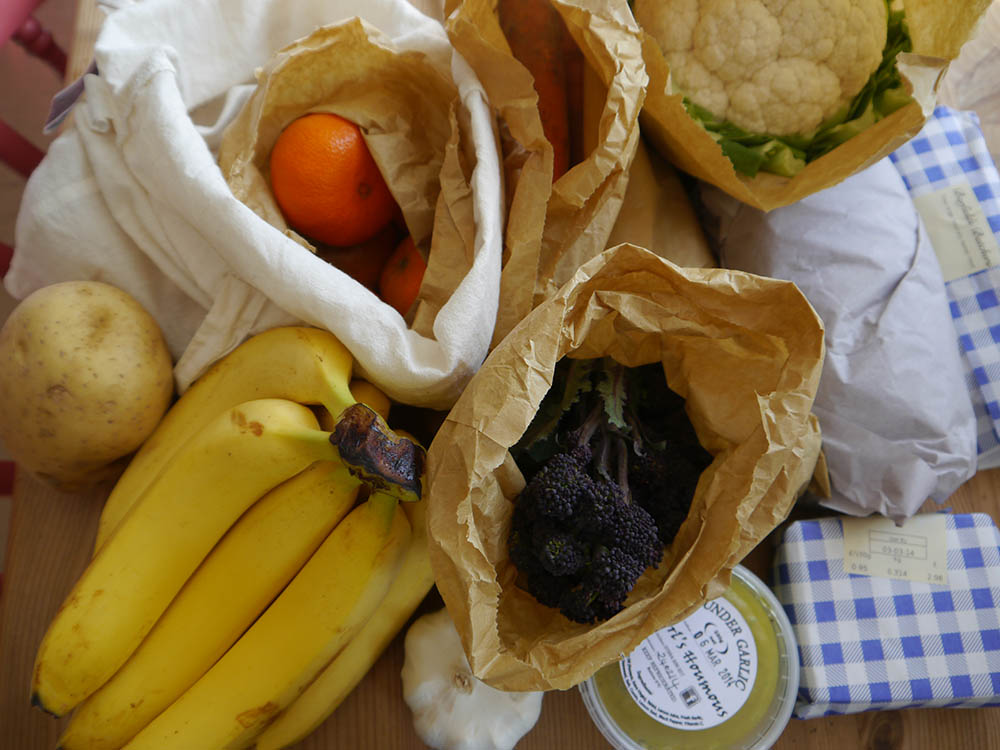
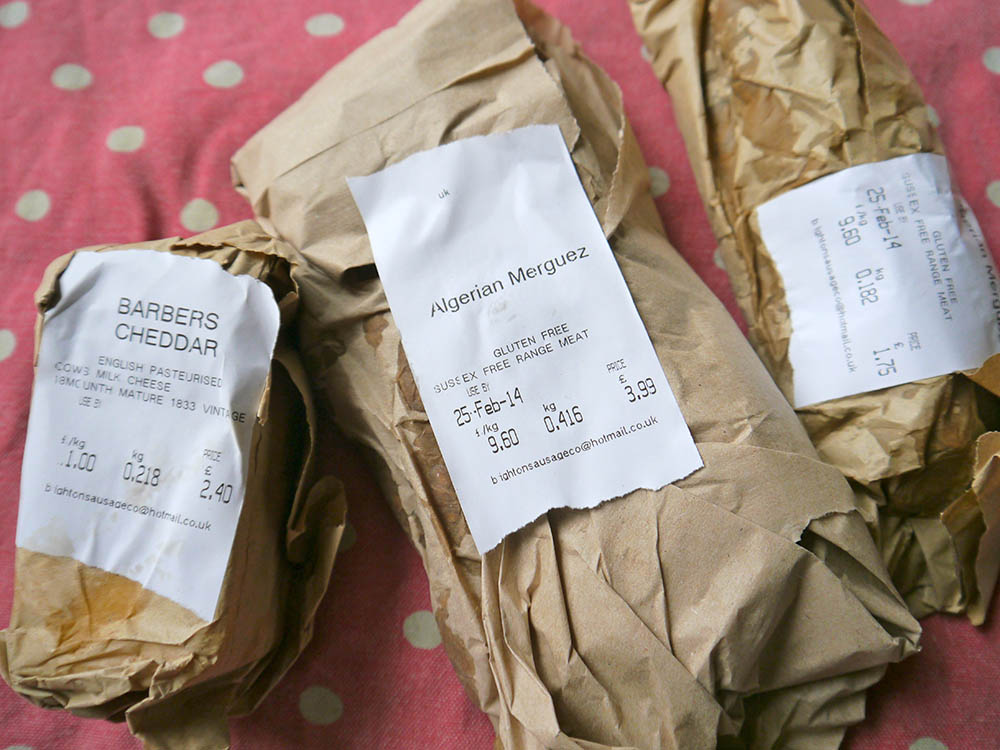
However, on the bright side, shopping at small local stores has been rather fun. I already know many of my local shop keepers and seeing them more regularly has kept the banter going (my local butcher has been taking quite an interest in my challenge and he seems to enjoy wrapping my cheese and meat in their blue chequered paper). It has to be said, there is a sense of satisfaction when buying things in paper bags and being able to compost the packages when they’re finished with. There is also some question as to whether some plastics leach into the foods, especially over a long shelf life, so it is gratifying to be avoiding this possible risk by using less plastic. It’s also rather pleasant to walk to a local shop, I’ve found that it reconnects me with my local neighbourhood and gets me to slow down a bit and notice things. In this way, walking can also fulfil others functions for me; gentle exercise and ecotherapy (I walk through woods and past front gardens). So it can be said that this change in buying habits has increased my quality of life.

P1000489DESIGN PROCESS

I began by reviewing the things I’d noticed, particularly the limiting factors; lack of time/energy, health concerns, restrictive diet, budget and resistance to change. These were all large limits on what I could achieve with this challenge, but I imagine that they might not add up to a lot more than many other people. Quite often people are either time poor, financially poor or health poor, whatever the limit, it’s not easy reducing our plastic waste when the system is rigged against us. Supermarkets make it so easy for the consumer to drive up, park for free, and buy large quantities of goods wrapped in plastic at seemingly discounted prices.

I found some things impossible to buy without plastic: I have no local fishmonger despite living only 3 miles from the sea, the only option was to go without fish, or buy it plastic. I can buy delicious locally made (just a mile away) artisan hummus at a reasonable cost, but it comes in a plastic pot. I could make it myself but this hummus is just so incredible that I’d struggle to replicate it at home. Despite making my own cakes and flapjacks for the family, my kids would go bonkers without a certain brand of chocolate biscuit that comes in plastic. I like to make my own kefir yoghurt but the kids don’t like it, so I buy them Yeo Valley yoghurt that comes in plastic pots. So I had to make a decision for the sake of this design. I decided that I would cut down on goods packaged in plastic that we can’t recycle, and continue to buy the goods that come in plastics that I can recycle.

P1000459For me personally, I felt it was more important to create long term beneficial changes to my shopping habits, than it was to go all out for a total change that I could only sustain for a week or a month. The challenge I’d signed up for was ‘plastic free February’, but in order for my design to be meaningful in the long term , I would prefer to use a ‘small and slow solutions‘ approach.

DESIGN CRITERIA

1 It needs to be sustainable; it has to work even when I feel ill.

2 It has to be affordable.

3 I want to continue to avoid buying the ‘dirty dozen’ in order to maintain my health.

4 It has to be in line with my ethics of buying fair trade for example.

5 It needs to be emotionally sustainable; I need to be able to buy what I need without feeling guilty about buying the odd bit of plastic.

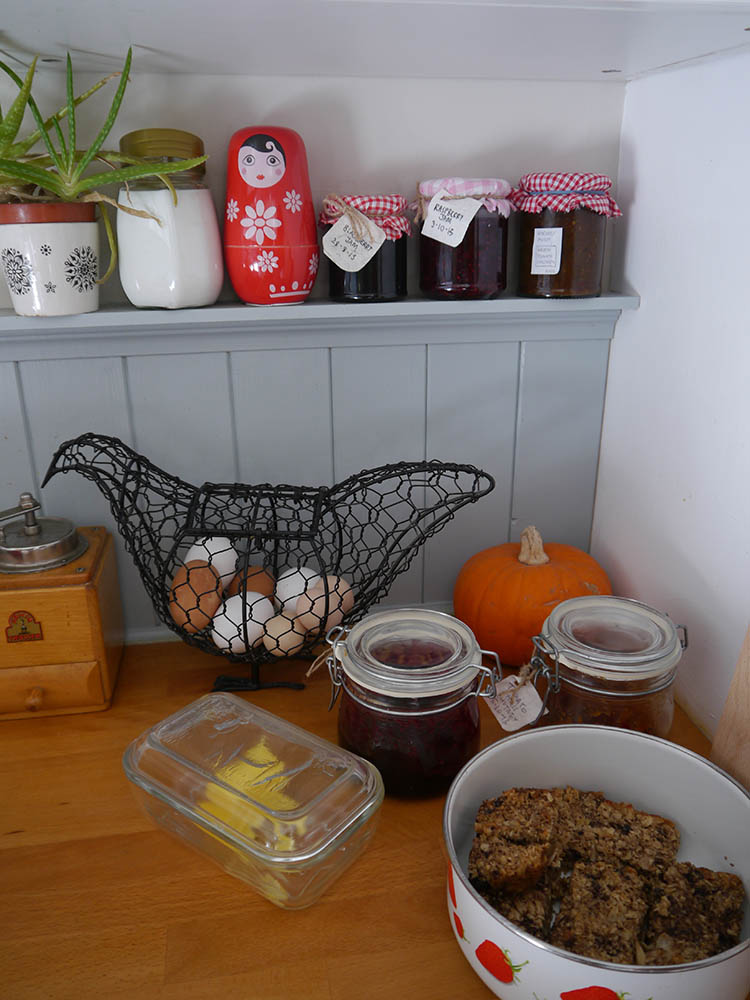
I found that a helpful start was to acknowledge how much packaging I already don’t buy. The image above is a corner of my kitchen where you can see my kefir yoghurt, home made jams and chutneys in recycled jars, home made flapjacks, and our own hens eggs. Making things at home saves packaging. I also use cloth bags when shopping, support independent stores and traders that sell fresh fruit and veg in paper bags, and avoid buying junk snacks. I felt I was already doing quite well at reducing waste.

P1000437DESIGN SOLUTIONS

1 Continue to buy meat and cheese from my local butcher who I’ve now got a good plastic free relationship with and he’s happy to wrap things in paper for me, and avoid buying meat at the supermarket, except for fish.

2 Continue to buy bread from the local bakery in paper bags and avoid supermarket bread.

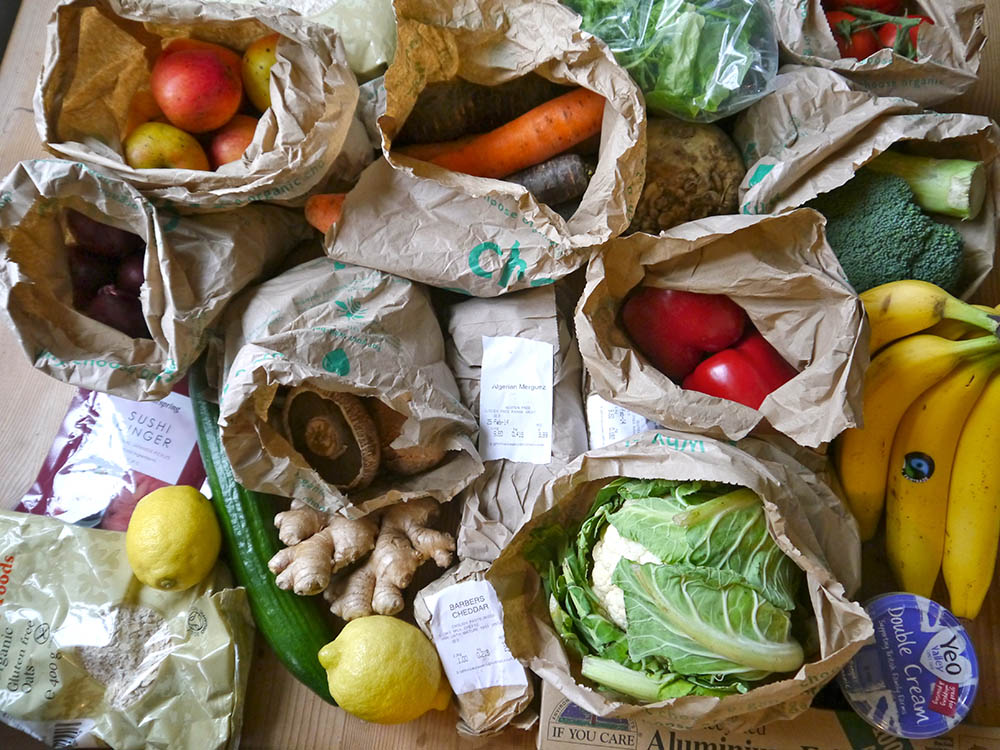
3 Buy some of our fruit and veg (as well as that delicious local hummus!) from my nearest local grocers, avoiding the ‘dirty dozen’ where possible, avoiding buying fruit and veg in plastic from the supermarket.

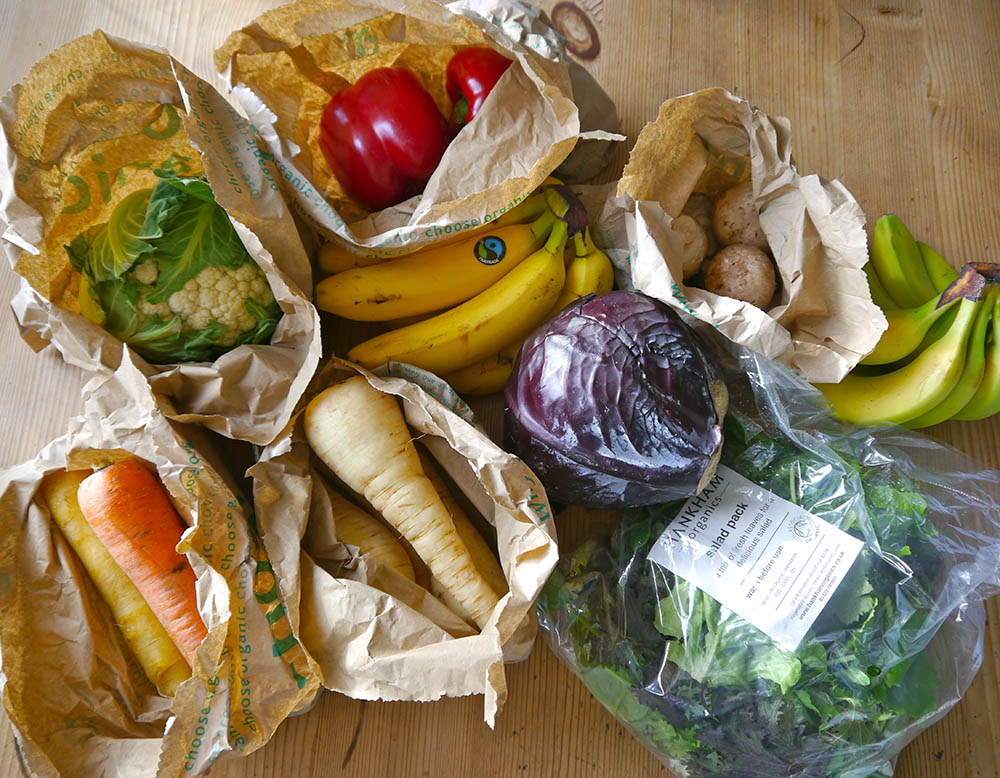
4 Buy fruit and veg from Infinity Foods where we get a staff discount and where we can buy all organic produce at affordable prices, in paper bags. My husband can pick up food from here during the week even when I’m not feeling well enough to go shopping.

5 Grow plenty of herbs and salads, fruit and veg in our garden at home, as well as keeping hens for eggs, to keep packaging to a minimum.

6 Keep making home made meals, cakes and biscuits to avoid buying these in plastic.

7 Use the supermarket without guilt when I need to, always remembering to take my cloth bags with me.

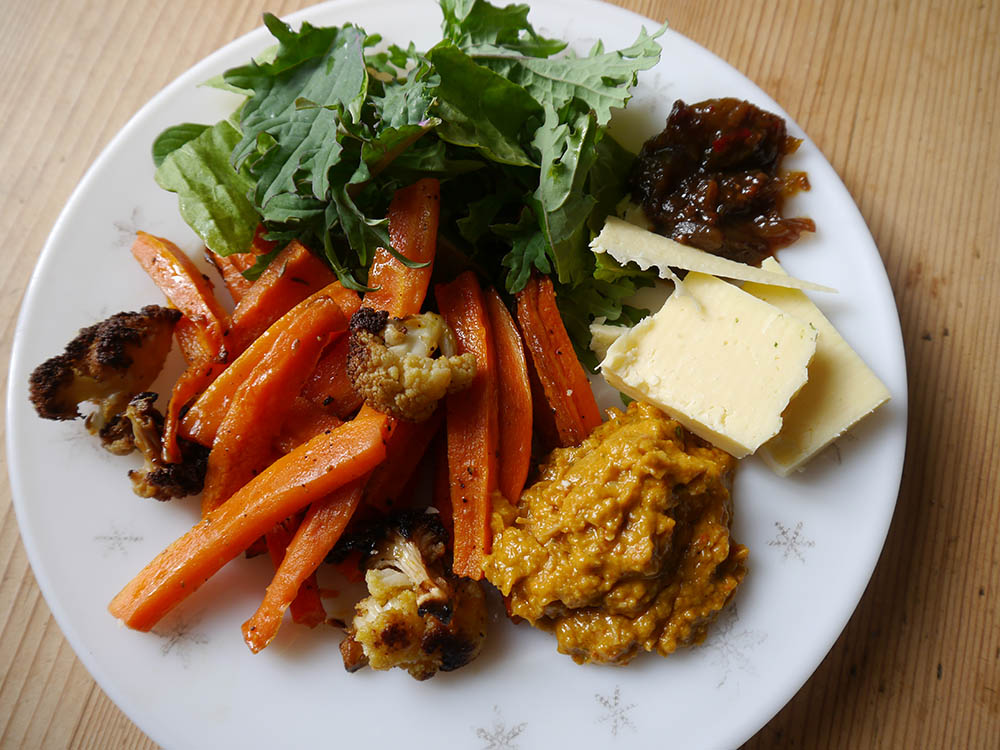
Before I go I’d like to share with you a picture of my lunch today. P1000485I had roast carrot and cauliflower (bought in paper bags from my local grocer), with salad leaves from my garden (corn salad, red russian kale and sorrel), with cheese (wrapped in paper from my local butcher) and chutney (home made), served with that delicious locally made hummus. It was really tasty!

These are all little steps towards a more plastic free lifestyle. Are there any steps that you have taken at home that you would like to share? Please do, either here or on my Facebook page.


My plastic waste challenge

MY PLASTIC WASTE CHALLENGE

DSCN5269I’ve just written a new article for Permaculture Magazine about food waste, where I interview Mel Rees about her own food waste challenge: ’100 days without buying food’ (you can read the blog I wrote about her here).  What inspired Mel to take on the food waste challenge was watching a locally screened film ‘The Clean Bin Project’ (you can watch the trailer here).

In January, I went along to my own community centre to watch a screening of The Clean Bin Project too, and I found it just as inspiring. It’s about a young creative couple living in Canada, who decide to embark on the challenge to create no waste for a whole year, which means that they don’t buy any new items (they even resort to making their own toothpaste!) and this means buying no food wrapped in plastic too. P1000267After watching the film I signed up for my own food waste challenge: ‘Buying no food wrapped in plastic for a month’. I am currently only part of the way through my challenge, but I thought I’d let you know how it’s going.

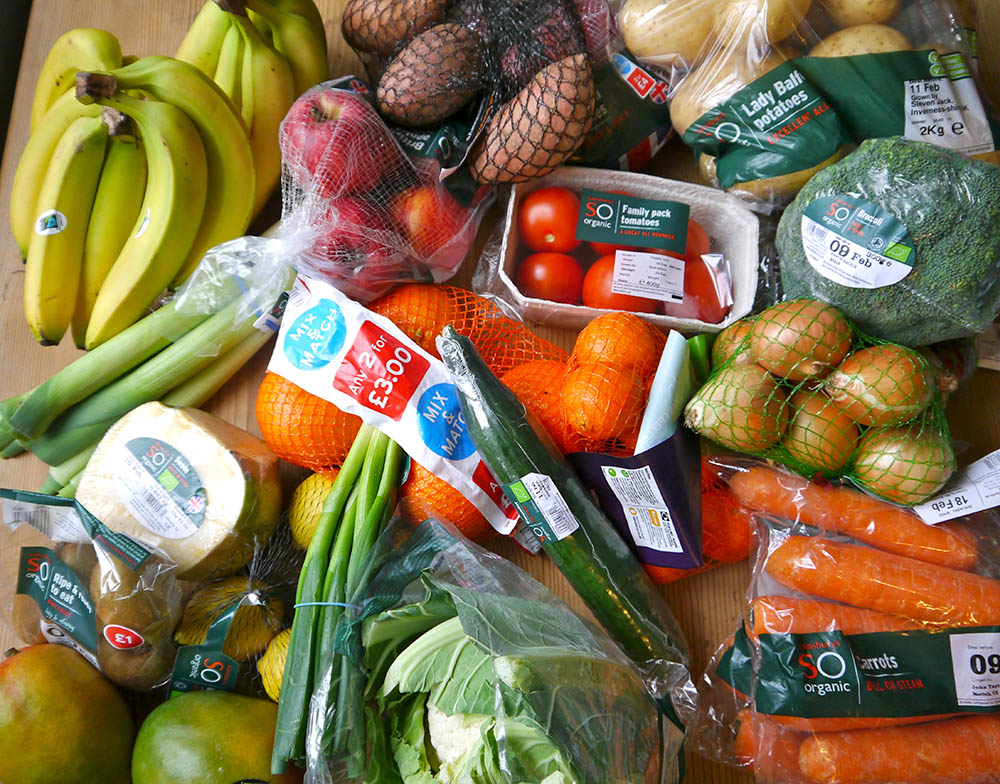
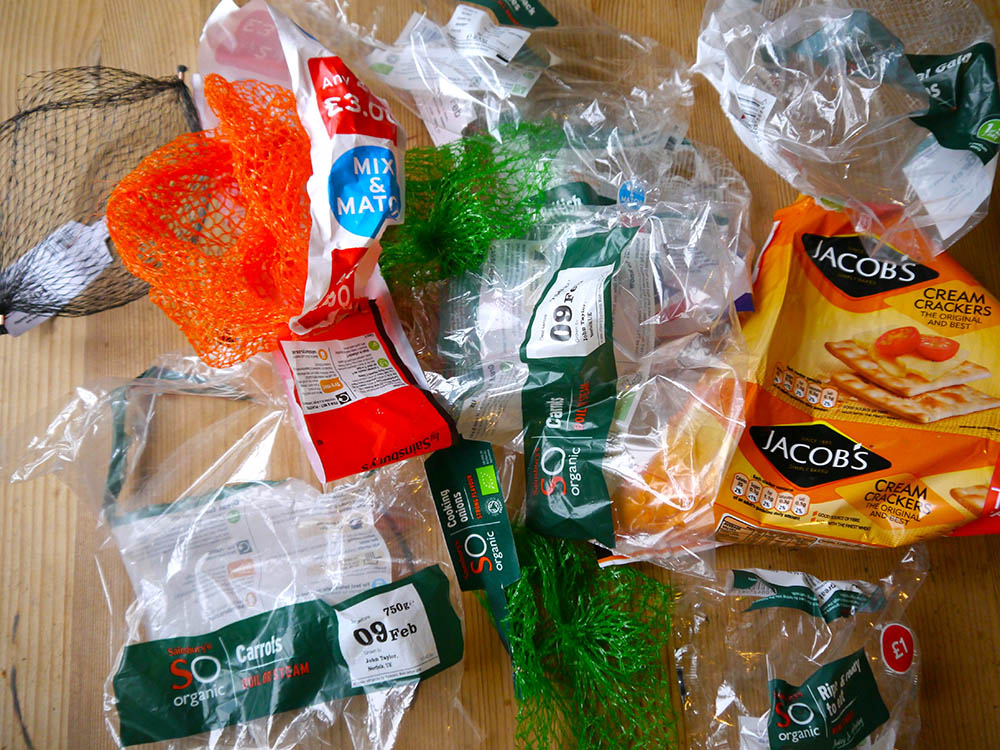
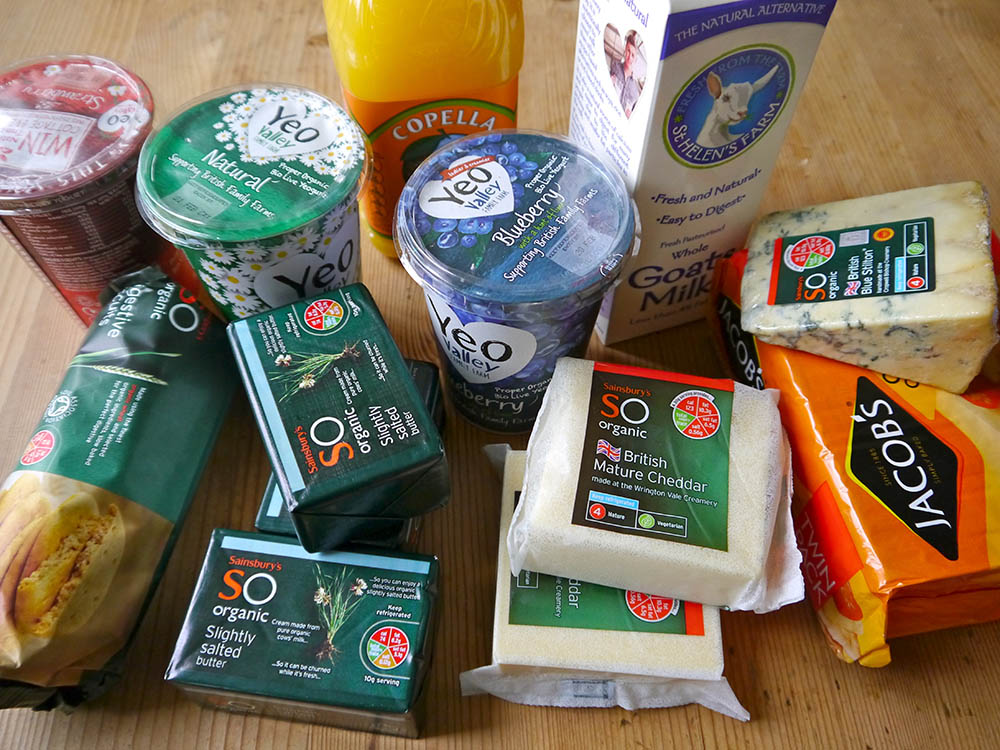
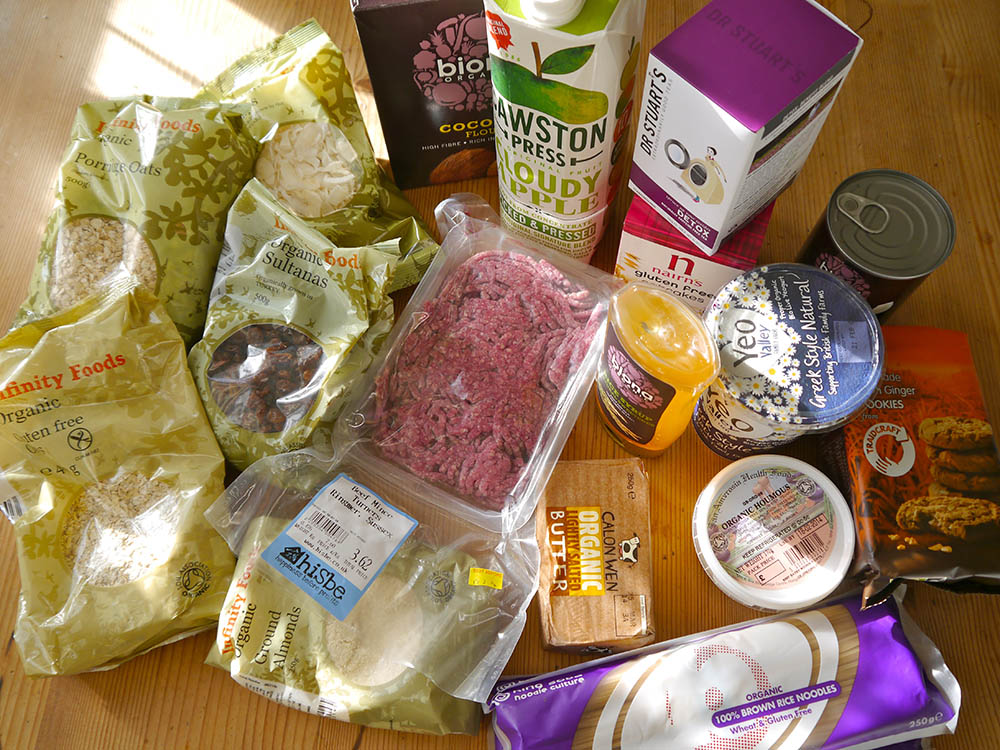
The first phase in any permaculture design as you know is SURVEY. For me this meant that I started out by recording all the food shopping that I brought home in the form of photos, and noticed the shopping patterns that I used. So what did I notice? Well, I already shop at different stores; a health food store, a local butcher, a local grocer, and a supermarket, but I thought I’d start with a typical week’s shopping at Sainsbury’s as a benchmark, because most people buy the bulk of their shopping at a supermarket. P1000271As you can see, all the fruit and veg I bought came wrapped in plastic or plastic netting, accept for the mangos and bananas that I bought loose. I tend to buy organic where I can, and this sometimes has more plastic packaging on it. Just look at all the left over packaging I had after putting my groceries away in the kitchen! I also noticed that it’s impossibly difficult to find dairy (especially cheese and yoghurt) or meat that isn’t in plastic packaging in a supermarket. The goat milk I buy comes in a tetra pack, and the butter is wrapped in a kind of foil/paper, so these are OK. The ‘fresh’ juice I chose comes in a plastic bottle and I couldn’t find any packet of biscuits that was not wrapped in plastic. P1000269

I should add here that you don’t see any rice, oats, pasta or noodles in these pictures from Sainsbury’s because I am gluten free and I source these from a health food company where my husband works; Infinity Foods. We also buy some of these items in bulk from the warehouse and store it in various containers at home, which reduces the amount of plastic used.

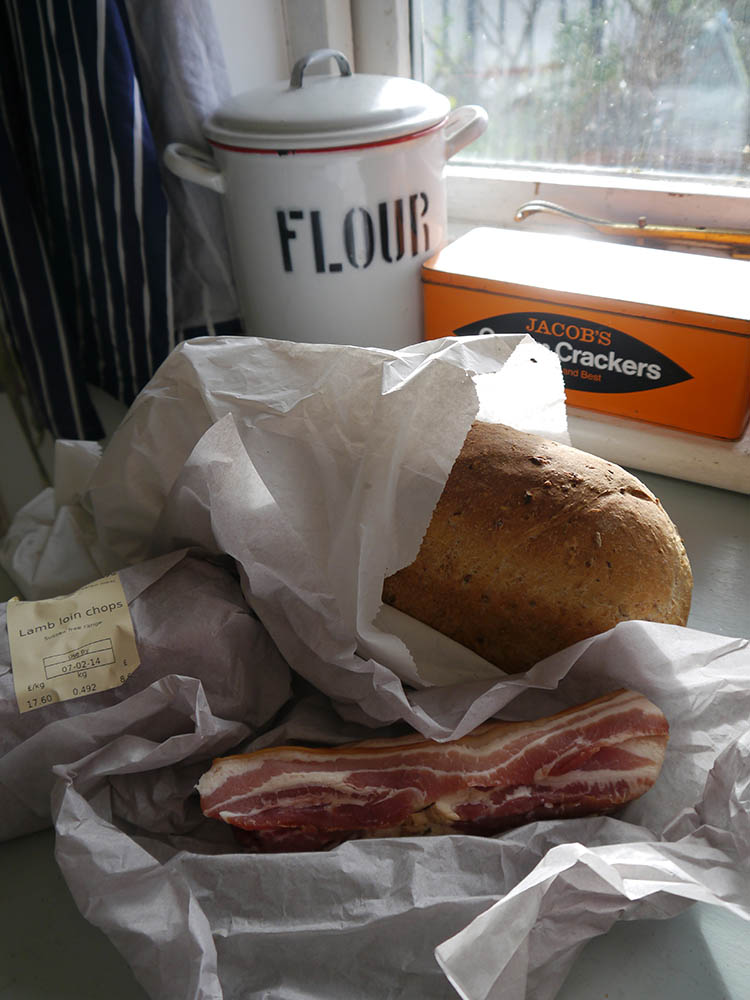
P1000264We are lucky here in Fiveways, in Brighton, to have a number of great small local shops. I can buy freshly baked bread in paper bags, and if I ask the butcher nicely, he’ll wrap the locally farmed, naturally reared meat in paper for me.

I also should mention that I have already got a large number of cloth shopping bags that I’ve collected over the years and that I always take with me when I go shopping, as well as a pull-along shopping trolley with a rather groovy black and white spots design. This greatly reduces the number of plastic bags I bring home. I’ve noticed though, that this small number of plastic bags are rather useful when used as bin liners, and for organising the recycling. I listened to a talk about fifteen years ago by a guy from Australia (sorry I’ve forgotten his name!) who believed we could live a zero waste lifestyle, but who advocated the use of a small number of plastic bags for dealing with household recycling. I rather like his way of looking at it; it greatly reduces the amount of plastic used, but makes the small amount you do use ‘guilt free’.  

While surveying for this project, I also visited a new independent supermarket just opened in Brighton called HISBE (‘how it should be’). Amongst their other fair trade and local produce, including local meat, I noticed that they also sell things like pasta, rice, nuts and other dry goods loose in a large container that you can dispense into paper bags. What a brilliant idea!

P1000297Now I feel that I’ve gathered enough data, I am starting the ANALYSIS stage. What are my resources and my limiting factors? 

RESOURCES:

Local shops where I can buy food in paper: Infinity foods and a local grocers where I can buy fresh fruit and veg in paper bags. Butcher where I can buy meat and cheese wrapped in paper. Bakery.

making kefir yoghurtI have a garden where I can grow my own salads instead of buying in locally grown salads in plastic packaging.

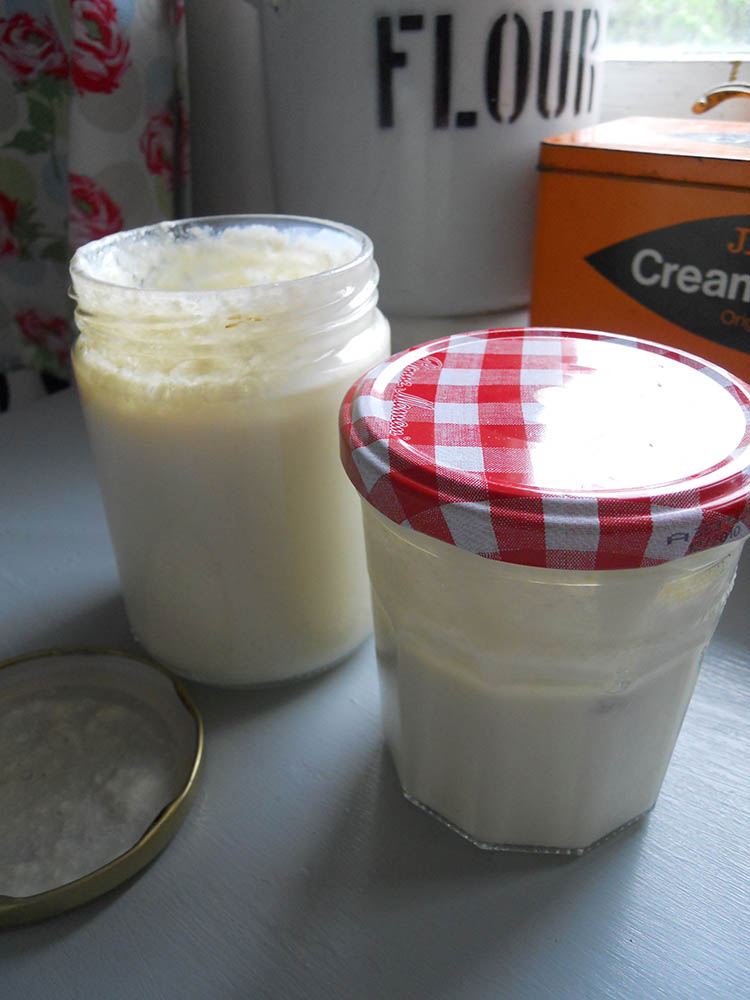
I make my own kefir yoghurt using recycled jam jars as containers, so reducing the number of plastic pots I need to buy.

I have lots of cloth bags and a trolley so I don’t need to use plastic bags when I’m shopping. I also have quite a lot of storage containers already for storing food.

We get a staff discount when shopping at Infinity Foods so it’s easier to buy things in bulk, reducing packaging.


LIMITING FACTORS:

P1000300Time and Energy. Sometimes it’s much easier to buy all I need in one place than visiting lots of small shops, especially if I have a limited amount of energy that week. I tend to buy big 2Kg plastic bags of potatoes from the supermarket because they are so hard to carry. My present shopping patterns have been shaped by my history of having limited health and energy. Being ethical takes extra effort!

Health. If I’m feeling unwell then I need to use the simplest, easiest method of bringing home food, which unfortunately means using a supermarket. I can drive there, park for free, use their shopping trolley and easily pack my shopping into my car.

Restrictive diet. I am very gluten intolerant, and I’ve found that it’s much harder to source staple gluten free goods without plastic packaging. In HISBE I noticed they were selling loose pasta, but not gluten free pasta, because I guess they don’t have enough demand for it just yet. I am restricted to what I can get from Infinity (or the ‘free from’ section at the supermarket) , and they still package all dry goods in plastic to protect the product. Infinity foods don’t seem to have found a non-plastic way of doing this yet. P1000440So how do I go plastic free if I can’t source my staple gluten free foods without plastic? Do I stop eating them for the duration of the challenge? I don’t think I can, as my health would probably suffer and this is a much higher priority.

Paper bags. By their very nature they degrade very easily. Sometimes they split when they’ve reached their weight capacity, spewing my carrots out onto the shop floor! Paper is not airtight, so it only protects your cheese for the journey home, and then it needs to be put straight into an airtight container. When I recently bought some sausages wrapped in paper, they turned it to mush within the time it took to get home and unpack the shopping. I then bought a new plastic container that I could store meat in. Oh the irony!

P1000437So I’m now working on the DESIGN stage of my project. How will I overcome my limiting factors? How can I use the resources I have for the best outcome? Will I succeed in becoming plastic free? Please join me here on my blog in a couple of weeks and find out. And if you have any tips about using less plastic yourself then please fill me in! Please leave comments below or find me on Facebook.
Ecotherapy

ECOTHERAPY

Today I managed to get outside in-between Atlantic storms and walk in the woods (through the mud!) near my house. It was a challenge to get out at all, because unfortunately this week I’ve not been feeling so well due to accidentally eating something contaminated with gluten. The first sign that something was not right was that I had a very sore stomach for 24 hours and a hot water bottle on my stomach was the only thing that relieved it. Then the malaise and flu-like aches set in along with the inevitable joint pain as my body reacted to this ‘foreign invader’ with increased inflammation. As you can image I was not happy about this; I was doing so well and was enjoying remission from Lupus.

I’ve always found that getting outdoors into nature helps improve my mood and sense of wellbeing, so I was intrigued to find out that there is research being done at the moment by MIND, which seeks to quantify this therapeutic effect. Ecotherapy is the name given to a wide range of activities that aim to improve good mental and physical wellbeing through outdoor activity in a natural environment. Studies have shown that you are likely to have higher rates of welling and lower rates of depression if you are more physically active, and being surrounded by nature can potentially improve your mood too, so the combination of both can make a significant difference to how you feel.

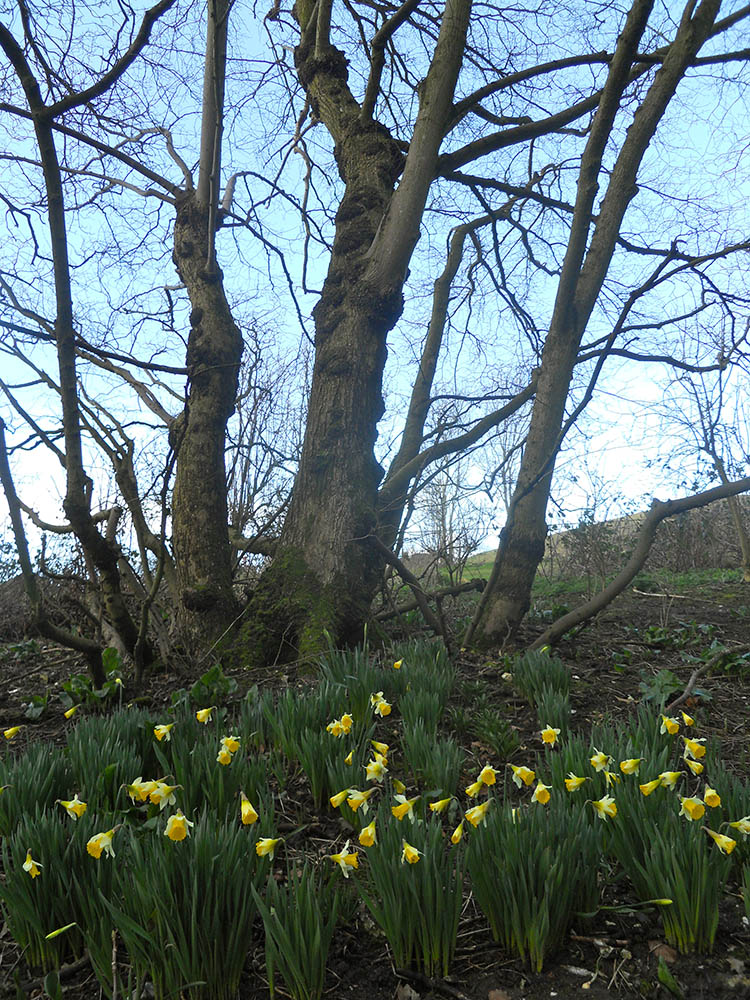
Making it out of the house today gave me a chance to exercise in a gentle way, which according to MIND helps me to use up excess stress hormones such as adrenalin. As well as this, I learned that while in the woods, my senses would have started to notice and enjoy the natural environment, which then would have sent positive messages to my nervous system which helped to calm it down. It seems to have worked! I noticed that the daffodils were out, giving me that hopeful feeling that Spring was just around the corner, and that the cycle of life just keeps on turning despite life’s ups and downs.

Many Ecotherapy programs involve working in a group outdoors, giving people the chance to meet new people and learn new skills, which enables them to feel less isolated and to build self esteem and confidence. I found out about my local Ecotherapy group called GROW, who run 8 week courses at a National Trust farm on the South Downs. They do activities such as nature walks, mindfulness and relaxation exercises, conservation work, green woodworking, and moving the sheep to new grazing sites. The University of Brighton have been working with GROW to produce a report on the benefits of Ecotherapy, and the results were announced in a report in January 2014. Before and after coming on GROW, each participant was asked to rank how they felt along a number of dimensions of wellbeing, which included things like stress reduction, sense of meaning, trust, confidence, and connection to nature. The results show a significant improvement on every dimension.

What I love so much about Ecotherapy, is that it’s beneficial to everyone, whether you have experienced mental health difficulties or not; everyone benefits from being absorbed in new situations with new people, while enjoying the beauty of nature. It can give you a welcome break from the stresses of life within a safe and supportive framework. According to MIND it also has other beneficial side effects too; it’s a clever way of introducing more exercise into peoples lives and so improves overall health, it works especially well for men who are less likely to seek help from the GP or counselling services, it also boosts healthy eating, and due to a better connection to nature people are more likely to recycle and take part in other eco activities. It’s a win-win for everyone, and the planet!

So what if you don’t feel the need to join a program but want to benefit from Ecotherapy? How can we do Ecotherapy ourselves? Here are some activities to try:

  • If you take any regular walks, plan your route to include a park or river.
  • If you live by the sea go beach combing
  • Enjoy a picnic (when the weather improves!)
  • Join a community garden or get into gardening at home
  • Go for a bike ride (cycling can improve confidence and independence)
  • Go fruit picking at a local farm or go foraging in the countryside
  • Offer to walk your neighbour’s dog
  • Join a local conservation group
  • Go camping with friends and cook on the fire

A few years ago I became really interested in natural dyes and I spend whole days in the woods, dyeing fabrics in a large pan over the fire and hanging them up in the trees to dry. I can honestly say that whose days were some of my most treasured. I felt like my whole being went into a new healing space, and my nervous system slowed right down to the pace of fire and trees. Pure magic.

What other ways do you like to enjoy being outdoors? What places in nature do you go to when you are feeling blue and how does it help you? What are the barriers that prevent you from spending time relaxing outdoors? Can you design a way to overcome these barriers?

As always I look forward to your comments here and on Facebook.


Incredible edible front gardens!

INCREDIBLE EDIBLE FRONT GARDENS!

The most valuable lesson that my permaculture diploma taught me was that by applying permaculture design to anything in my life, I could measurably improve it and increase the ‘yield’ I got out of it. I learned that permaculture works. I would never have completed my diploma if I hadn’t learned this because I’d just been dealt a massive limiting factor; a diagnosis of Lupus. Permaculture taught me how to break things down into manageable steps and use my natural patterns of energy to get things done.
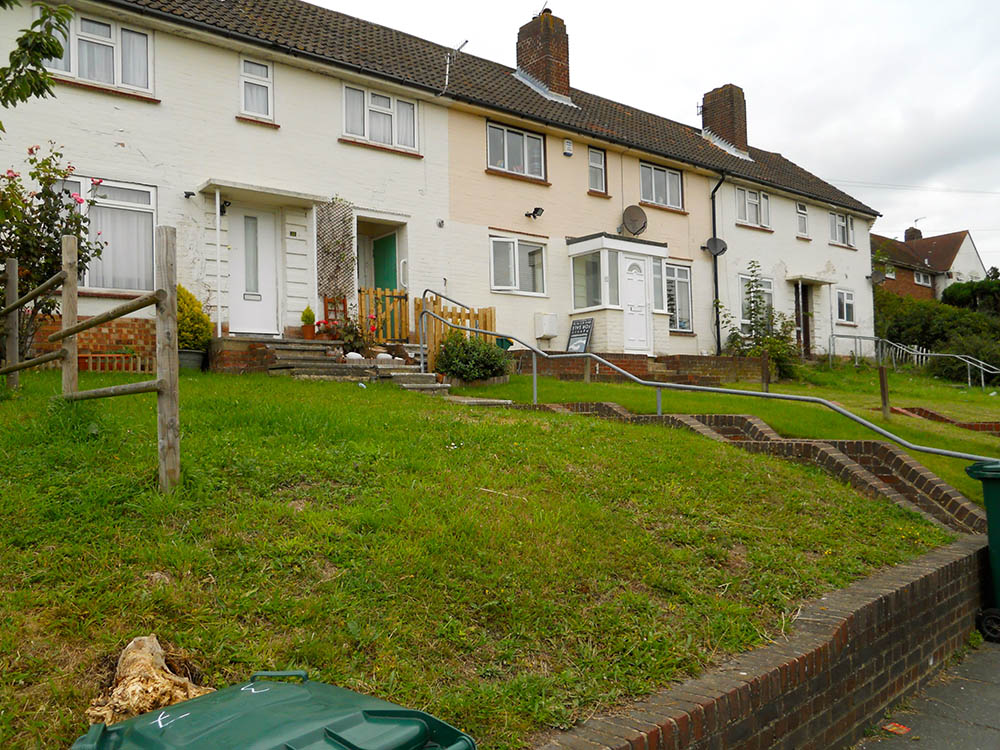
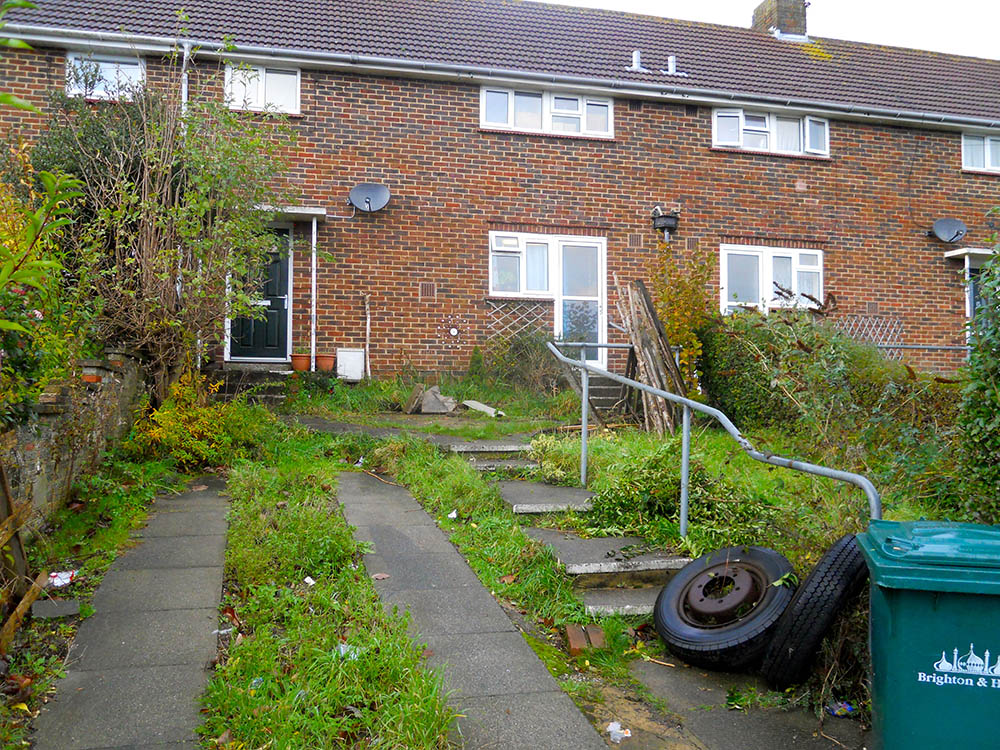
So my 10 designs included applying permaculture to all areas of my life; my health and wellbeing, how I organised my house, how I grew food in my garden, and increasing sustainability in my housing co-op. I needed just one more design to complete my diploma, and finally the inspiration came as I was on the bus home one day. Our bus route takes us through our local council estate in Hollingdean, Brighton, and as I stared out the window I observed how many large front gardens people had, all very under-used with mostly just grass growing there. I’d also been noticing a lot of coverage in the media about how people were feeling the financial squeeze with all the benefit cuts, many having to make very difficult choices between eating OR putting the heating on. One particular article about child food poverty really struck me; how could children in a developed country like the UK be going without food?? This is insane!

I really wanted to do something to address these issues, so as I let my imagination wonder from the bus window I had a vision; could I help increase access to affordable healthy food, by encouraging a new culture of food growing in front gardens and green spaces throughout the estate? I had my doubts due to my health being so limiting; could I really take on such a big project on a community scale? I decided to put my doubts aside and go ahead and design a pathway to make this happen, using permaculture tools and principles to help me.

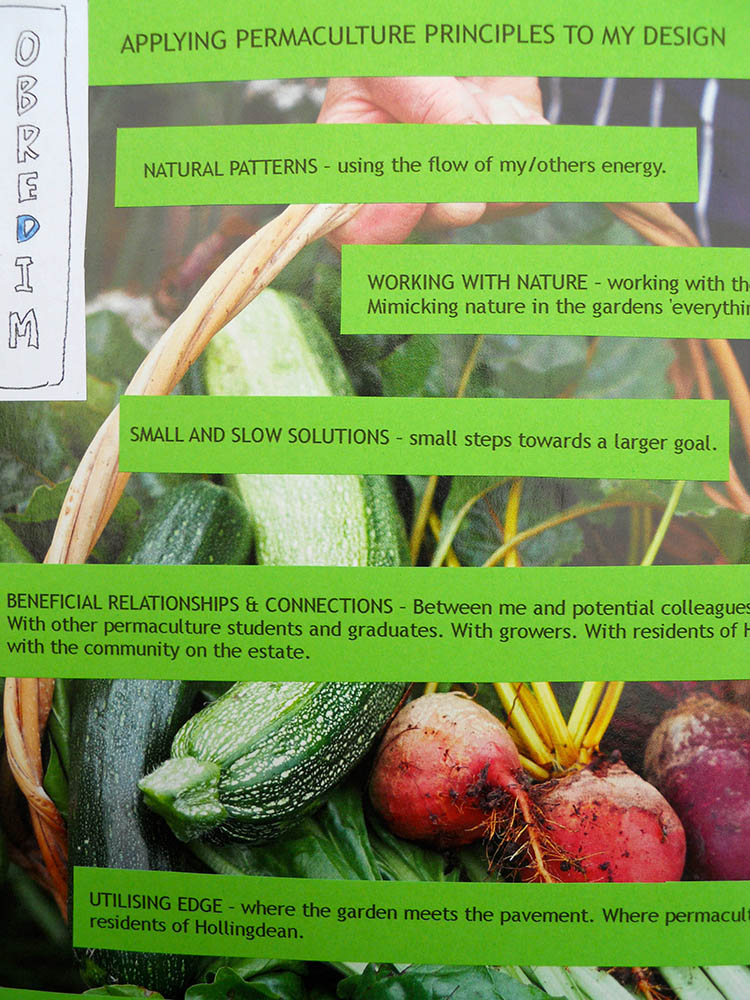
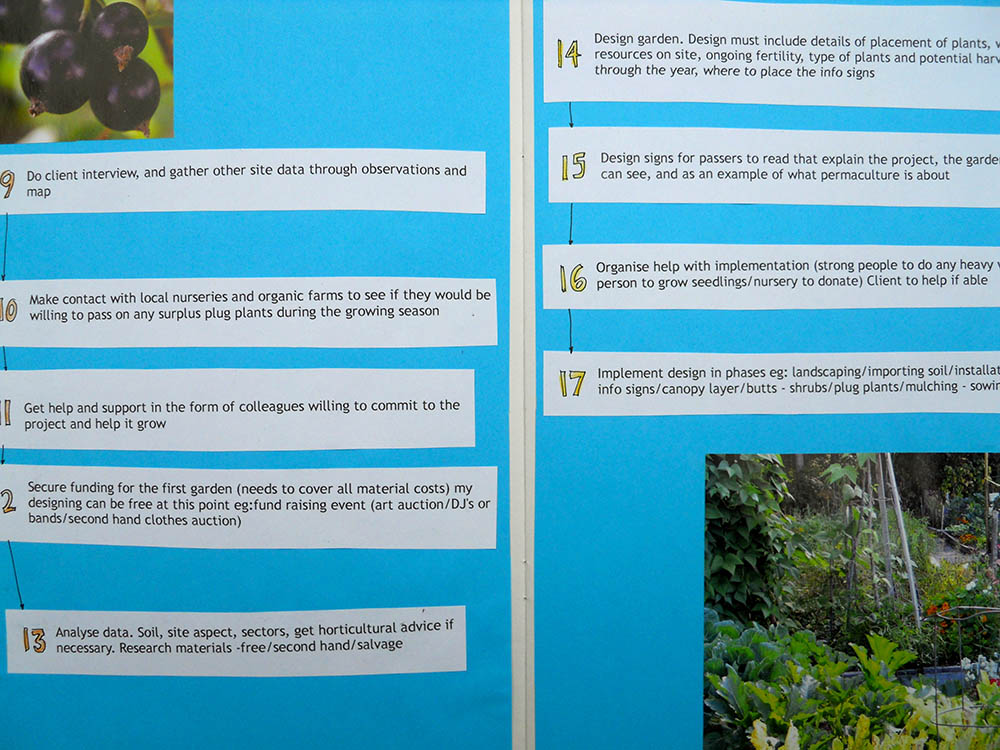
Using the principle of designing from patterns to detail, I designed a simple step by step flow-chart to help me plot my way to setting up the project, now called Real Food Hollingdean. This had the magic effect of helping me to not see the whole project as a huge and overwhelming impossible mountain to climb. Instead I could just focus on each small step. I also designed in some allies to help me achieve my goal, asking for help from a good friend who was always on the end of the phone to offer moral support and advice, and who came with me to deliver our leaflets in our target area along the main bus route. I also invited Brighton Permaculture Trust (BPT) to be our project Partner, which really helped to add weight to our cause and to attract funding. Three members of BPT are now part of our management committee and one is also our project co-ordinator, and with their help and expertise of working on a community level, the project has leapt forward.

We had two households respond to our small leaflet drop in our target area. We interviewed them both, and decided which one would best suit our aims. The household we chose was a single mother, who showed a keen interest in learning about permaculture and growing food in her front garden, and who was comfortable with other people coming to the garden to learn too.

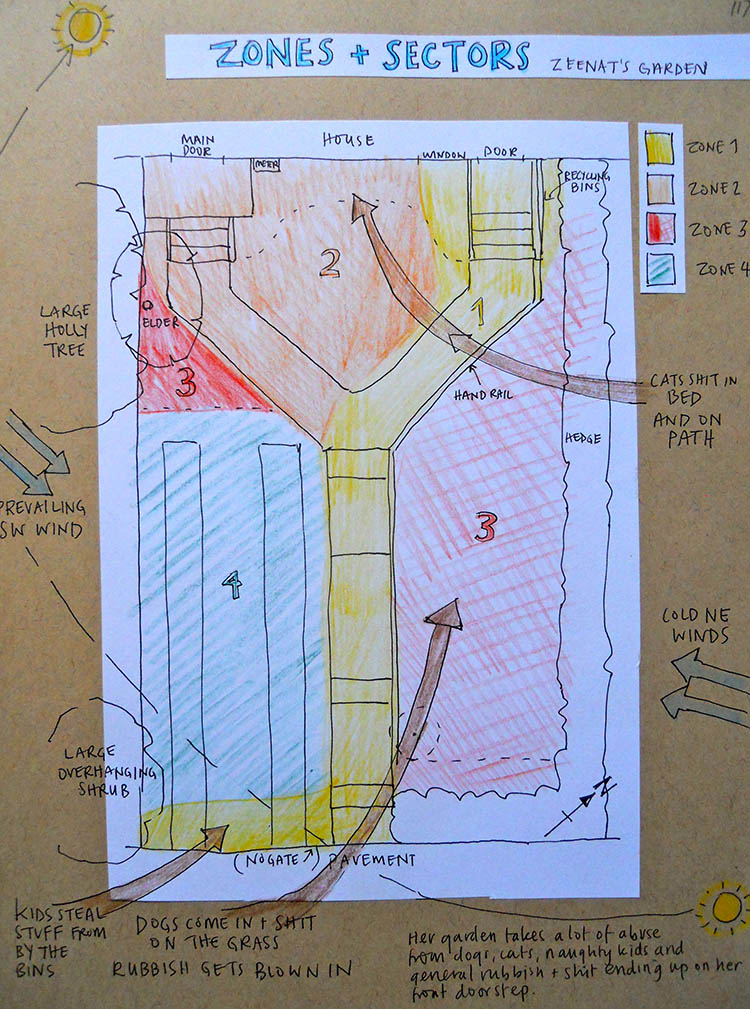
We then spent some time working together. We went through the various stages of permaculture design together, starting with the SURVEY stage; observing the garden and recording these in the form of photos and a base map. At the ANALYSIS stage we looked at the observations and mapped out what we’d noticed. We looked at zoning (noticing which parts of the garden got the most attention), sectors (the things that influence the garden front the outside) and we looked at resources and limiting factors. We also used the tool ‘plus/minus/interesting’, where we created a mind-map of the things we’d noticed, to help us address these in the design process. Many of our sessions were recorded on film by an interested person who wanted to learn more about permaculture, and these little films may even turn up on Youtube in future!

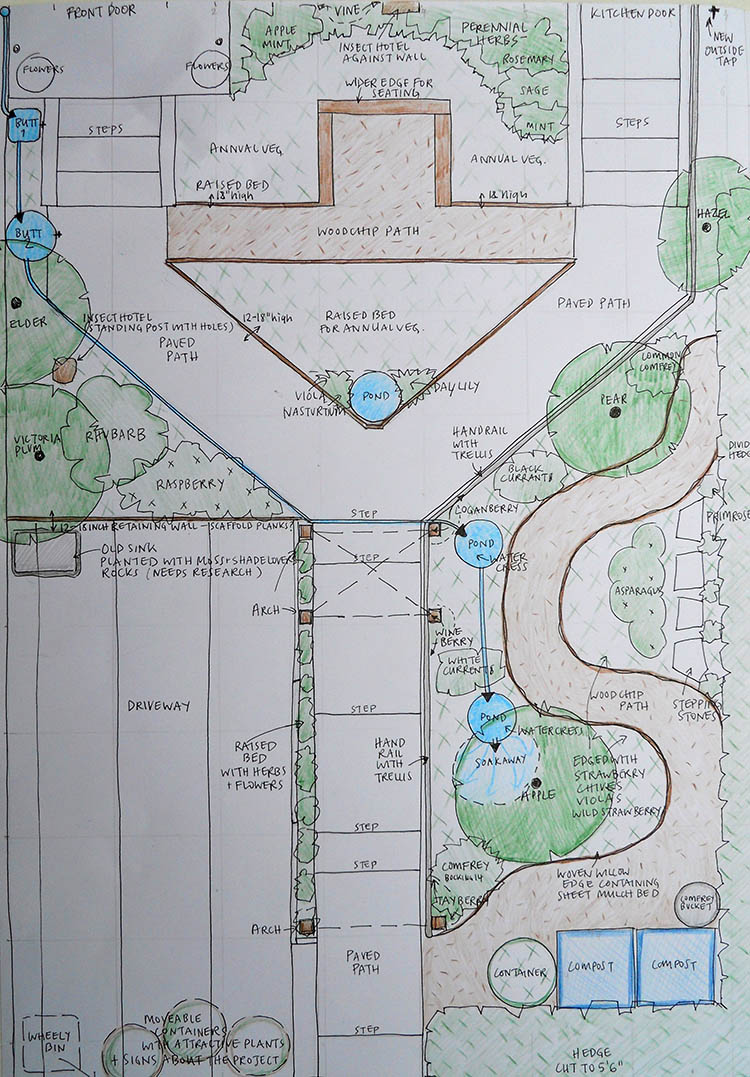
At the DESIGN stage, I tried to create a design that would work for the household, and us as a project. The garden includes a perennial food forest in the zone that receives less attention, and raised beds near the doors for annual veg and herbs where they’d receive more attention. This design will hopefully be giving the household some fresh food all year round, including apples, pears, asparagus, rhubarb and lots of different soft fruits, as well as providing a varied and interesting array of plants for people to come and learn about.

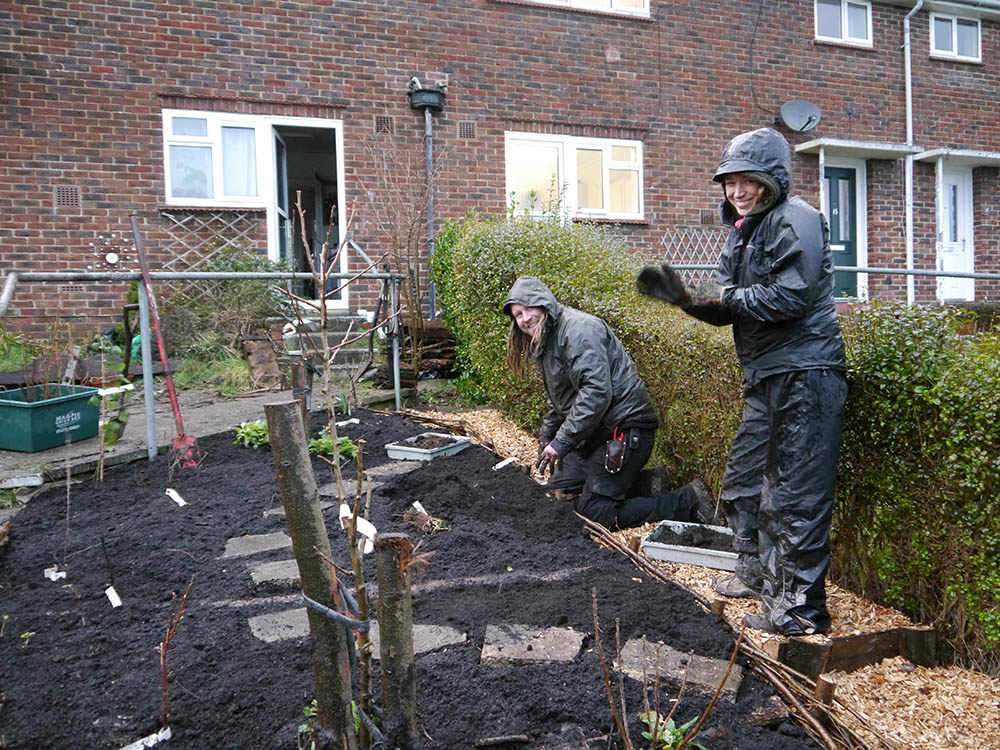
Excitingly, we are now at the IMPLEMENTATION stage! We’ve had our launch, a successful event at the local community centre where I spoke about the history of the project, and our co-ordinator, Stephan Gehrels presented the garden design. Lots of people signed up to be volunteers and we had our first gardening session last Saturday. We were very fortunate that our volunteers were hardy souls who were not afraid of a few torrential hail storms!

We are now planning the next phase of gardening days and looking forward to seeing all the fruit trees and perennial plants that we planted coming to life in the Spring. We hope that all the passers by who saw what we are doing and stopped for a chat will also want to be part of this exciting project – perhaps it’s just the beginning for an incredible edible landscape in Hollingdean?!

So here I am, despite the odds against me I’ve achieved my goal of making a difference in my local community, using permaculture design to help me. So, if you are feeling overwhelmed by all the world’s problems, and want to find a way of making your own patch of the planet a little better, I would encourage you to have a look at permaculture design courses in your local area and go for it! It’s the best decision I ever made.


Follow

Get every new post on this blog delivered to your Inbox.

Join other followers: