RECORDING OBSERVATIONS
 Permaculture is a design system that is born out of observations. When we spend time carefully observing how Nature’s systems are resilient to change, are diverse, and are self-cycling and self-perpetuating, we can attempt to apply these same concepts to our own lives. The first stage of any good permaculture design involves the SURVEY stage, which for land based designs is ideally a year or more. This is also true when designing for human systems, such as our own health and wellbeing. We first need to record our observations about our own natural patterns over a period of time, so that we can refer back to this data, to analyse it and draw out ideas for our design. In an article I wrote for Permaculture Magazine I talk about how I created a design for my own health and resilience using the data I recorded. You can see the article here.
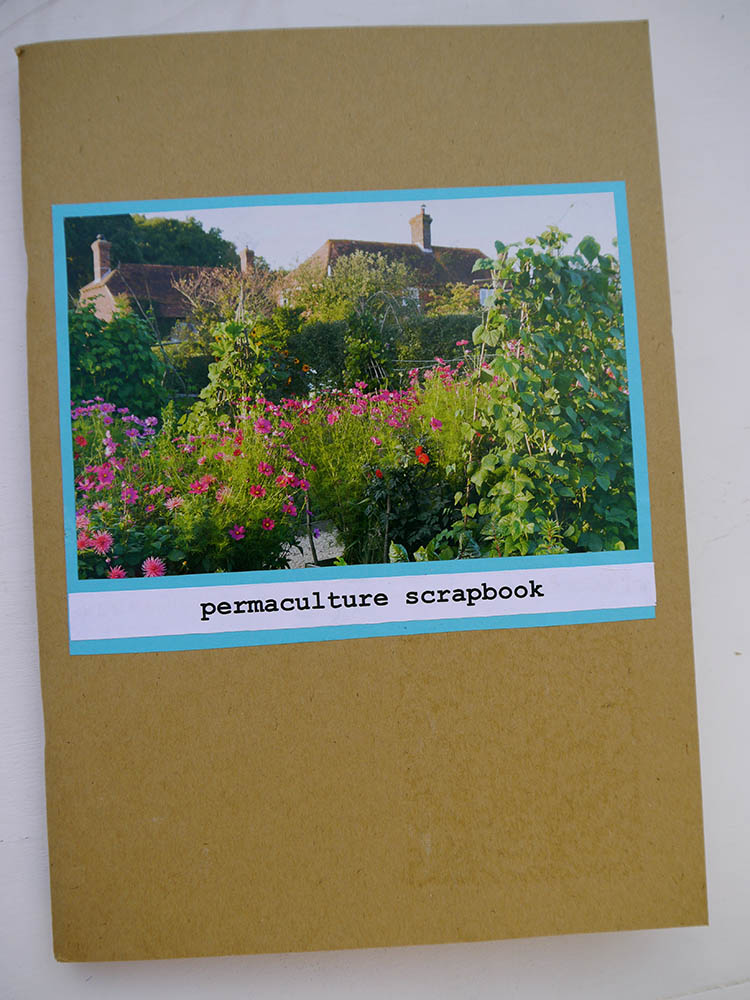 I like to record information I’ve observed about the world around me, in the form of a permaculture scrapbook. My scrapbook is a place to gather interesting newspaper and magazine articles, my notes from training courses, photos, thoughts and observations about projects I’ve visited, and my own permaculture design processes.
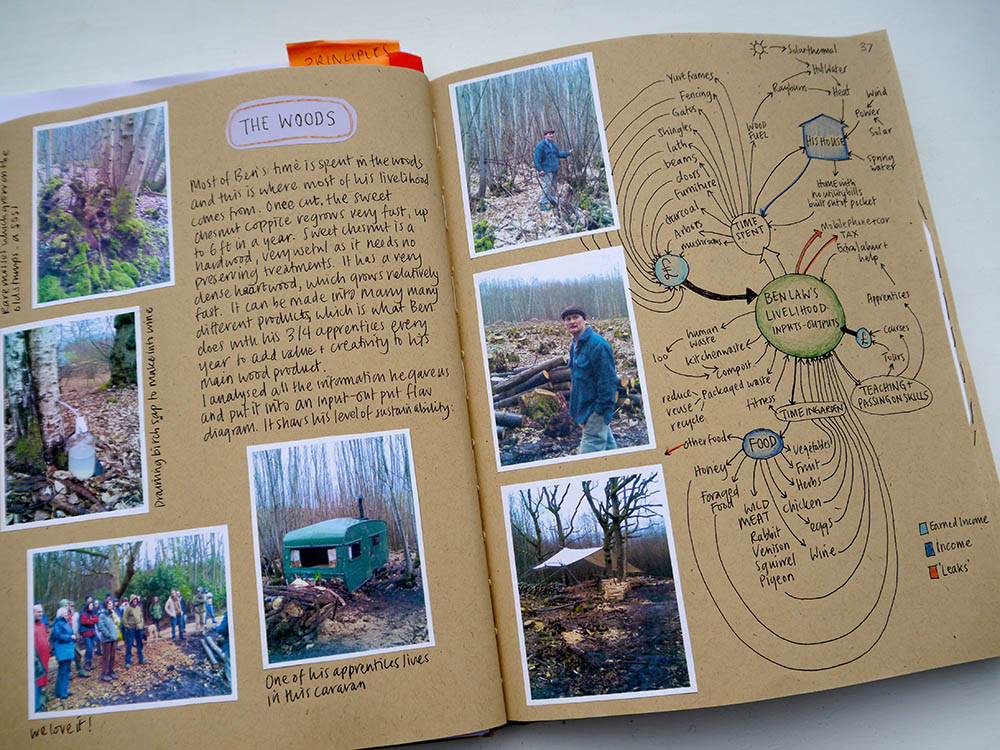
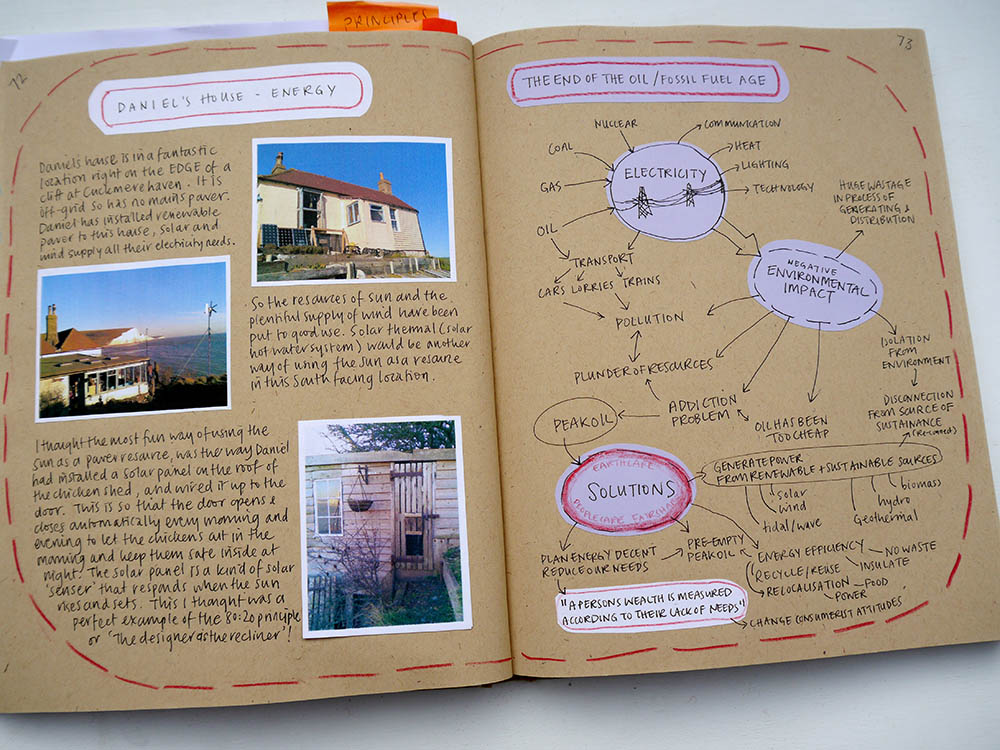
I’m a very visual thinker and learner, so I record my scrapbook data in the form of colourful mind maps, drawings, photos and collages. This also makes it easier to refer back to, as the data is easy to find without having to trawl back through lots of long tracts of text.
 I first started working this way when I did my permaculture design certificate at Brighton Permaculture Trust back in 2008. In order to be accredited with the Open College Network for this 72 hour course (spread over 4 months) we needed to create a portfolio. I initially decided that I wanted to do the course for fun, and not worry about creating a portfolio, and instead I started keeping a scrapbook where I recorded my notes and photos. Near the end of the course when I showed my course leaders the scrapbook, they insisted that this WAS a portfolio, and that I should go for accreditation; so I did, and then I went on to complete my diploma in the same way too.
 The reason I’m writing about this is because I think that to be able to observe, record and present things in an easily accessible format is an important skill to develop; it’s a way that we can make sense of the world around us, and make these observations useful. We live in such a disordered and unbalanced world that we need to find ways of making sense of it, to be able to learn from our mistakes, and to then be able to formulate new ways of being that are healthier and more life-sustaining for ourselves. This is why I find permaculture so helpful.
So you might ask ‘How do you decide how you are going to record and present the data on each scrapbook page?’. This is a good question, especially as a blank white page of paper can be very daunting to fill, and it’s the reason why I always use scrapbooks with brown pages (so much less daunting!). 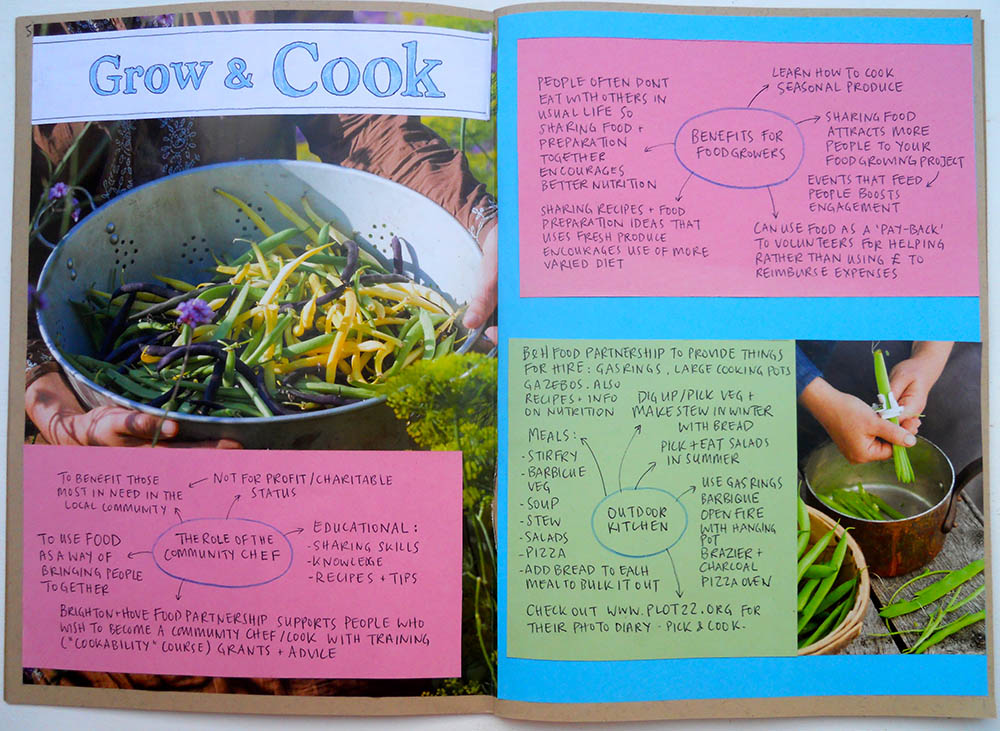 Well it depends on the data you’ve collected. If I’ve made some notes at a meeting that I want to refer back to, I’ll draw a mind-map of the main points on coloured paper, and use pictures torn out of a magazine to illustrate the theme of the notes. Obviously it helps to have a stack of old magazines, some coloured paper, scissors and a Prittstick handy to do this.
If I want to record a visit to an interesting permaculture project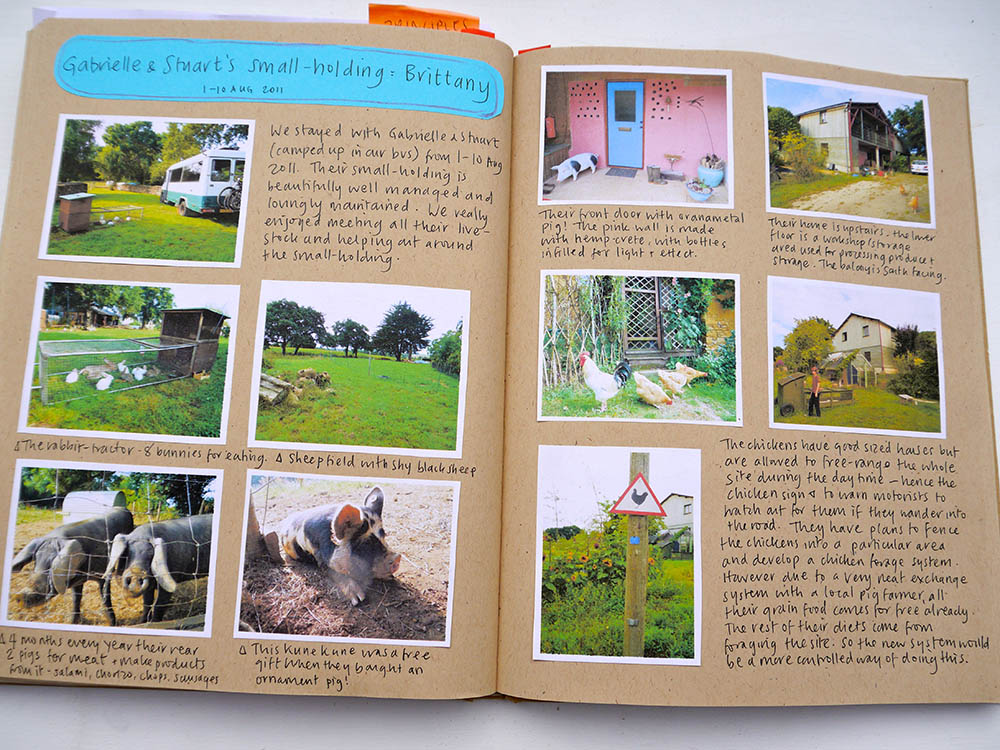 or garden, then I’ll simply print out some of the photos and stick them in, along with my thoughts, feelings and observations.
As a starting point for presenting my thought processes, I usually make my notes on a scrap piece of paper, usually in the format of a mind map, using permaculture tools (such as the ones I mention in old blog called PERMACULTURE DESIGN here). 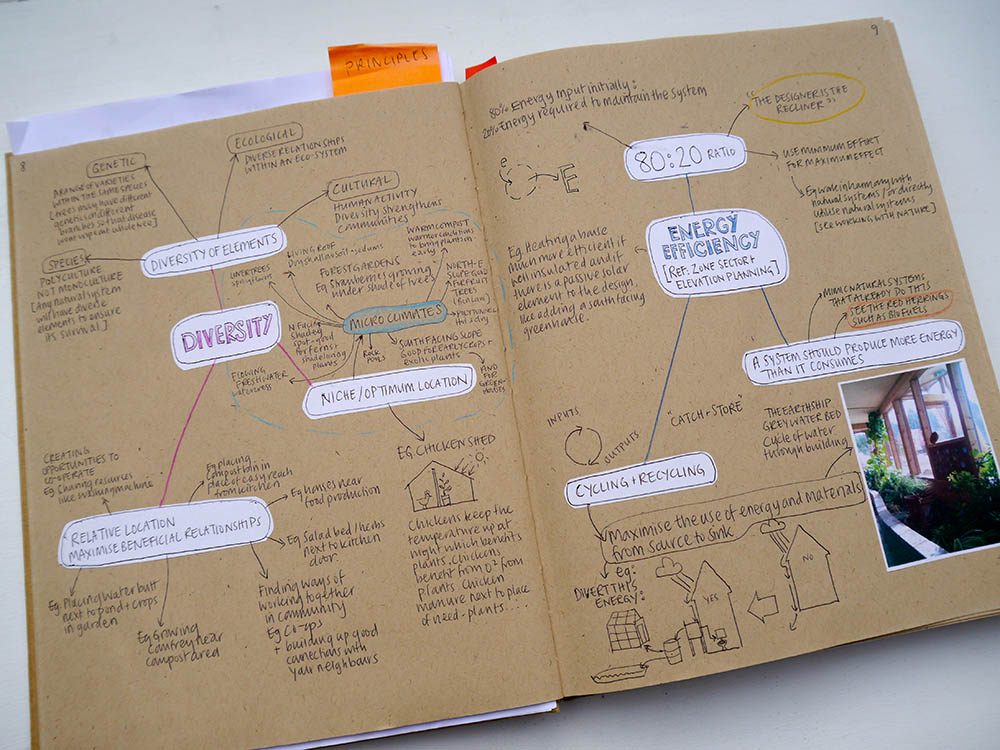 Then I draw out the mind map neatly on the scrapbook page, adding colour with pencils or coloured paper. This way, it’s very easy to refer back to and quick to retrieve information.
Here is one of my most recently created pages in my scrapbook. It’s a collage which includes an article from The Guardian about how ‘going back to nature’ provides the best solution to the problems of flooding (you can read the article online here). 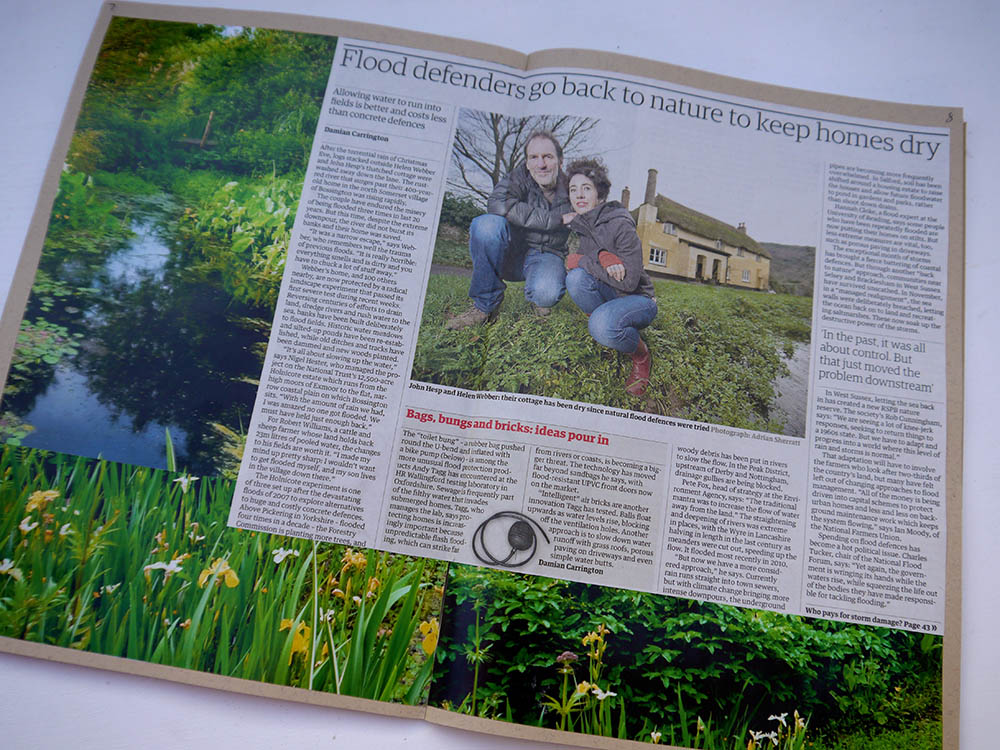 It’s a very interesting article because it shows how many problems occur when you don’t really spend time observing a system before imposing changes to it. River valleys are supposed to flood; it’s what they are designed to do. It is the nature of water sheds to catch rainfall and to allow it spend as much time as possible on land before meeting the sea, seeping into tree roots, filling ponds, flooding water meadows and flirting with flood plains as it meanders gently around wide river valleys. There’s nothing that water likes to do more, than hang around on land, while gradually making it’s way downhill towards the coast. But there has been a proliferating mindset over recent centuries, that nature needs to be contained and controlled, and so efforts were focussed on getting rid of the water as quickly as possible, through draining land, dredging rivers, and rushing the water towards the sea.
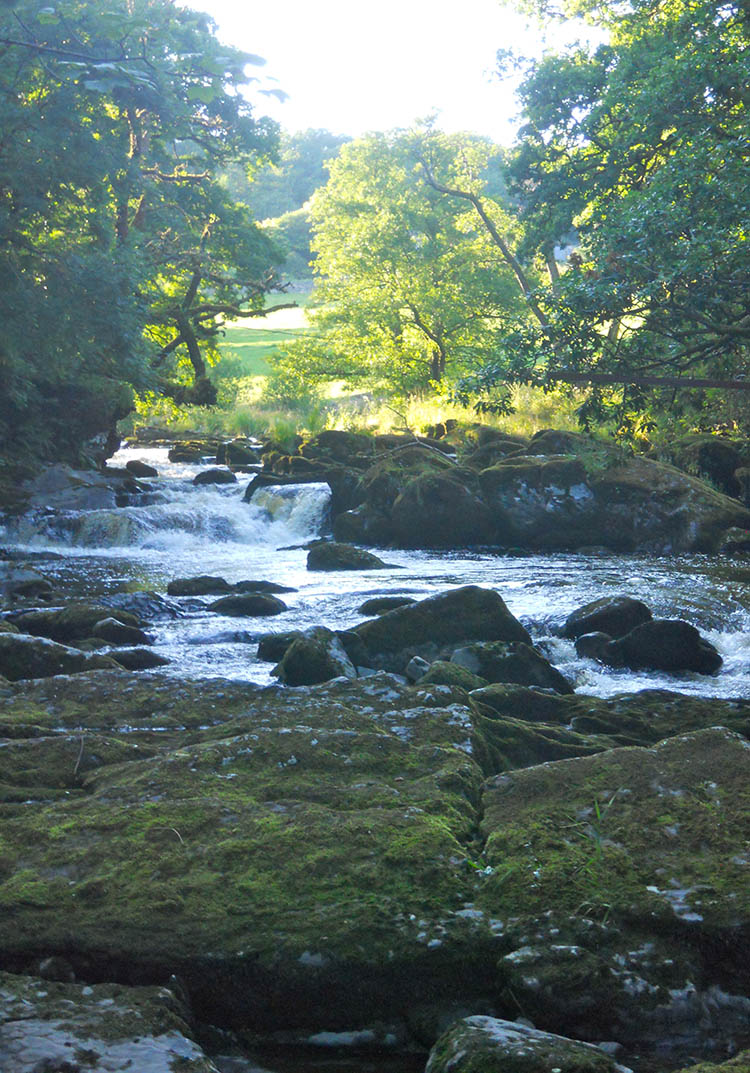 Unfortunately, this mindset has caused more floods than it’s prevented, particularly now with extreme weather becoming more frequent, with many towns downstream regularly becoming victims of the excess water pouring so quickly of the surrounding hills.
Thankfully, through observations of natural hydrology a solution has been found: banks have been built to deliberately flood fields upstream, historic water meadows and silted-up ponds have been re-established, old ditches and tracks have been dammed, and new woods planted. And as you’ll read in the article, homes were protected from flooding by this new landscape experiment during the recent weeks of extreme weather. This certainly demonstrates the power to be found in good observation of nature, and then applying the lessons learned. Sounds like permaculture to me!
How do you record your own observations? Could you use a scrapbook or use social media such as Facebook or Pinterest to collect images and information? If you have any questions or comments about this, do leave a comment on my Facebook page here.
