MY PLASTIC WASTE CHALLENGE
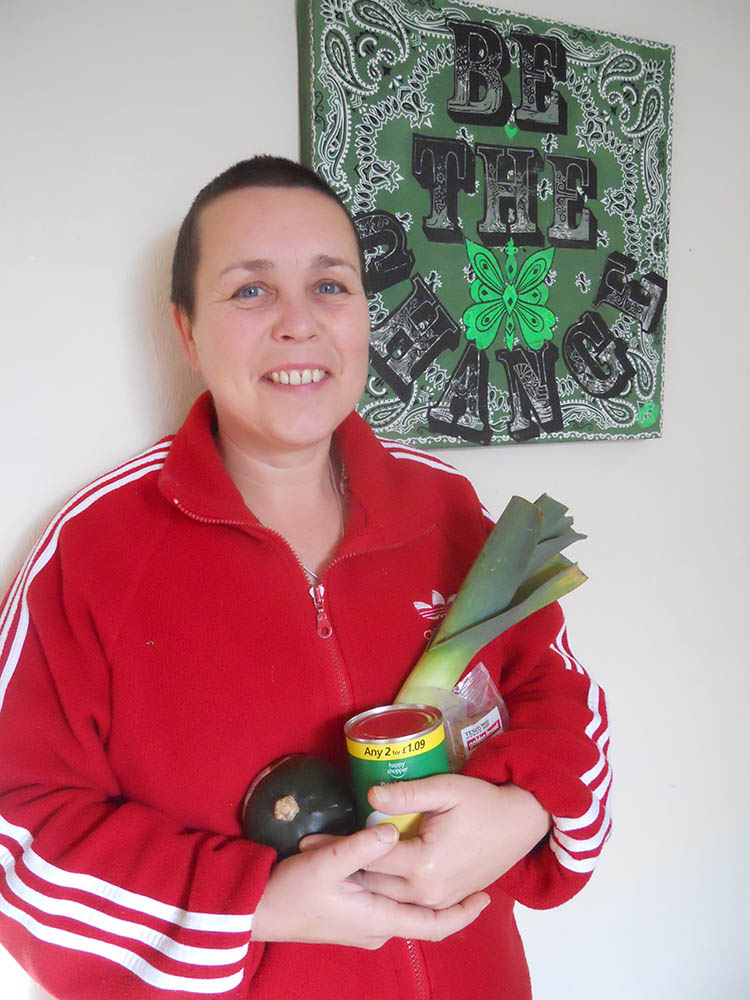 I’ve just written a new article for Permaculture Magazine about food waste, where I interview Mel Rees about her own food waste challenge: ’100 days without buying food’ (you can read the blog I wrote about her here). What inspired Mel to take on the food waste challenge was watching a locally screened film ‘The Clean Bin Project’ (you can watch the trailer here).
In January, I went along to my own community centre to watch a screening of The Clean Bin Project too, and I found it just as inspiring. It’s about a young creative couple living in Canada, who decide to embark on the challenge to create no waste for a whole year, which means that they don’t buy any new items (they even resort to making their own toothpaste!) and this means buying no food wrapped in plastic too. 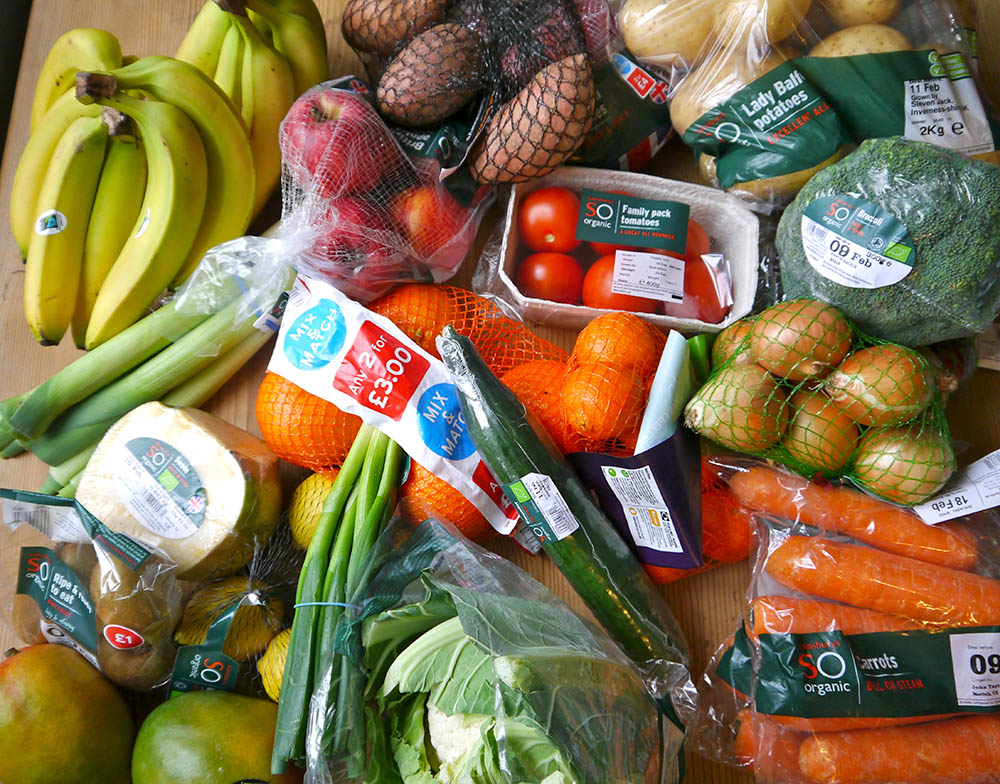 After watching the film I signed up for my own food waste challenge: ‘Buying no food wrapped in plastic for a month’. I am currently only part of the way through my challenge, but I thought I’d let you know how it’s going.
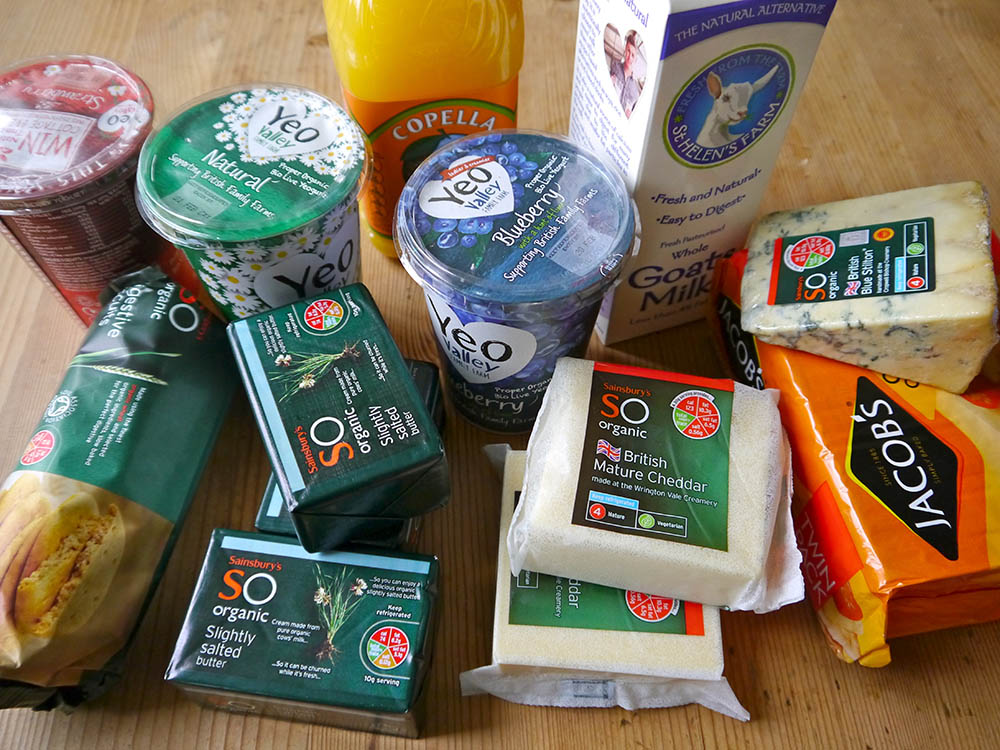
The first phase in any permaculture design as you know is SURVEY. For me this meant that I started out by recording all the food shopping that I brought home in the form of photos, and noticed the shopping patterns that I used. So what did I notice? Well, I already shop at different stores; a health food store, a local butcher, a local grocer, and a supermarket, but I thought I’d start with a typical week’s shopping at Sainsbury’s as a benchmark, because most people buy the bulk of their shopping at a supermarket. 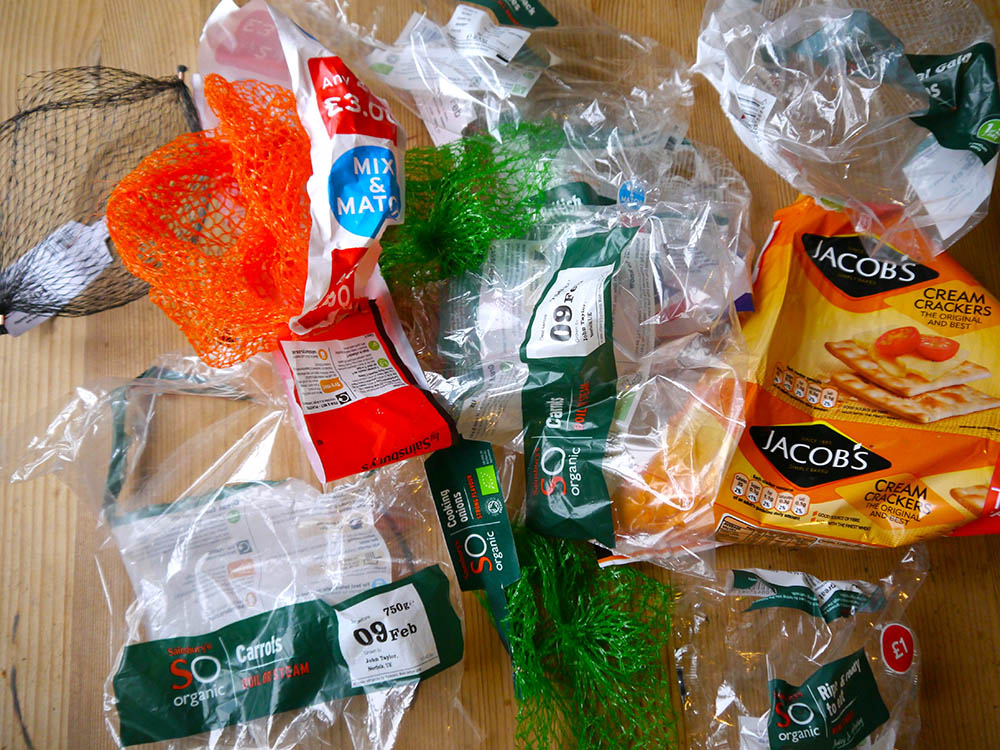 As you can see, all the fruit and veg I bought came wrapped in plastic or plastic netting, accept for the mangos and bananas that I bought loose. I tend to buy organic where I can, and this sometimes has more plastic packaging on it. Just look at all the left over packaging I had after putting my groceries away in the kitchen! I also noticed that it’s impossibly difficult to find dairy (especially cheese and yoghurt) or meat that isn’t in plastic packaging in a supermarket. The goat milk I buy comes in a tetra pack, and the butter is wrapped in a kind of foil/paper, so these are OK. The ‘fresh’ juice I chose comes in a plastic bottle and I couldn’t find any packet of biscuits that was not wrapped in plastic.
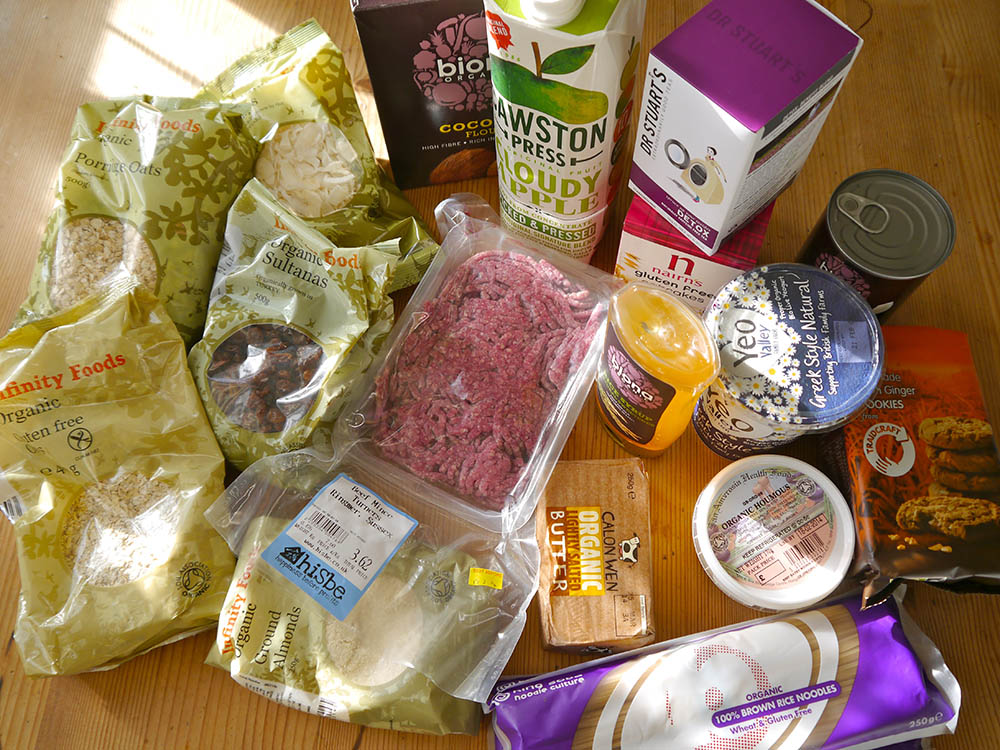
I should add here that you don’t see any rice, oats, pasta or noodles in these pictures from Sainsbury’s because I am gluten free and I source these from a health food company where my husband works; Infinity Foods. We also buy some of these items in bulk from the warehouse and store it in various containers at home, which reduces the amount of plastic used.
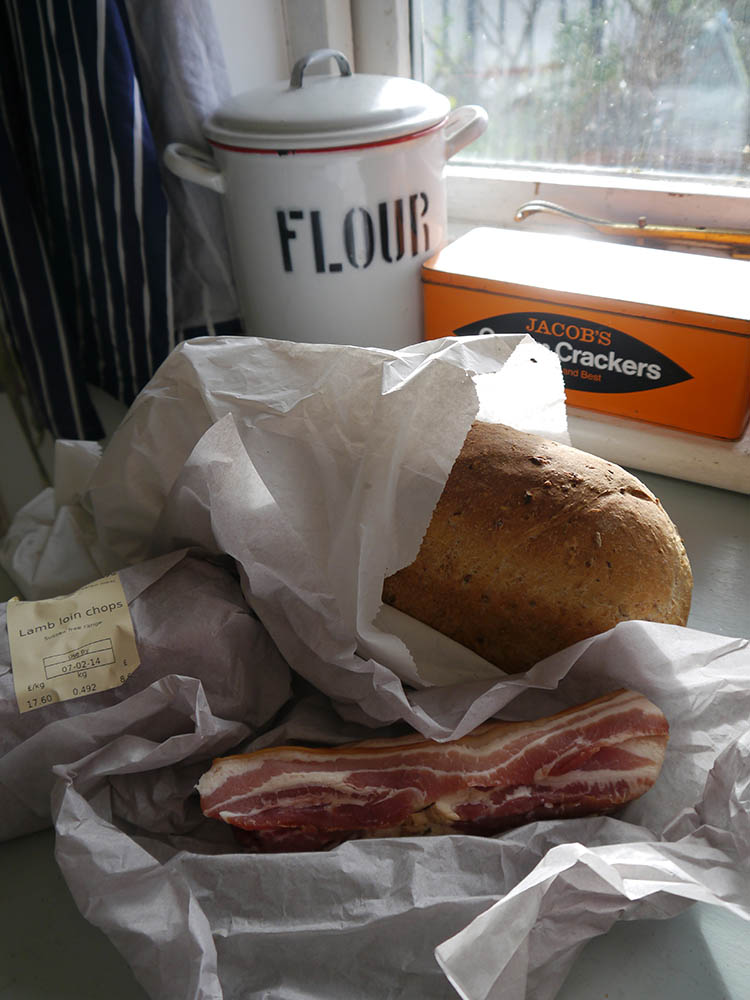 We are lucky here in Fiveways, in Brighton, to have a number of great small local shops. I can buy freshly baked bread in paper bags, and if I ask the butcher nicely, he’ll wrap the locally farmed, naturally reared meat in paper for me.
I also should mention that I have already got a large number of cloth shopping bags that I’ve collected over the years and that I always take with me when I go shopping, as well as a pull-along shopping trolley with a rather groovy black and white spots design. This greatly reduces the number of plastic bags I bring home. I’ve noticed though, that this small number of plastic bags are rather useful when used as bin liners, and for organising the recycling. I listened to a talk about fifteen years ago by a guy from Australia (sorry I’ve forgotten his name!) who believed we could live a zero waste lifestyle, but who advocated the use of a small number of plastic bags for dealing with household recycling. I rather like his way of looking at it; it greatly reduces the amount of plastic used, but makes the small amount you do use ‘guilt free’.
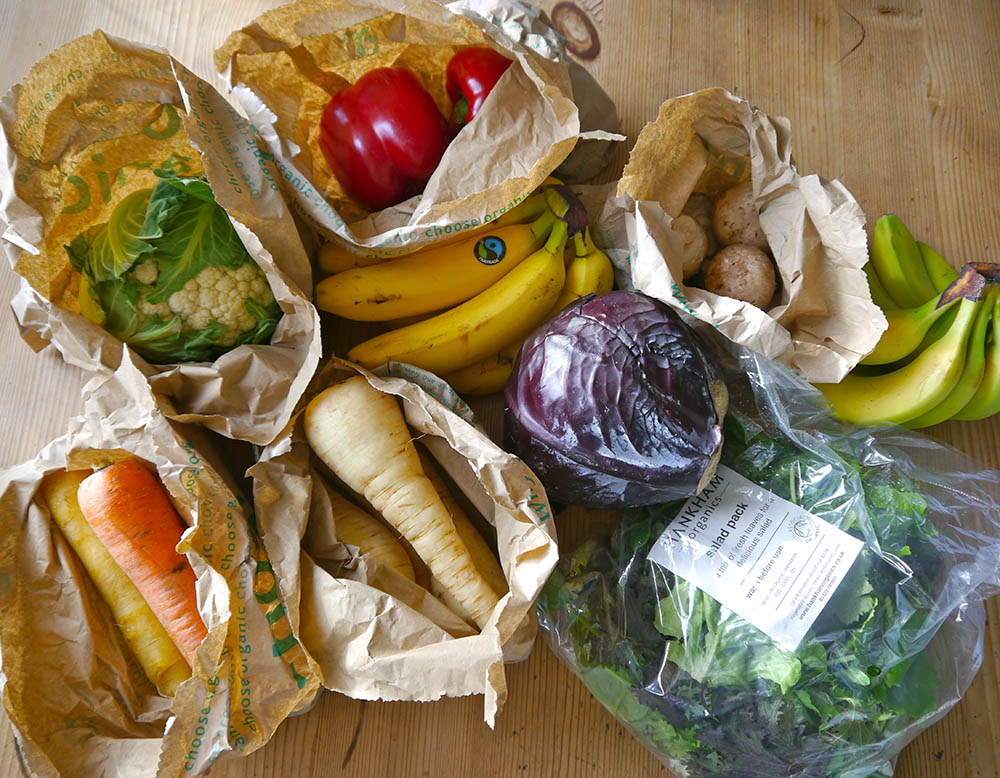
While surveying for this project, I also visited a new independent supermarket just opened in Brighton called HISBE (‘how it should be’). Amongst their other fair trade and local produce, including local meat, I noticed that they also sell things like pasta, rice, nuts and other dry goods loose in a large container that you can dispense into paper bags. What a brilliant idea!
 Now I feel that I’ve gathered enough data, I am starting the ANALYSIS stage. What are my resources and my limiting factors?
RESOURCES:
Local shops where I can buy food in paper: Infinity foods and a local grocers where I can buy fresh fruit and veg in paper bags. Butcher where I can buy meat and cheese wrapped in paper. Bakery.
 I have a garden where I can grow my own salads instead of buying in locally grown salads in plastic packaging.
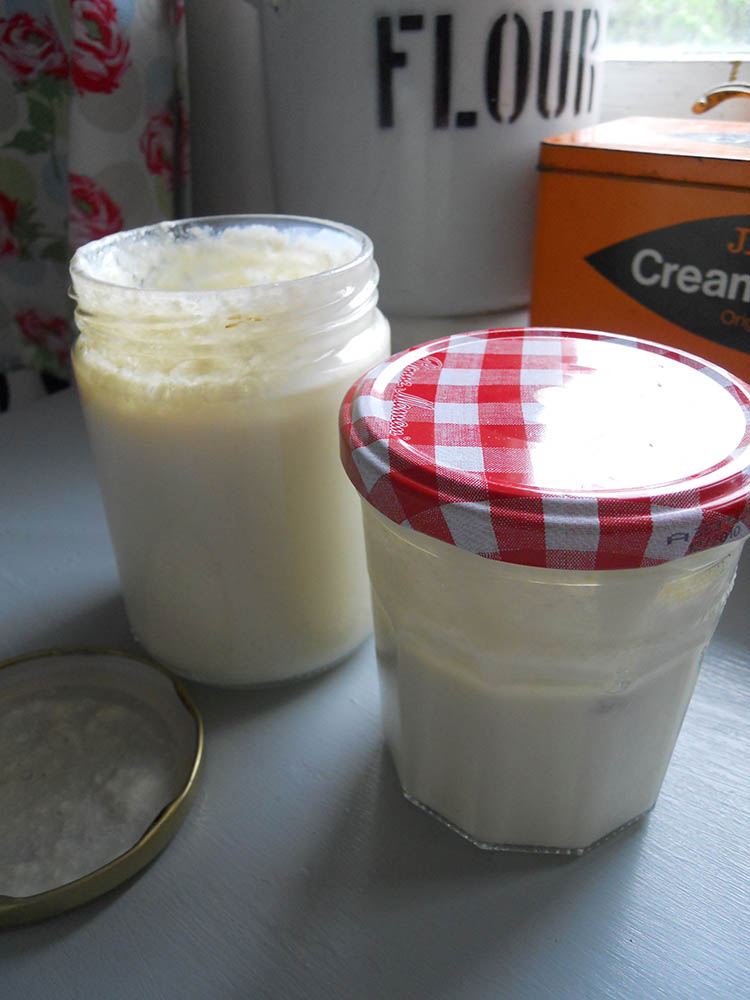
I make my own kefir yoghurt using recycled jam jars as containers, so reducing the number of plastic pots I need to buy.
I have lots of cloth bags and a trolley so I don’t need to use plastic bags when I’m shopping. I also have quite a lot of storage containers already for storing food.
We get a staff discount when shopping at Infinity Foods so it’s easier to buy things in bulk, reducing packaging.
LIMITING FACTORS:
 Time and Energy. Sometimes it’s much easier to buy all I need in one place than visiting lots of small shops, especially if I have a limited amount of energy that week. I tend to buy big 2Kg plastic bags of potatoes from the supermarket because they are so hard to carry. My present shopping patterns have been shaped by my history of having limited health and energy. Being ethical takes extra effort!
Health. If I’m feeling unwell then I need to use the simplest, easiest method of bringing home food, which unfortunately means using a supermarket. I can drive there, park for free, use their shopping trolley and easily pack my shopping into my car.
Restrictive diet. I am very gluten intolerant, and I’ve found that it’s much harder to source staple gluten free goods without plastic packaging. In HISBE I noticed they were selling loose pasta, but not gluten free pasta, because I guess they don’t have enough demand for it just yet. I am restricted to what I can get from Infinity (or the ‘free from’ section at the supermarket) , and they still package all dry goods in plastic to protect the product. Infinity foods don’t seem to have found a non-plastic way of doing this yet. 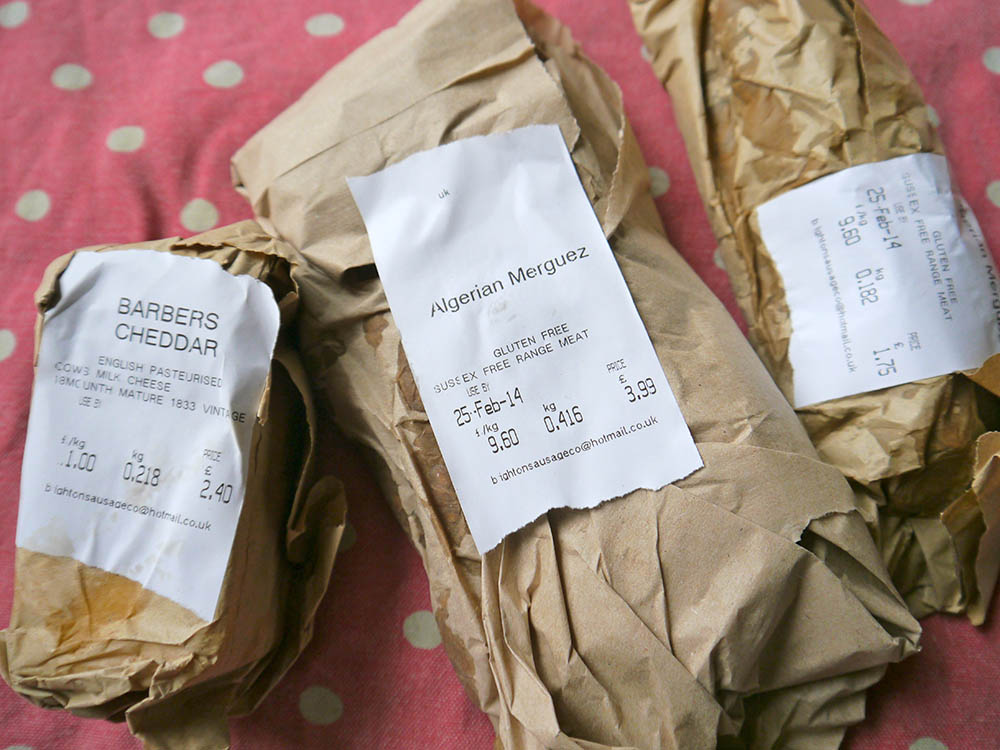 So how do I go plastic free if I can’t source my staple gluten free foods without plastic? Do I stop eating them for the duration of the challenge? I don’t think I can, as my health would probably suffer and this is a much higher priority.
Paper bags. By their very nature they degrade very easily. Sometimes they split when they’ve reached their weight capacity, spewing my carrots out onto the shop floor! Paper is not airtight, so it only protects your cheese for the journey home, and then it needs to be put straight into an airtight container. When I recently bought some sausages wrapped in paper, they turned it to mush within the time it took to get home and unpack the shopping. I then bought a new plastic container that I could store meat in. Oh the irony!
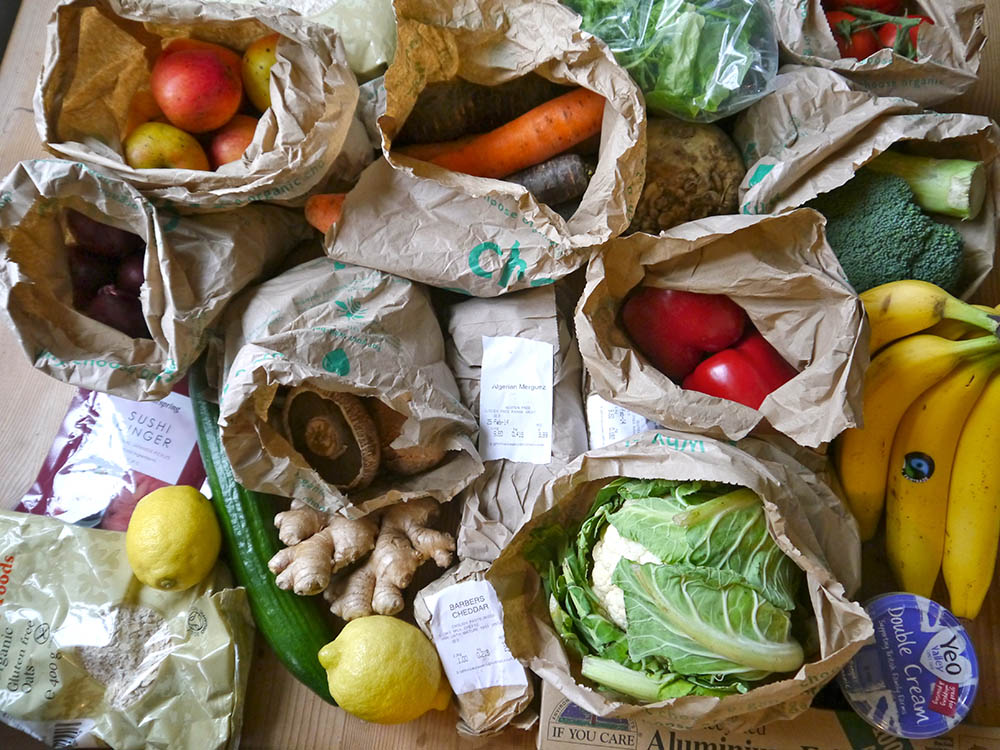 So I’m now working on the DESIGN stage of my project. How will I overcome my limiting factors? How can I use the resources I have for the best outcome? Will I succeed in becoming plastic free? Please join me here on my blog in a couple of weeks and find out. And if you have any tips about using less plastic yourself then please fill me in! Please leave comments below or find me on Facebook.
