SUCCESSION IN THE GARDEN.
It’s a good idea to develop a habit of planning ahead as a gardener. Designing a growing space is not quite the same as painting a picture, as of course Nature is constantly growing and changing and adapting to varying temperatures and light levels, so we have to change and adapt along with Her. As I’ve become a more experienced grower, I’ve become better at looking ahead into the next 2 or 3 seasons, and knowing which plants will thrive in which seasons. This way I have learned how to plan to maximise the amount of yield I can get from my space. My aim for this next full year was to start a bed of Asparagus somewhere where there were no perennial weeds…. but where?
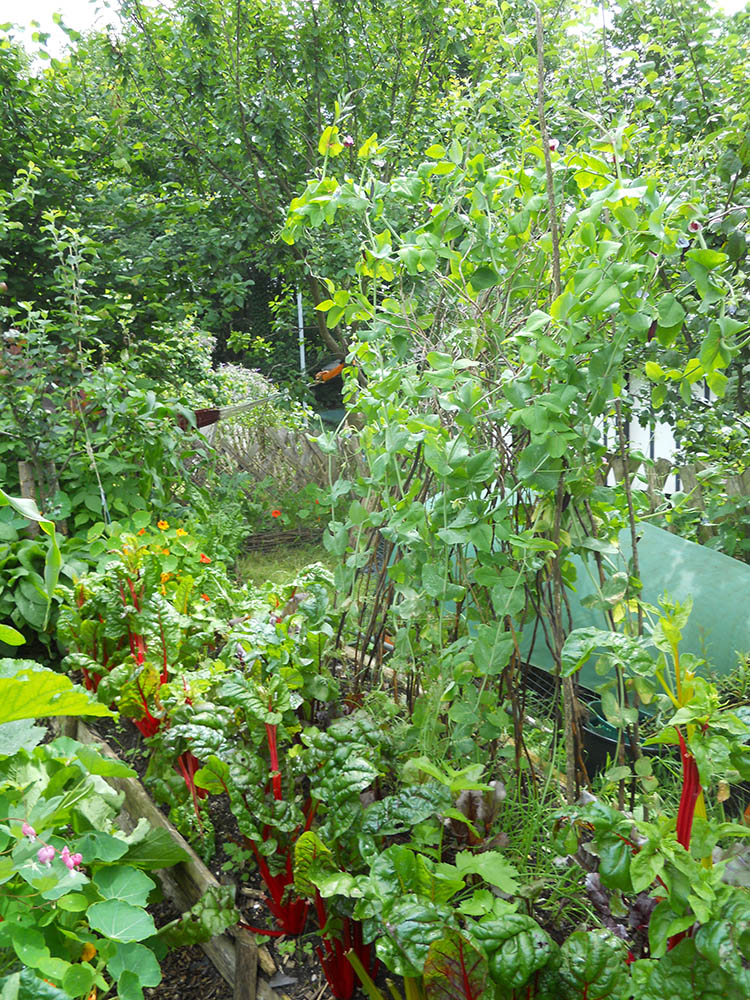
In my pottage bed near the chicken house I’ve been growing a patch of heritage variety ‘Purple Podded Peas’ this year. Peas are notoriously difficult to support, but I’ve had success with using my contorted willow cuttings from last year, tied in with a few sturdy sticks at each corner. I always sow a wide row (around 9 inches wide) and sow the peas around 5cm apart in triangular patterns so to maximise the number of plants in the row, which is around 4ft long.
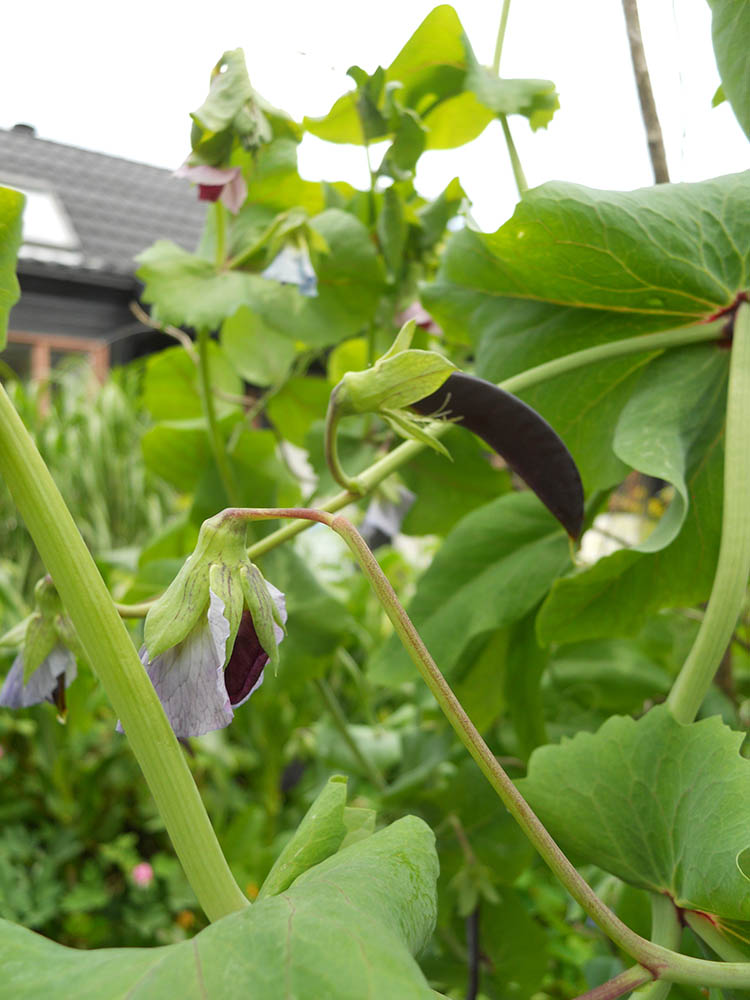
Purple Podded peas have the most beautiful purple flowers that people often mistake for sweet peas. The purple pods are harvested young and eaten as a mange tout pea which we like to eat raw in salads, or cooked in stir fries or lightly steamed with other veg. When the pods are mature, the peas can be taken out of the tough pods and eaten raw in salads, or steamed.
The peas started to look rather tired by the end of August, so I decided to pull them up and use the space to squeeze in a new crop for the Autumn and Winter. I left many of the pea roots in the ground so that their helpful nitrogen fixing properties would carry on enriching the soil, and then I added some new compost and planted a mix of salads and mustard greens. Some of the salads are going to do well in the Autumn sunshine but die off in the first frosts, and the mustards will survive the frosts and live well into next year.
When I was thinking this through, I realised that this forward planning would mean that this space would be ready to do something new with in the Spring, and it would be weed free too. So I’m planning to harvest all the salads then, give it a last dig to make sure all weeds were gone, add manure and home made compost, and then begin establishing my new Asparagus bed there.
I am really looking forward to having fresh Asparagus in my own garden! It takes 2 years to establish, but it will be worth the wait because it is an expensive crop to buy, and I do love it!
