OUR CHICKENS
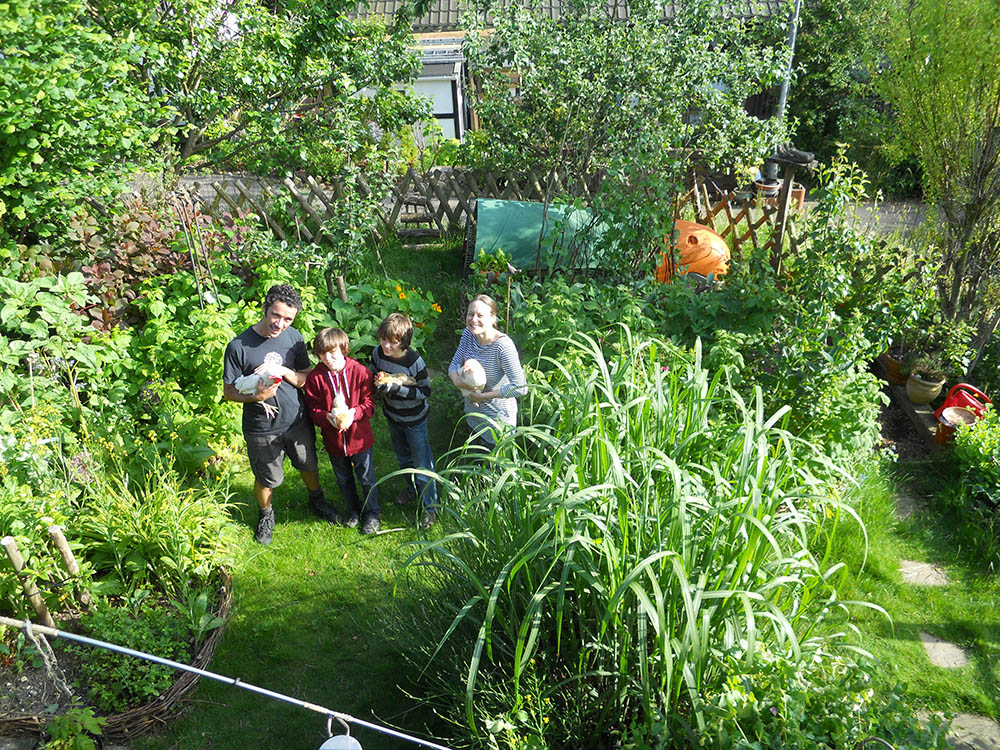 In my last blog I shared with you the article I wrote for ‘Your Chickens’ magazine, explaining how we keep two flocks of chickens in our small urban garden. I explained how we turned their natural pecking, manuring and scratching tendencies from a hindrance into a help, by creating a moveable chicken ark or ‘chickens tractor’ that we use on our vegetable beds, so that the bantam hens would add fertility and remove pests there, essentially doing the work for us.
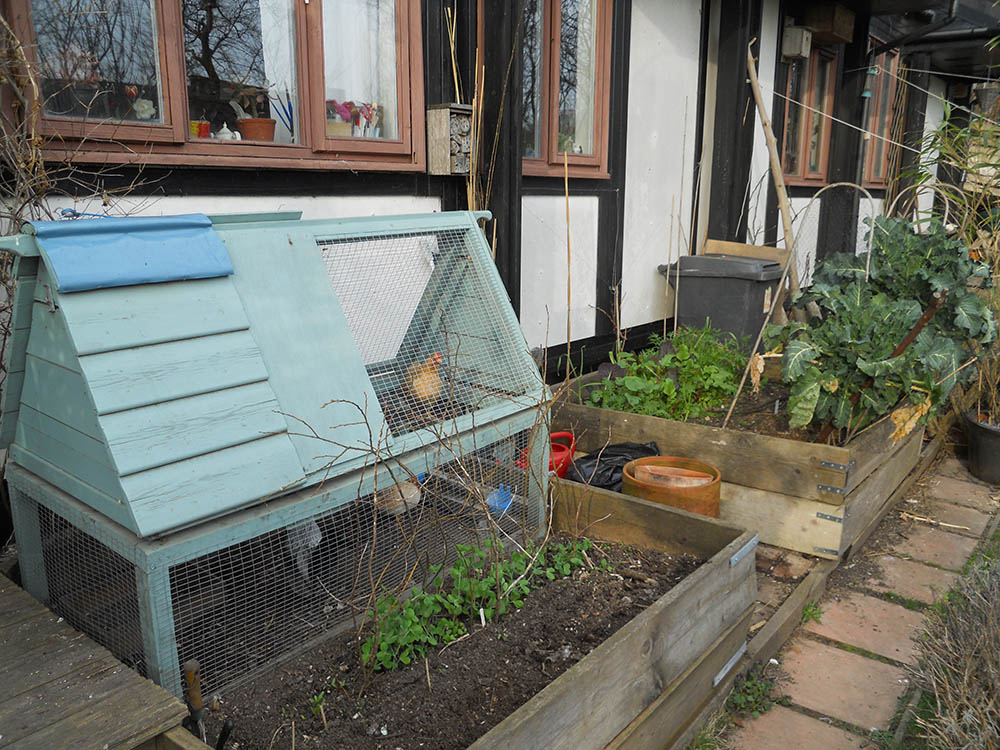 However, as time went on we realised we had hit upon a snag in our great chicken tractor design. We live in a housing co-op, 16 wooden houses nestled together on the chalk Downs on the edge of Brighton, and all of us living here have noticed an increase in the rat population over the years. Particularly worrying is their ability to invade our wooden houses, often making nests in the cavity walls, and keeping us awake at night. Obviously, rats are only attracted to live where there is a reliable food source, and with our co-op’s Green policy of increasing the number of compost bins on site and with two households keeping chickens in their gardens, there is a food source available. Believe it or not, not only do rats like to eat the chicken feed, they actually eat chicken poo too!
We noticed that the level of rat activity was much lower at the end of the garden with our larger laying hens in the Eglu. We figured that this was because even though there was more food for them there (a bigger feed container and larger, more plentiful lumps of poo!) the rats had less cover there and were more vulnerable to cats and other predators. The rat activity seemed be to be focused on the chicken ark on the raised beds near the house, where they could retreat quickly into the cavity wall of the house.
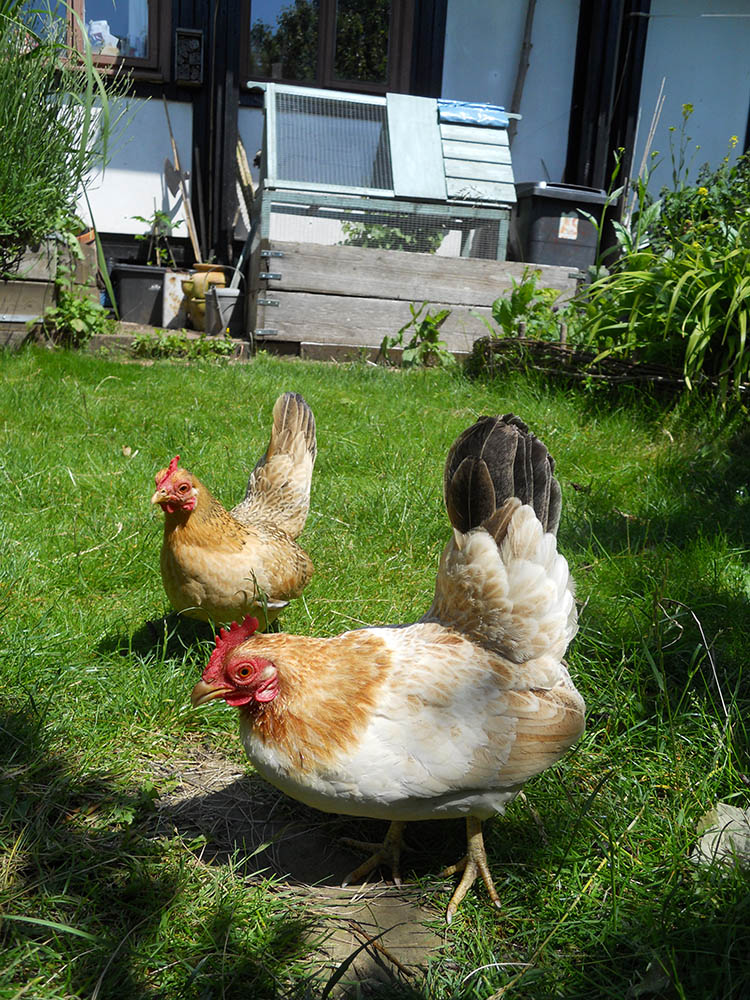 This was bad news for us on many levels. Firstly, our bantam hens are a very small breed called ‘Serama’, and originate from Malaysia where there are often kept as house pets. Rats are real threat to them due to their size, so they raise their loud alarm call whenever a rat comes near them. This was noisy to live with, and worried us that they were constantly feeling stressed out. It also worried us that if rats were getting into their ark, then they could potentially be spreading diseases, and while they were burrowing through our vegetable beds to get to their ark, they could also be contaminating our food.
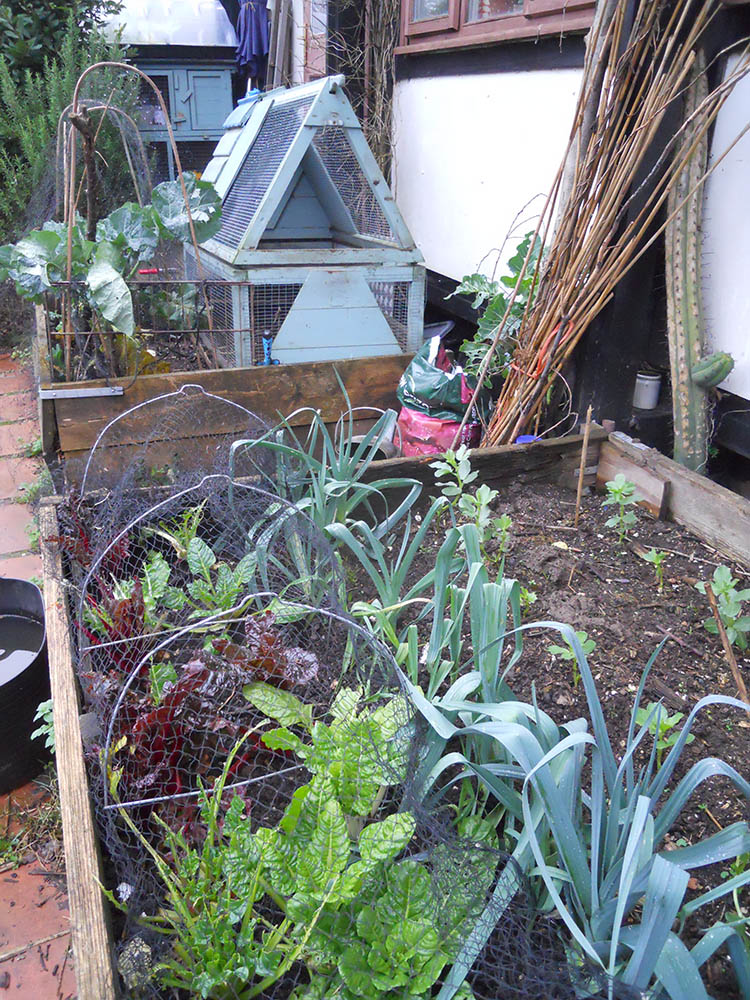 We had kept on top of the rat numbers by trapping them as much as possible, but we knew that every time we killed another rat, it would be no time at all before another stepped into replace it. It was time to make sure that we cut off the rats’ food supply at the source, and so we developed some new strategies. As a co-op, we made sure that every household had wire mesh on the bottom of the compost bin so prevent rats accessing that food source by burrowing underneath. In our garden, we keep the chicken food inside a large wheely-bin which they have not been able to access, put the food containers away at night, and fixed wire mesh to the underside of the ark so that they could no longer burrow into it.
Having wire mesh on the underside of our ‘chicken tractor’ was a big compromise because it meant that our bantams could no longer scratch the soil up and hunt for pests there, although their manure still dropped through the mesh to the soil below. We added lots of wood chip to the ark for them to scratch about in, but this left us with as less effective chicken tractor system. It seemed that the only solution would be to move the ark to the end of the garden away from the house, but where?
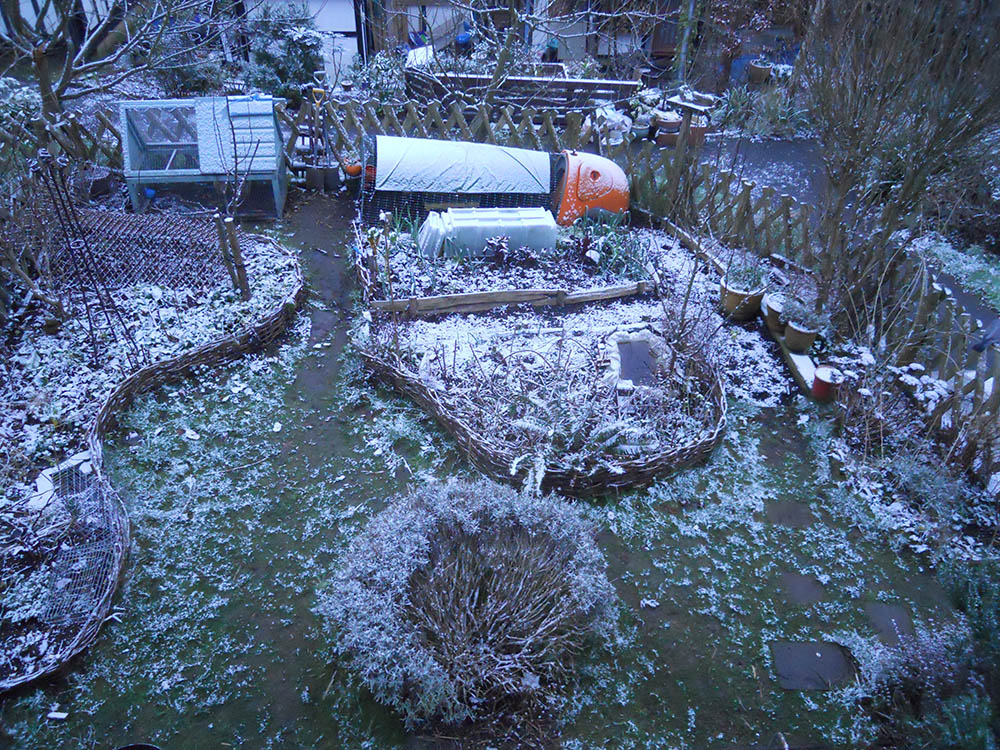 We temporarily sited the ark at the end of the garden, but quickly realised that by the time that Spring came along, this area would be needed again because this is the only part of the garden that is shady enough for me to sit in. I have a disease called Lupus which makes me very photosensitive (UV light makes the disease active and makes me ill) so I really need my shady place to sit in order to keep me healthy.
It was while I was putting the chicken feed into the ark one day that I hit upon the solution. I was standing on part of the bed (in the lefthand corner) to access the ark, and was just thinking about how shady that corner of the garden is, how things struggle to grow there with the low light levels and the slug problem from the long grass nearby. Then I realised that this was the perfect place for the ark to go, all I needed to do was to extend the bed by a foot and it would fit.
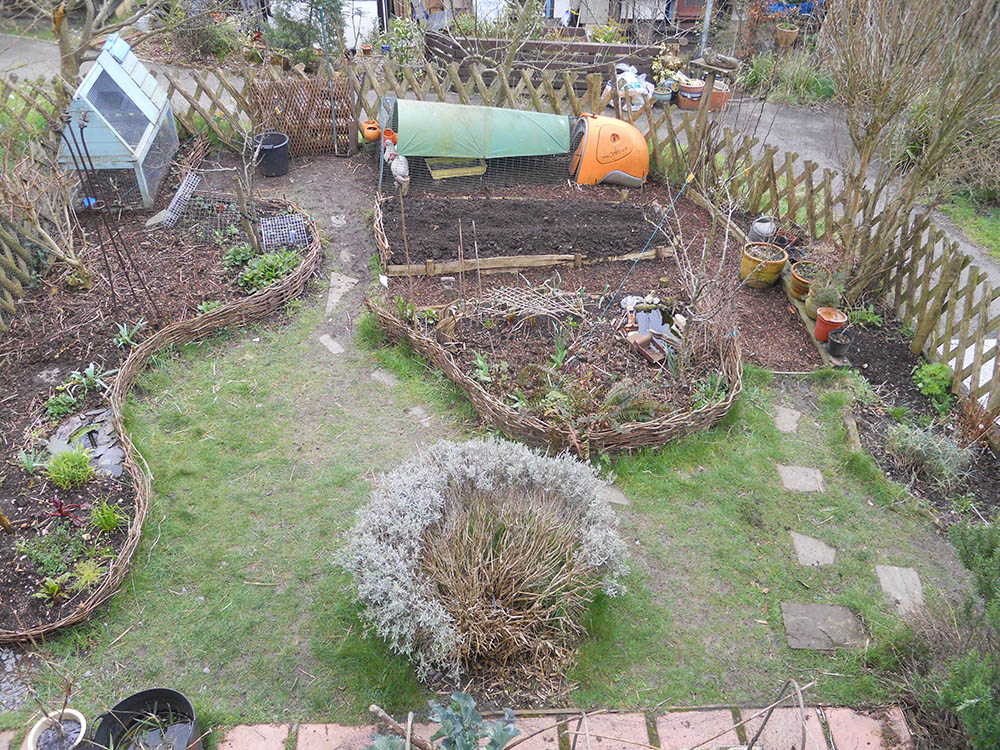 Finally the ark has a home away from the house so that the rats no longer bother us. It’s sited in a place where nothing much grows, so this frees up the rest of the sunny beds in the garden for maximum food production, and I no longer have to worry about rats digging near my veg. The mesh on the bottom of the ark prevents any rats accessing it and bothering our hens, and I’ve even managed to squeeze in a line of strawberries on the edge of the bed, the only thing that will thrive in that place, flowering before the canopy closes overhead. I still have a shady to sit where I can enjoy watching the chickens. Meanwhile our bantam hens can still free range in a controlled capacity, removing pests as they go, and our garden still benefits from the manure that gets added to our compost from both the flocks. So I think we’ve found a win:win solution.
In my next blog I will explain how the chickens helped us in the process of changing the garden around, and our plans for growing asparagus this year.
