IT’S PRUNING TIME!
The garden can look very bare at this time of mid-Winter with all the leaves gone and any remaining seed-heads well stripped by the birds. However, this means that the bare bones of the garden are open and exposed, making it easier to see what needs cutting back for the next season.
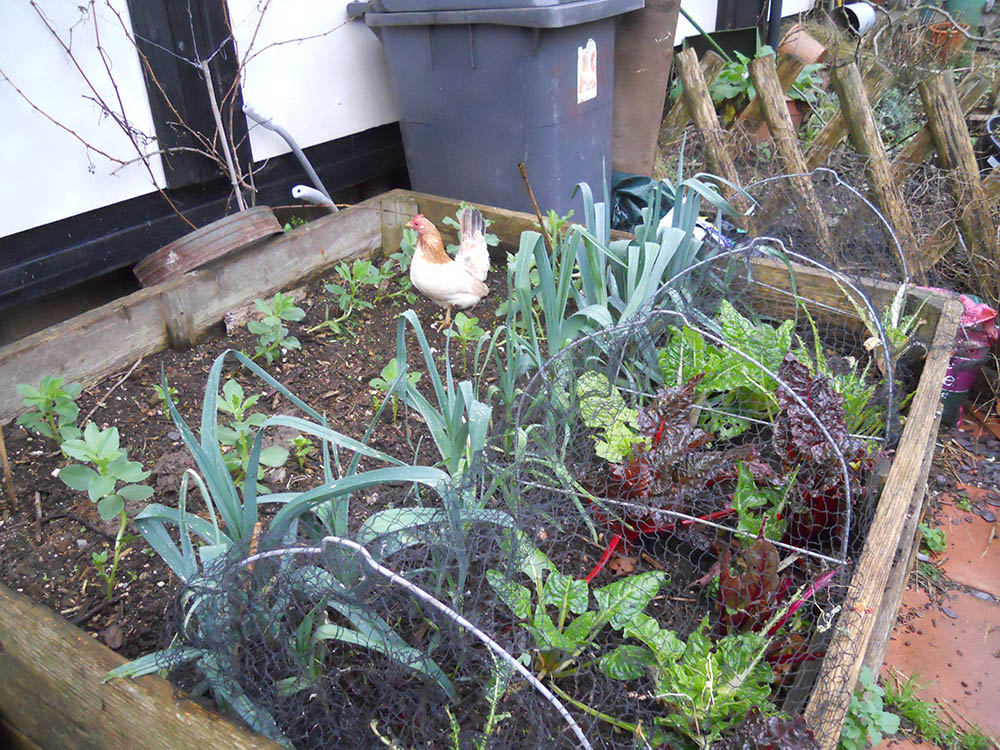 Yesterday I managed to dodge the rain and spend some time out in the garden with the Bantam hens, who promptly ducked behind the raised bed to find the driest dust to have a bath in. As you can see, the raised beds are not bare this Winter, in this bed (roughly 5x5ft) I’m growing two rows of broad beans, a thick row of leeks, which I’ve earthed up, and in the front is a couple of rows of rainbow chard. I’ve had to net the chard because the wood pigeons keep flying down from the large Beech trees nearby and eating it.
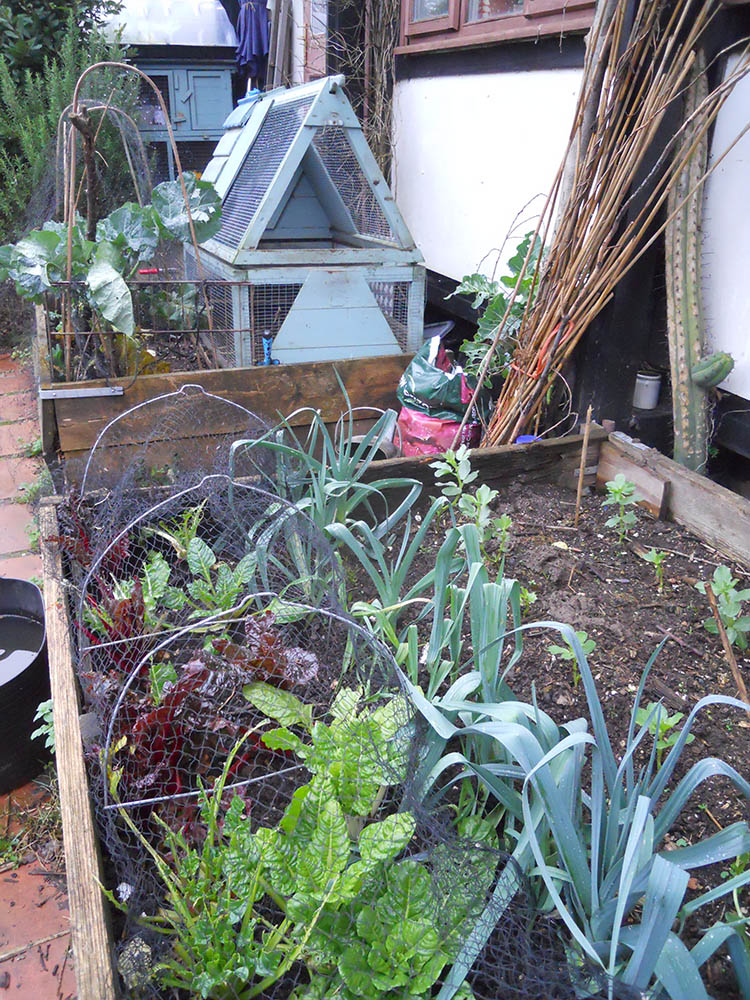 I’ve also had to protect my purple sprouting broccoli which is growing in the other raised bed, along with the kale and wild rocket growing in the borders, and anything else green they can get their beaks onto! I can honestly say that these pigeons, which have very few natural predators, are starting to look rather well fed and tasty to me!!
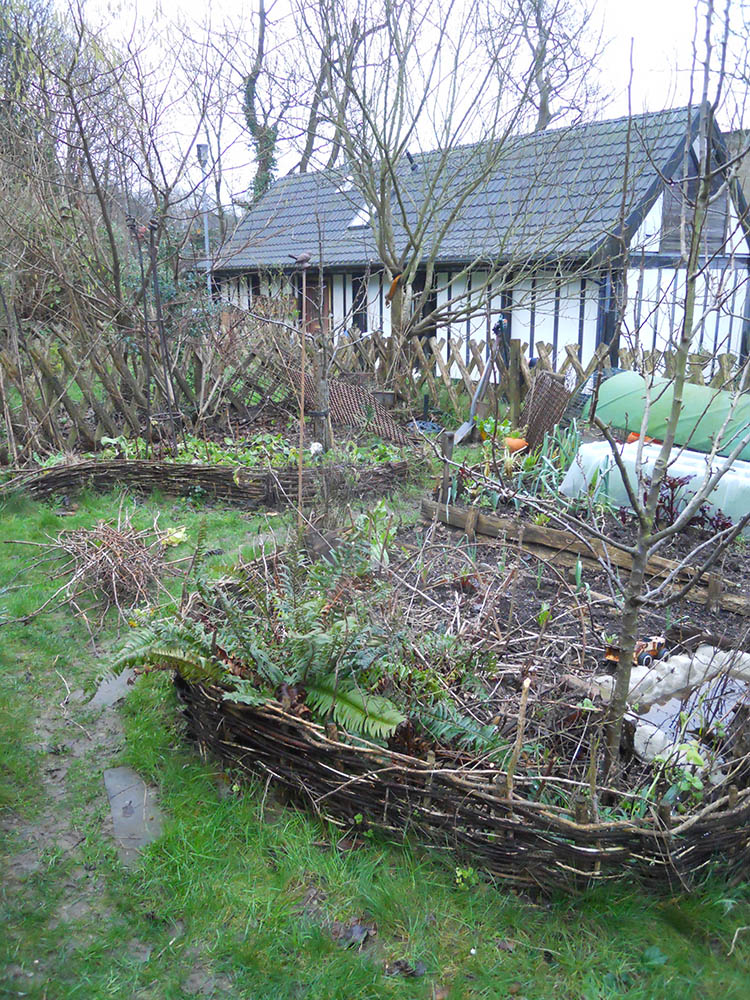 Next I got stuck into cutting back the raspberry canes. I have Autumn fruiting raspberries, which are ready to harvest from the end of August to the beginning of December (depending on how cold it is). I’ve managed to extend the growing season for these raspberries by experimenting with my pruning technique. I’ve found that if I cut some canes only down to knee height then these will fruit earlier, and this way I am able to start harvesting raspberries from mid June to July, with a little break before the August harvest starts.
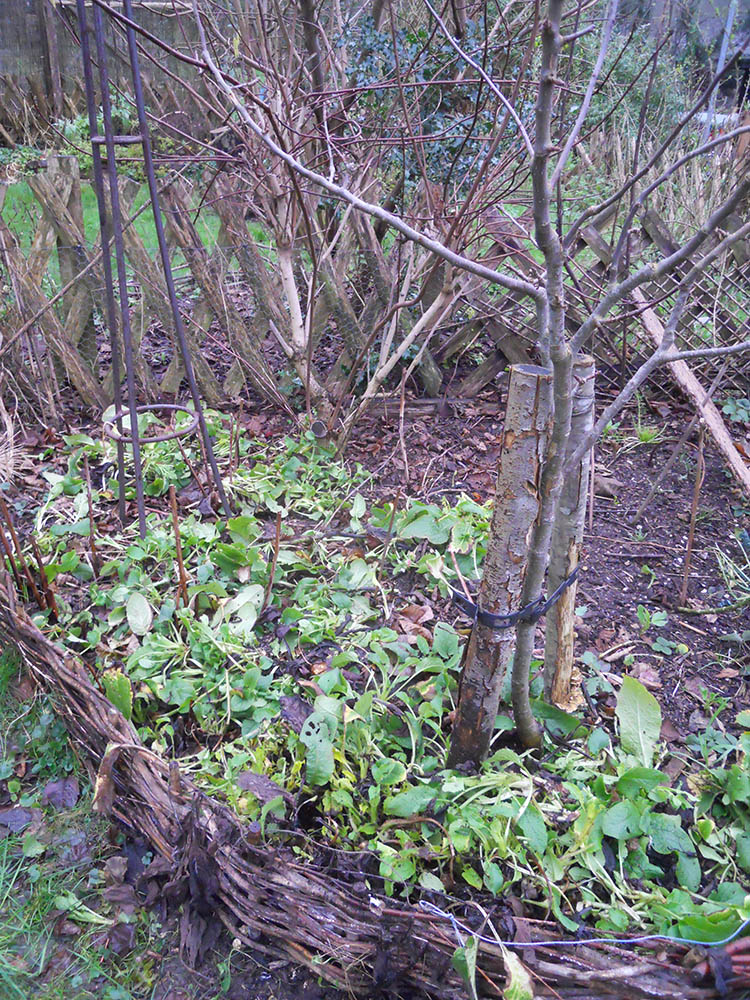 Under the apple tree and by another patch of raspberries, I have comfrey growing, which I planted there because I wanted to create a beneficial link between it and the fruiting perennials. Comfrey has very deep roots, with which it taps nutrients deep down in the soil and makes it available to the plants around it. One of the best ways to make these nutrients available is to ‘chop and drop’ the comfrey leaves at this time of year so that they act as a mulch, the worms gradually work the leaves into the soil, breaking down the nutrients as they go. Another way is to make a comfrey ‘tea’; simply let a large handful of leaves rot down in a bucket of water (with a lid -it’s VERY smelly!) then a 2-3 weeks later put an egg-cup-ful into a large watering can full of water and apply to your hungry plants during the growing season.
I then also made a start on pruning my apple tree. This time last year I attended a Brighton Permaculture Trust pruning course, so I feel confident to do my own pruning now. I’ve learned how to train the tree to grow in the desired direction by weighting branches during the growing season, and how to get the best from the tree in terms of fruit yields. While I was on the course I made a booklet of notes about pruning and created a pdf file to share with others. If you would like to have a copy of these pruning notes (with my own illustrations) then please ‘like’ me on Facebook and request the file and I will send it to you by email. To find me on Facebook click on ‘Facebook’ under ‘Follow Flo’ on my home page.
Hope to see you on Facebook!
