GROW AND COOK
Happy New Year to you all!
I hope you had a good break over the festive season? Any exciting presents? 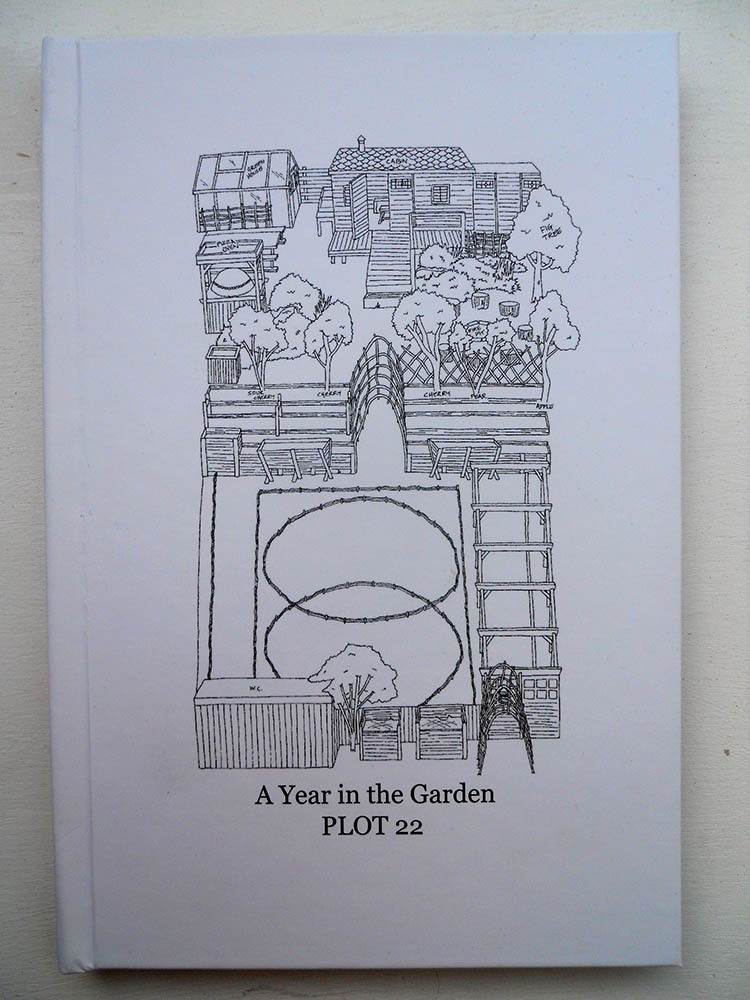 I had one inspiring present that I’d like to share with you. It’s book called ‘A Year in the Garden PLOT 22′ and it deserves some explanation.
Before Christmas I attended an event organised by Brighton and Hove Food Partnership called “Soup and Share”, where people who organise community food growing projects could meet community chefs, and brainstorm together about how we can link these two aspects together in the city. It was well attended by both food growers and cooks, and I found that preparing soup together -chopping veg while the community chef transformed the ingredients into delicious soup right there and then- was a very relaxed and natural way to meet and talk about our projects. Of course we then had the bonus of eating the soup together too.
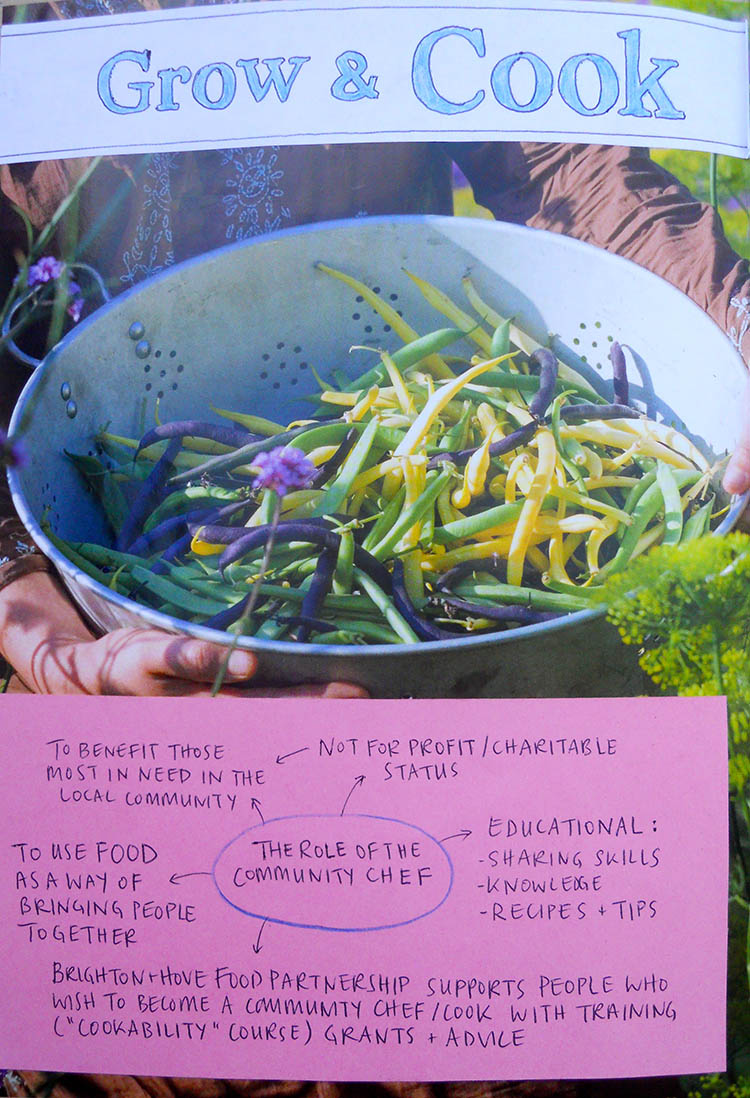 We talked about the role of the community chef and how they can benefit their local community in ways I’d not thought of. It hadn’t occurred to me that many people live alone and don’t normally eat with other people, and so by coming together and preparing food and eating with others, they are encouraged to eat fresh ingredients that they would not necessarily have thought of trying before, thus improving their nutrition. Another factor is the improvement to mental health that occurs when eating and spending time with others in a nurturing environment. It also has a positive impact on food poverty; those most vulnerable in the community get to share a healthy nutritious meal for free in return for their time helping in the garden. It’s a win-win.
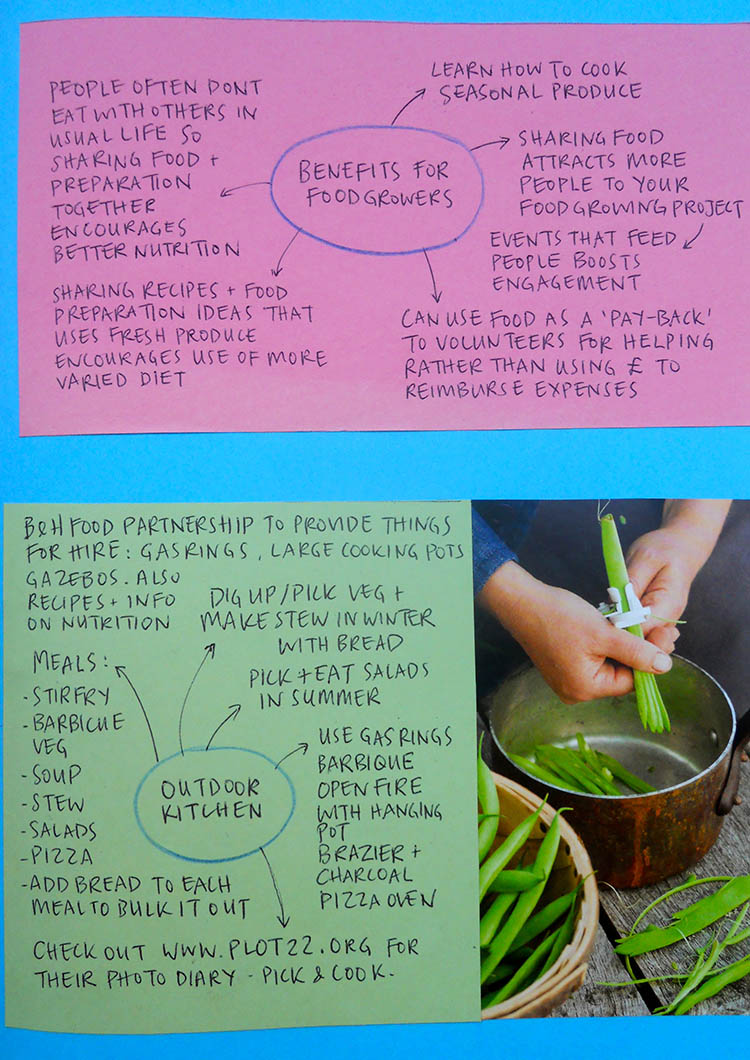 We also talked about the benefit that food-sharing can have on a community food growing project. I found out that events that feed people tend to boost engagement and attracts more people to your project. It helps growers to learn how to prepare and eat the seasonal food that they grow so that they can make the most of their produce (how many growers have grown an unusual vegetable such as the Asparagus Pea or Jerusalem Artichoke and then not known how best to eat it?!). Sharing food can also be a good ‘payment in kind’ for volunteers, as a way of reimbursing their expenses rather than giving them money for a bus fare for example.
It was around the table whilst eating our soup that I met Emma from Plot 22. She talked about her inspiring project on their Hove allotment. 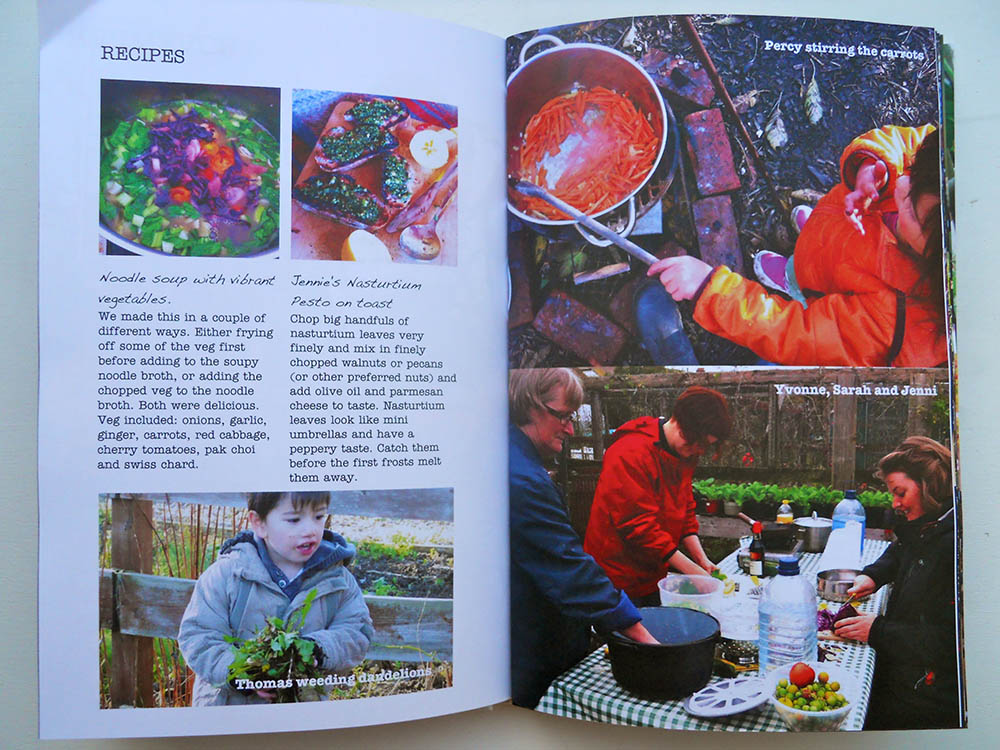 Their community plot holds Garden Sundays once a month, where they garden and then cook together over the fire using produce picked from the plot. Over the past year she had collected pictures of the plot along with recipes of the freshly picked produce they’d eaten together, and put together a beautiful photo diary of their year together, which is the book I got for Christmas.
Emma also talked about the types of things that helped her initially when setting up Plot 22; she went to a ‘Pick and Cook’ session at Moulescoomb Forest Garden in Brighton, where she learned about how they organise volunteers and how they cook their produce outdoors using a brazier, pizza oven and the open fire. Training is also available at B&H Food Partnership for those with an interest in becoming a community cook called Cookability. 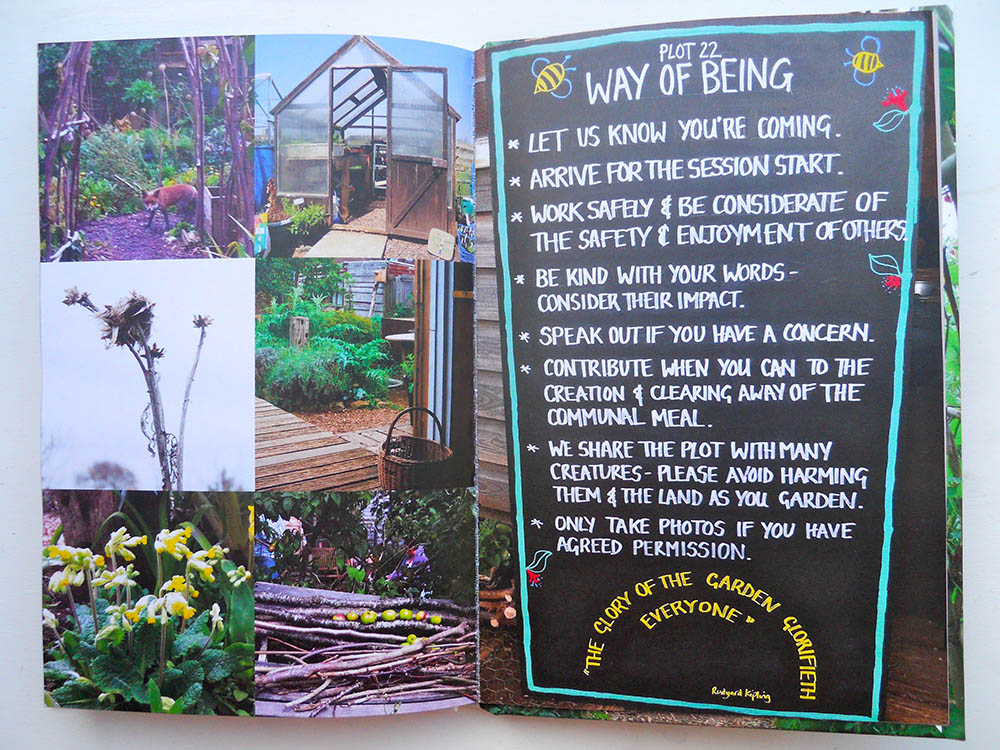 She also gained confidence in the types of meals that could be prepared and cooked outdoors, which inspired many different meals on Plot 22 such as soups and stews in winter, stir fries, salads and barbecues in summer, all served with bread, and the occasional pizza or roasted veg in the pizza oven. On bright days, they always eat outside, in foul weather they retreat to a little cabin and cook over the wood burner.
It was inspiring to hear about Emma’s project along with the others I heard about that day, and it certainly got me thinking about how we can introduce some of these elements into our own community food growing project Real Food Hollingdean. It’s so important in these times of austerity that we can introduce elements of hope into our local neighbourhoods, with the amount of people needing to use food banks increasing as well as the amount of mental health problems too. The permaculture ethics of Earth care, People care and a Fair share for all, can all be implemented in projects like these, offering solutions to the ‘meltdown’ that’s currently being felt globally in terms of financial, social, and environmental problems.
I hope it has left you feeling inspired too? There might be food growing or food sharing initiatives in your area that you could offer your skills on? Or perhaps you already do, in which case I hope I’ve inspired some new thoughts and ideas for 2014.
