The laws of Nature

THE LAWS OF NATURE

I am going to start off this blog with a quote from a book I’ve just finished reading:

“As long as the people of your [Western] culture are convinced that the world belongs to them and that their divinely-appointed destiny is to conquer and rule it, then they are of course going to go on acting the way they’ve been acting for the past ten thousand years. They’re going to go on treating the world as if it were a piece of human property and they’re going to go on conquering its as if it were an adversary. You can’t change these things with laws. You must change peoples minds. And you can’t just root out a harmful complex of ideas and leave a void behind; you have to give people something that is as meaningful as what they’ve lost -something that makes better sense than the old horror of Man Supreme, wiping out everything on this planet that doesn’t serve his needs directly or indirectly.” [ from ISHMAEL by Daniel Quinn]


What PERMACULTURE offers the world is an alternative mindset to the one we currently have in our Western culture. It is the meaningful ‘something’ that fills the void, once people have given up their old mindset of treating the Earth as something to be conquered and used.


Through Permaculture’s ethics of Earth Care, People Care and Fair Share (see my “what is permaculture?” page in the box on my home page) we have created a mindset that fully rejects the Western model and instead values all of life on Earth and all it’s Peoples. It respects that everything has a right to life, and that we can live alongside it with ease and happiness. We don’t have to take more than we need. Nature will always sustain us if we follow her patterns and respect her laws. In fact if we don’t start respecting her laws, most people are aware that we will surely exterminate ourselves and many species along with us will vanish. It’s diversity that creates resilience to change, and so the more species we destroy, the more impoverished we will be and the less adaptable to change. This is how systems collapse.
Mankind needs to step back into his rightful place, where he recognises that he is subject to the fundamental laws of Nature, which sets a limit to growth according to the resources available. Unlimited growth -whether that’s global population, oil production, or the world economy- is not possible on a finite planet with finite resources, and even if we find a new planet tomorrow nearby that we can expand onto, we will not have addressed this most basic problem of “how to live” with Nature. We are not above Nature, somehow exempt from her systems, but we are part of her, we are just one strand in the web of life.
Fortunately we don’t have to give up being “civilised” in order to live in harmony with Nature, we just have to use our technology appropriately and with awareness. In fact through my knowledge of permaculture, I can now envision a future that is preferable to the current dying culture:

Imagine how much more fulfilled we will all be if we stop trying to fill our sense of dissatisfaction with more TV, alcohol and other distractions, and instead turn towards each other and start working together in communities. Imagine how fulfilling and empowering it will feel to start managing our resources together; sharing food and entertainment, taking our power back from the power companies by generating our own electricity in local renewable schemes, taking our power back from the supermarket giants by growing our own food and saving seed, working less and thinking and living more creatively, and spending more time outdoors enjoying the bird song.

Imagine getting off the treadmill of the rat race, and finally being able to relax because you don’t have lots of rent or bills to pay, but instead have a rich community life both locally in your neighbourhood, and globally, through the internet. Imagine not having to worry about where your food comes from because it is produced locally so you know it is healthy, fresh and inexpensive. Imagine working together in communities to manage your housing, keeping rents low and using natural building materials. Imagine this world unfolding, as we wake up from the delusion that things have to be the way they are, and start creating a new world, a new harmonious system, and a new way of being human.
I know this new world is possible because so many people are already living this way:

http://www.findhorn.org

http://www.lammas.org.uk

http://directory.ic.org/records/ecovillages.php

http://www.cohousing.org.uk/cohousing-bristol

http://www.cohousing.org.uk/eco-cohousing-brighton

http://www.permaculture.org.uk/opportunity/new-members-landmatters-collective-eco-community-totnes

http://www.prospectcommunity.org.uk

http://www.indymedia.org.uk/en/2012/07/498072.html

http://lostvalley.org

http://www.earthaven.org

http://crystalwaters.org.au
 

Succession in the garden

SUCCESSION IN THE GARDEN.

It’s a good idea to develop a habit of planning ahead as a gardener. Designing a growing space is not quite the same as painting a picture, as of course Nature is constantly growing and changing and adapting to varying temperatures and light levels, so we have to change and adapt along with Her. As I’ve become a more experienced grower, I’ve become better at looking ahead into the next 2 or 3 seasons, and knowing which plants will thrive in which seasons. This way I have learned how to plan to maximise the amount of yield I can get from my space. My aim for this next full year was to start a bed of Asparagus somewhere where there were no perennial weeds…. but where?

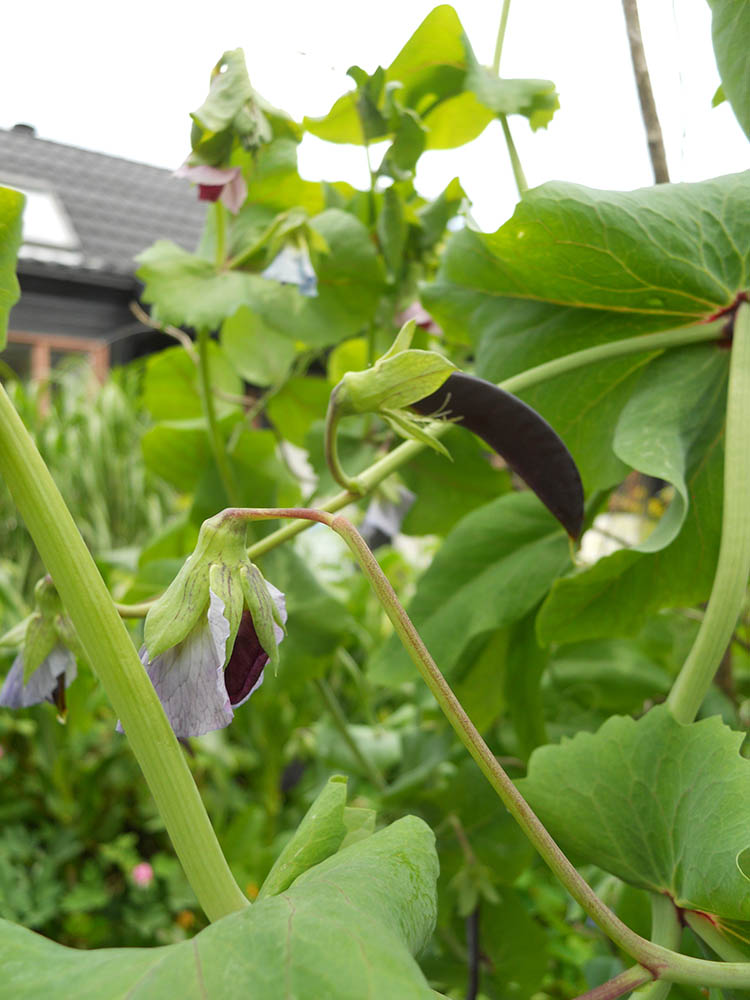
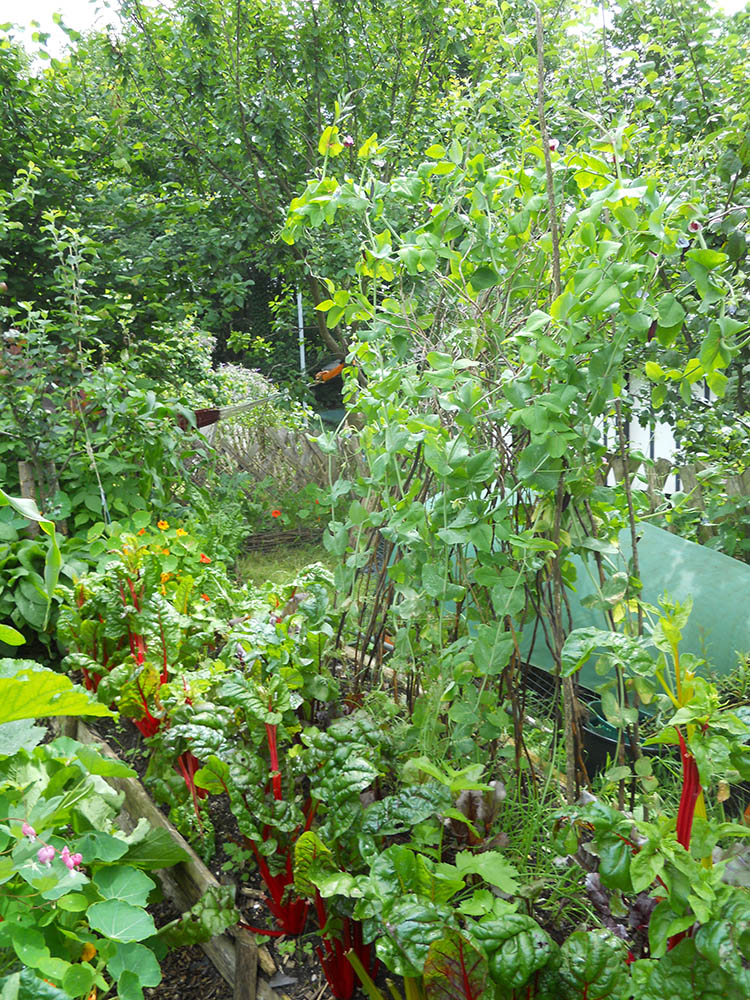
In my pottage bed near the chicken house I’ve been growing a patch of heritage variety ‘Purple Podded Peas’ this year. Peas are notoriously difficult to support, but I’ve had success with using my contorted willow cuttings from last year, tied in with a few sturdy sticks at each corner. I always sow a wide row (around 9 inches wide) and sow the peas around 5cm apart in triangular patterns so to maximise the number of plants in the row, which is around 4ft long.

Purple Podded peas have the most beautiful purple flowers that people often mistake for sweet peas. The purple pods are harvested young and eaten as a mange tout pea which we like to eat raw in salads, or cooked in stir fries or lightly steamed with other veg. When the pods are mature, the peas can be taken out of the tough pods and eaten raw in salads, or steamed.

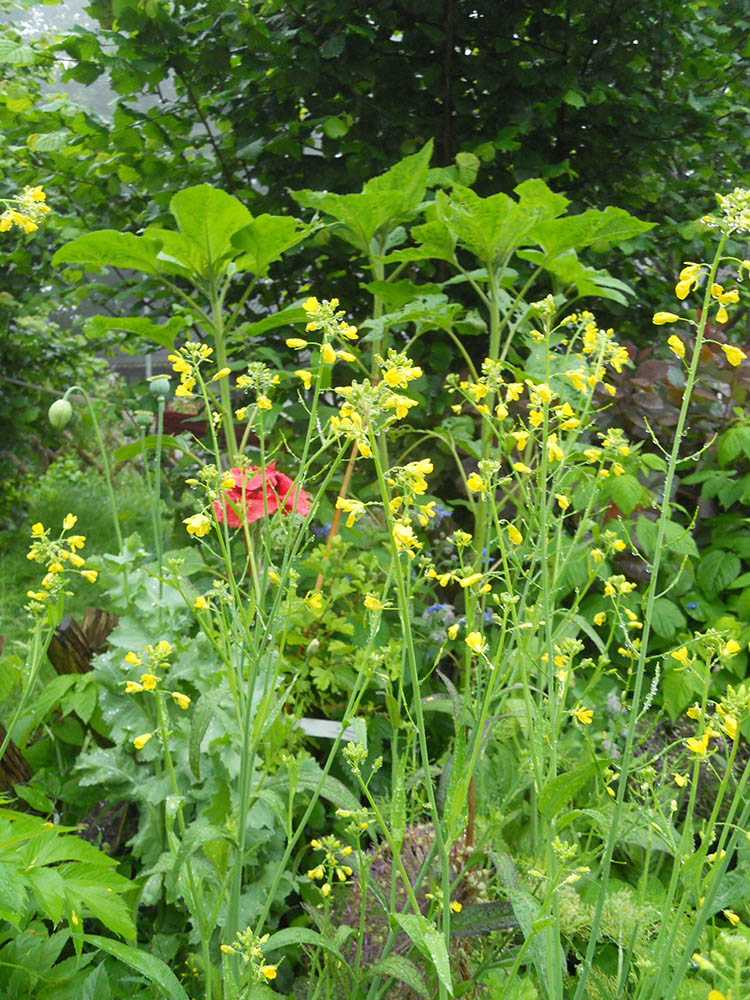
The peas started to look rather tired by the end of August, so I decided to pull them up and use the space to squeeze in a new crop for the Autumn and Winter. I left many of the pea roots in the ground so that their helpful nitrogen fixing properties would carry on enriching the soil, and then I added some new compost and planted a mix of salads and mustard greens. Some of the salads are going to do well in the Autumn sunshine but die off in the first frosts, and the mustards will survive the frosts and live well into next year.

When I was thinking this through, I realised that this forward planning would mean that this space would be ready to do something new with in the Spring, and it would be weed free too. So I’m planning to harvest all the salads then, give it a last dig to make sure all weeds were gone, add manure and home made compost, and then begin establishing my new Asparagus bed there.

I am really looking forward to having fresh Asparagus in my own garden! It takes 2 years to establish, but it will be worth the wait because it is an expensive crop to buy, and I do love it!

Edible Flowers

EDIBLE FLOWERS

Here in the UK we are having the wettest, darkest, dreariest Summer of all time!! So at every possible opportunity I am cheering myself up by getting out into the garden (dodging torrential rain, hail and thunder) to harvest things for supper, and to spend a few minutes appreciating the beautiful things that are now growing and flowering. Fortunately we aren’t really craving salads this year so it doesn’t matter that all my salad leaf has been munched by the slugs, we have enough mustard greens, spinach and chard to keep us going and what cheers up the dinner table most of all is the edible flowers.

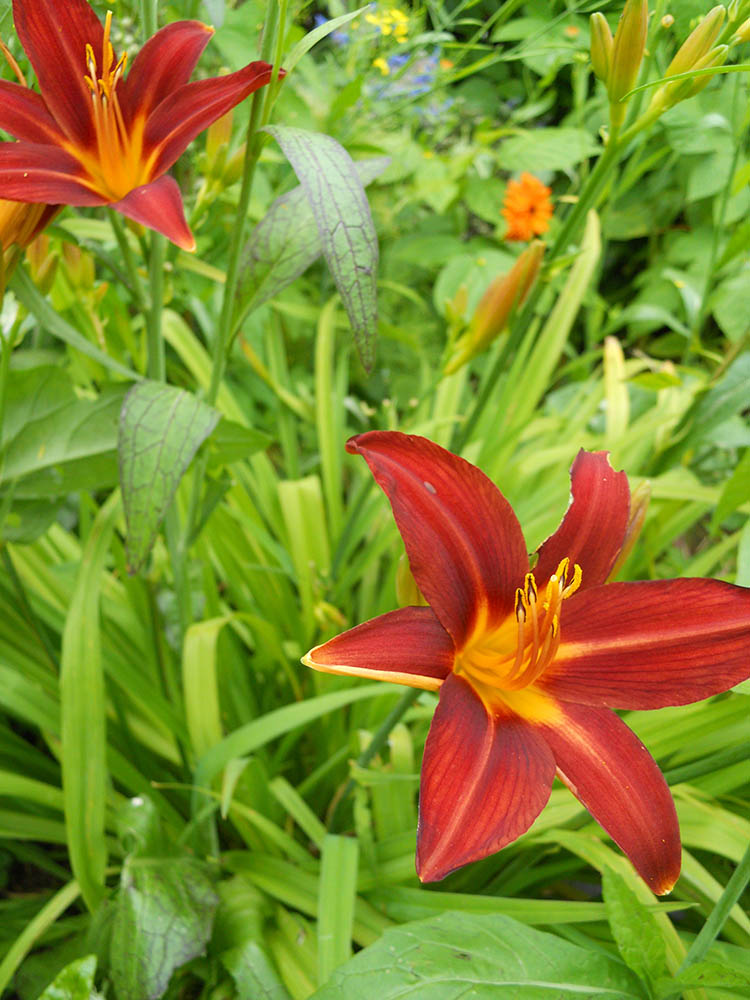
Above is a photo of the beautiful day lilies, which seem to shine even on a dull day and always put a smile on my face. As their name implies, they only flower for a day before wilting, so it’s good to appreciate them while they last.

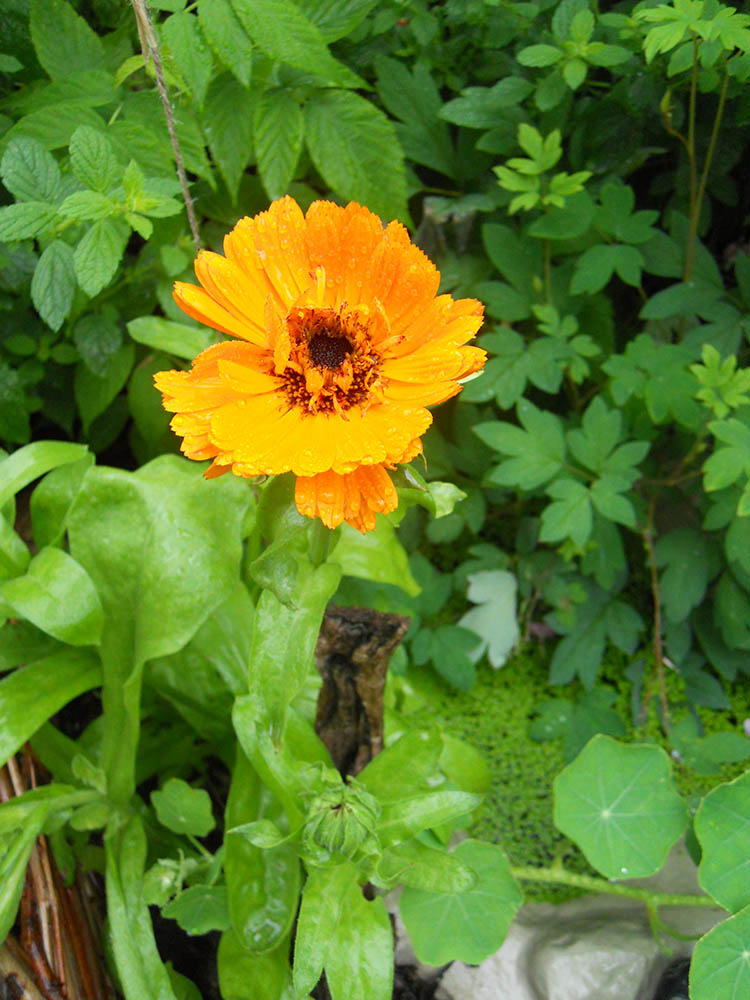
Also flowering in abundance is the blue Borage. Once established it sets seed every year, making it very low maintenance, and I love the way they taste a bit cucumber-like.  In the foreground is the Calendula Marigold which really jazzes up a salad if you pick off the petals and sprinkle them on the top.

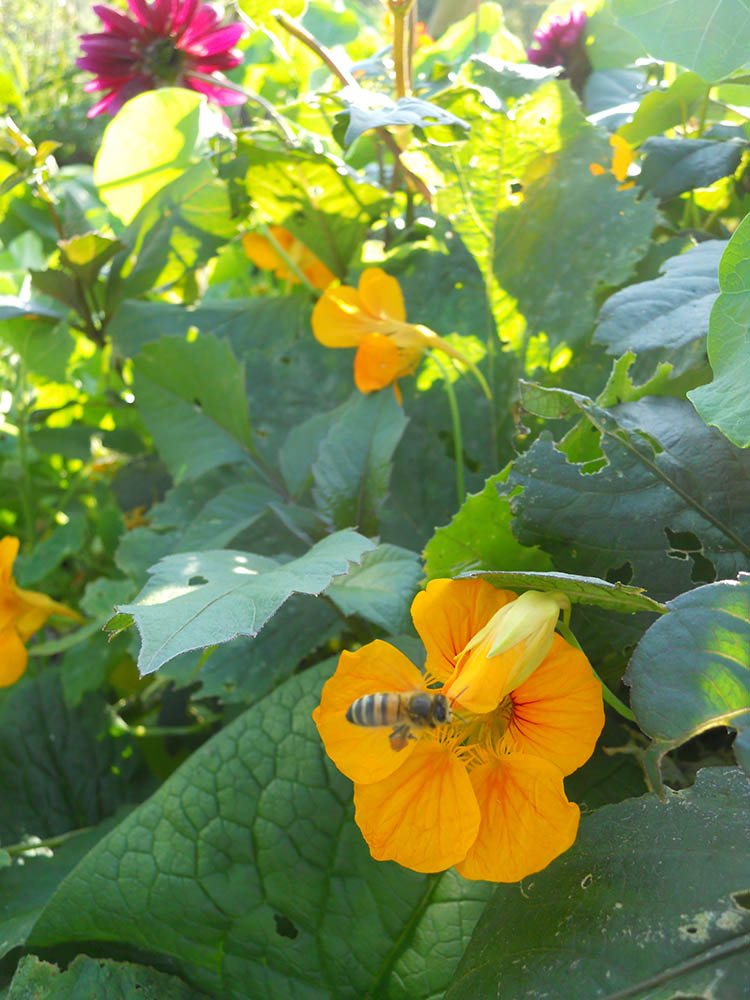
Not only are the flowers bright and cheerful, and edible, they also attract beneficial insects into the garden too. Today I noticed lots of bumble bees buzzing from flower to flower, along with hoverflies, and honey bees too. We need to make these pollinators as welcome as possible at the moment, as their numbers are in decline.

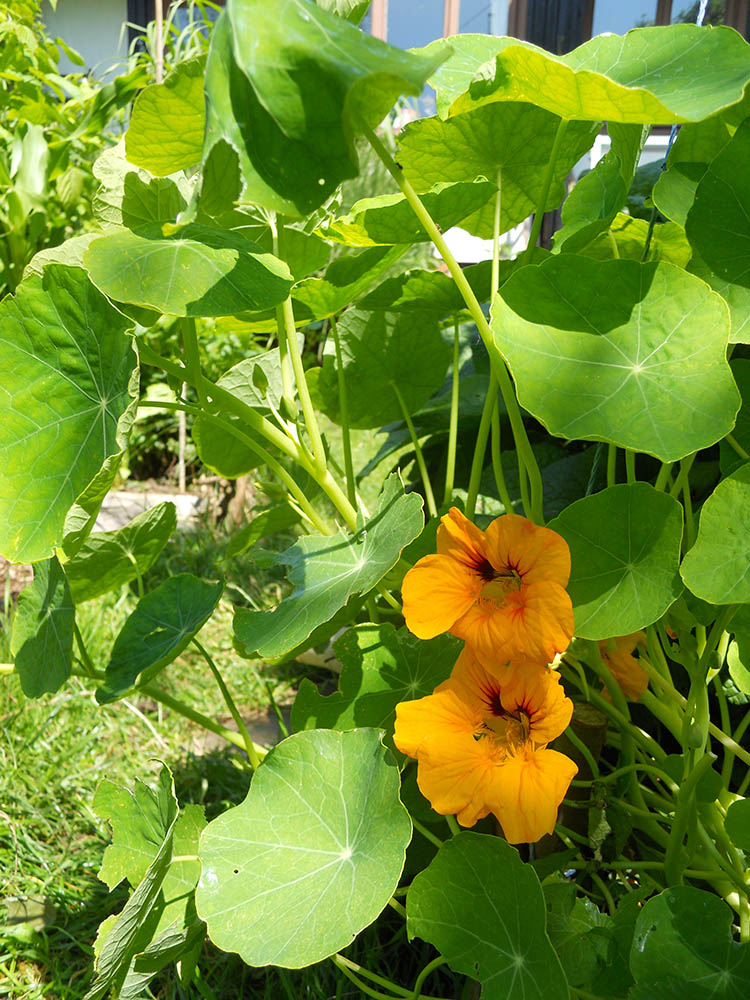
Finally, here are the Nasturtium. These are a such a great garnish to any meal, really ‘zinging it up’ with their peppery taste and hot bright colours. I grew ‘Tom Thumb Mix’ this year, which has a good range of colour from sunny yellow to deep red. Beware though, they spread like crazy and will self seed from year to year… but that’s what I love about them!

I am currently growing a type of viola called ‘Heartease’ and the ‘Poached Egg Plant’ with it’s yellow and white flower, in modules, but they are not yet ready to plant out and I can’t wait to see what they are like!

Do let me know if you grow any of your own edible flowers, and which are your favourites so that I can give them a try. Thanks!


Extreme Weather

When I was a child I remember watching a BBC children’s drama which has really stayed with me over the years. The story is set in a future where the sun never shines, it is always overcast, grey and raining, and it focuses on the lives of a group of children living in this dreary world.

These children walk to school dressed in all-in-one rain suits. When they enter the school through the first cloakroom, they take off their rain suits, and undress down to under clothes and go into a brightly lit UV room, where they spend twenty minutes chatting while receiving their daily does of ‘sunlight’. Then they move into the next cloakroom and get dressed into their school clothes, and then the school day begins.

Part of the story was about school bullying, where one smaller girl is targeted by older boys. One of their bullying tactics is to lock her in the cupboard -which had a small window, high up and out of reach. It just so happens that one day while she has been locked in the cupboard, the clouds part, and the sun makes an unexpected and glorious appearance. These children have never seen the sun before, and they run outside shouting and laughing into the school field, which is now so wild and overgrown that the grass is taller than them. Meanwhile the small girl is locked in the cupboard isn’t able to go outside and see the sun. She’s trapped in the cupboard and can’t see out. However, the sun shines down through the tiny window above, she reaches up to a beam of light dancing with illuminated dust, feeling the sun on her skin for the first time.

I am getting the same sort of feeling when I go out into my garden these days as this BBC drama conjured up in me. The extreme rain has worked it’s magic with the plants, they have become wild and luminous -and tall! The flowers glow amongst the lush green leaves and because I have not been out there cutting things back, they have a distinctly untamed look about them. I feel so thrilled whenever the sun breaks through the clouds, I feel like the girl locked in the cupboard would feel like if she had been able to make her escape outside.


Today’s Harvest

Permaculture is all about achieving a yield from whatever system you have designed. I find garden designs are the most satisfying because the yields they produce are so visible, tangible and edible too!

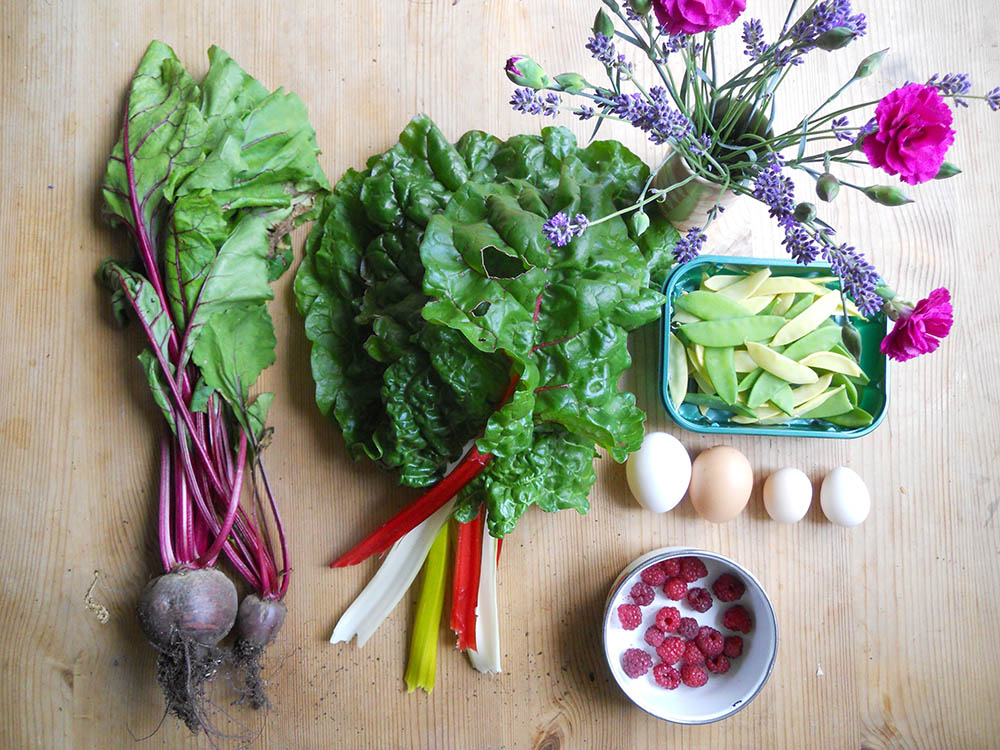
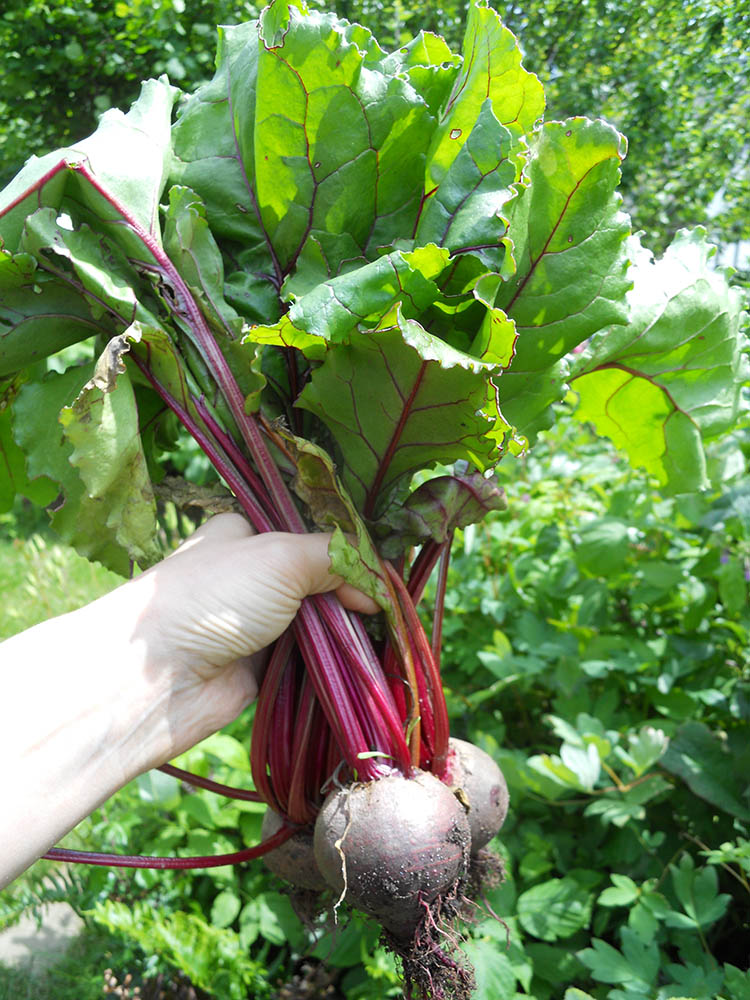
Today the sun came out at last and I took the opportunity to harvest some of my produce: I was very pleased to taste the first of this season’s raspberries and strawberries (mostly eaten before I took the photo so you’ll have to take my word for it-they were really delicious!); four eggs from our four hens; a punnet full of mange tout pea; a vase full of beautiful pinks and lavender flowers (some yields are aesthetic); a large handful of rainbow chard; and two beetroot.

I’m going to make the delicious frittata again this evening (see previous blog for recipe), this time with garlic mushrooms and wilted chard on the side, and steamed mange tout pea. We’ll be fighting over the rest of the raspberries at breakfast tomorrow if it’s raining again -but if the sun’s out we can just pick some more!

Chickens ‘Dig for Victory’

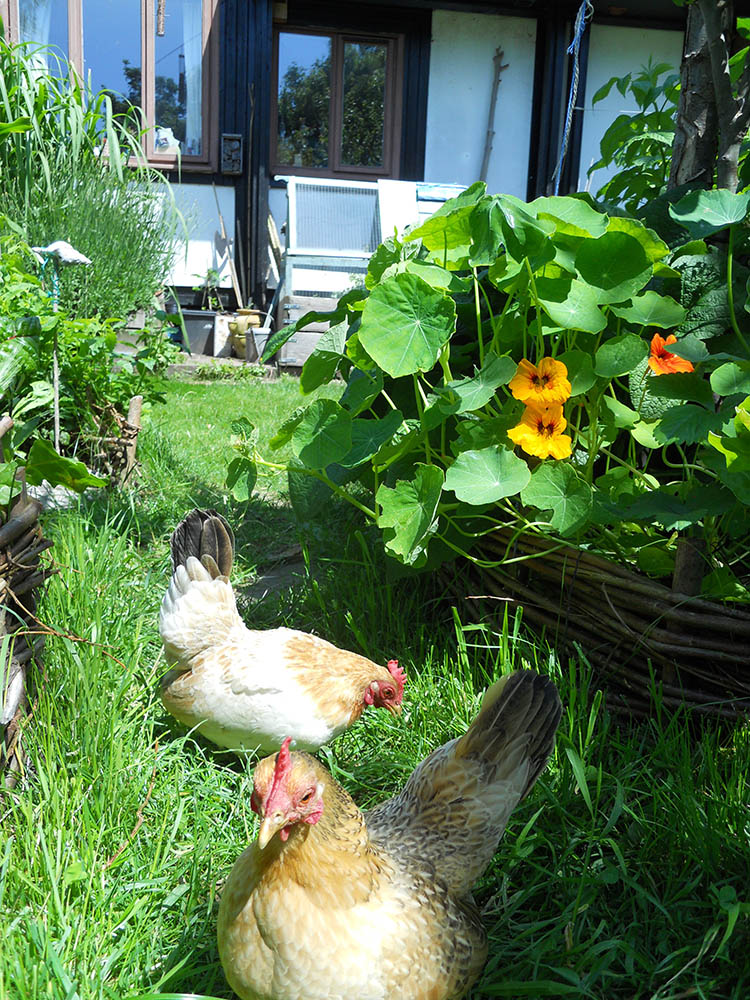
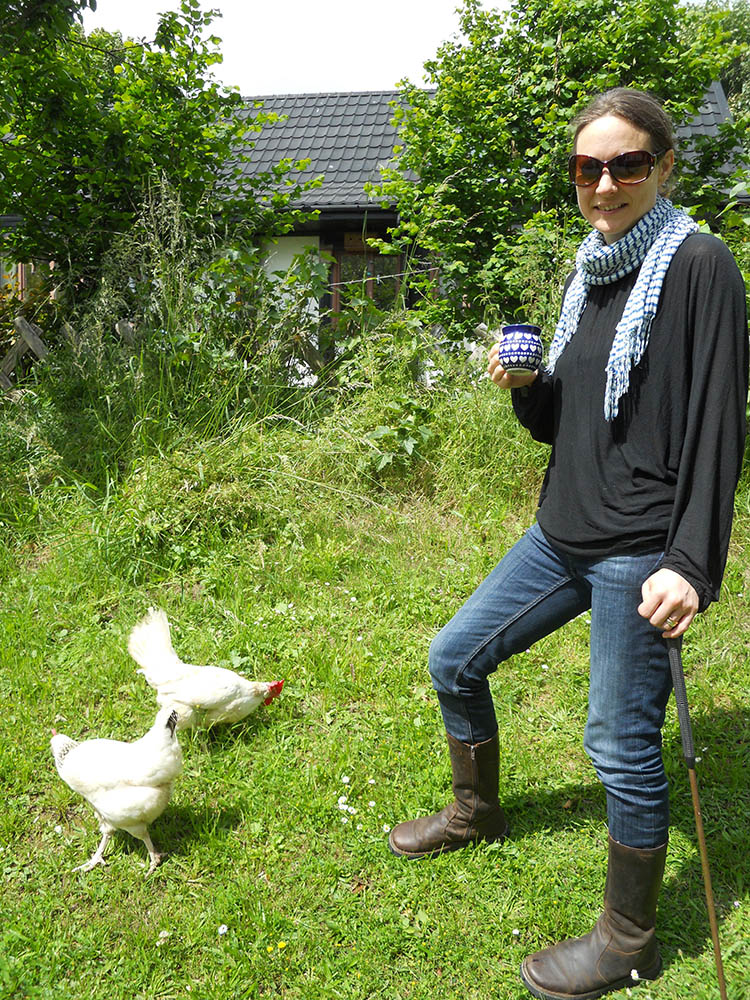
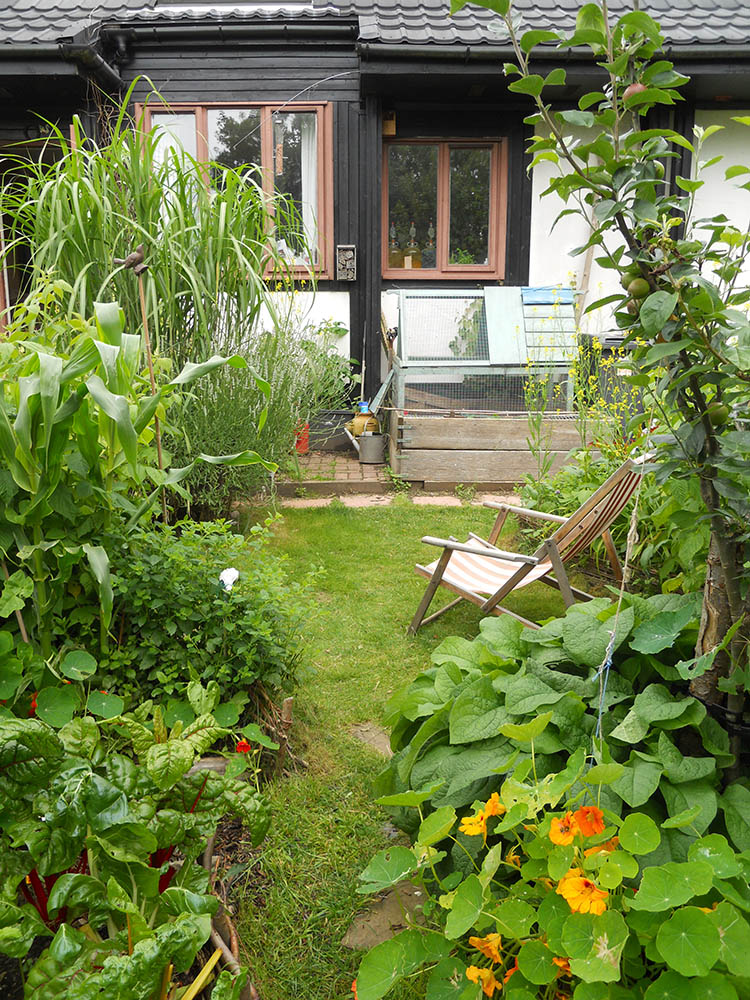
I am currently writing an article for a magazine called ‘Your Chickens’!  In the article I describe how we have achieved a system of happy chickens in a small garden with good permaculture design. In our garden we have 2 raised veg beds near the house that are big enough for a rotation of 3 crops plus the ‘chicken tractor’. This is simply an ark and run designed to be big enough for our tiny bantam hens (Daphne and Brenda) to spend most of their time in when they aren’t free ranging. This  means that their pecking/scratching/manuring behaviour is focused on where it is most useful to us, and in this way they remove pests, add manure and scratch the fallow ground into a fine tilth for us, ready for the next crop to be planted. We also have larger laying hens called Lily and Vera in our Eglu at the bottom of the garden. They also get to free range in the green space of the co-op, but I have to watch over them to keep them safe from dogs, like a kind of chicken shepherdess!

I have finished the final draft and  I now need to gather some photos of how my chicken system works in my small garden.  So yesterday I took advantage of the good weather and let Daphne and Brenda out of our ‘chicken tractor’ and tried to photograph them, and my husband kindly took photos of me being the ‘chicken shepherdess’ with Lily and Vera too. Chickens must be one of the hardest animals to photograph -their heads move so fast as they peck about that it’s very tricky trying to get any good shots of them both together!

I’m hoping that we get some decent weather this summer, so that I can spend more time in the garden free ranging with my chickens!

Beetroot

Today I’ve harvested my first few beetroot from the garden and I’m planning to make a frittata with it this evening.

FRITTATA:
1 parboil 3 beetroot and a few potatoes (cut into 2cm cubes)
2 meanwhile cut up one large onion into large chunks and chop some garlic
3 drain the beetroot and potatoes and add to a large roasting pan
4 add the onion and chopped garlic
5 sprinkle all with pepper and salt and a glug of olive oil
6 put in preheated oven at 200′c for 35 mins until all is soft and smells good
7 take out of the oven
8 whisk together 8 large eggs and pour over the ingredients in the roasting pan
9 put back into oven for 15 mins or until the egg in the frittata is well cooked
10 cut and serve (it’s good hot or cold) with steamed veg or salad

Healthy Eating

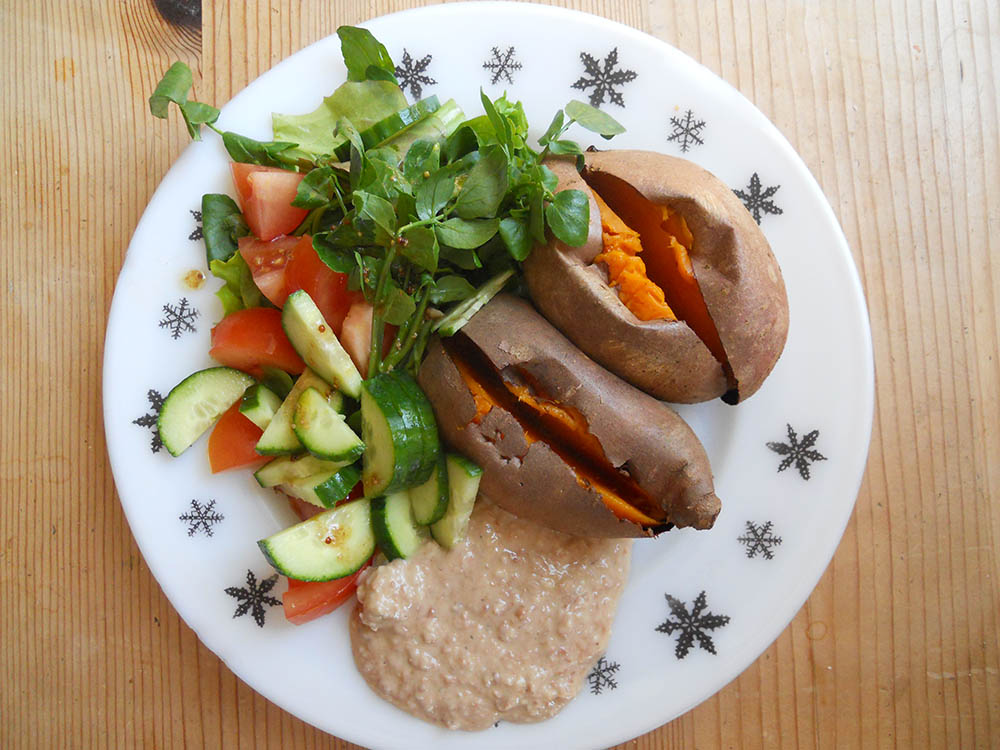
I am currently doing a permaculture design on my health (I have Lupus) and I’m doing a special anti-inflammatory diet to see if this will help. As part of the survey I had to observe what I ate and what effect this had on my health, so for the past month I’ve kept a food/mood/symptom diary. This has given me good feedback to work with. I needed to increase my salad and veg intake so I’ve been enjoying eating all the salads, chard, peas, purple sprouting broccoli and herbs in my garden. I’ve been eating well!

Follow

Get every new post on this blog delivered to your Inbox.

Join other followers: